4 2026 Best Solar Lights for Dark Garden Paths
The Foundation of Path Illumination: Why Construction Precedes Lighting
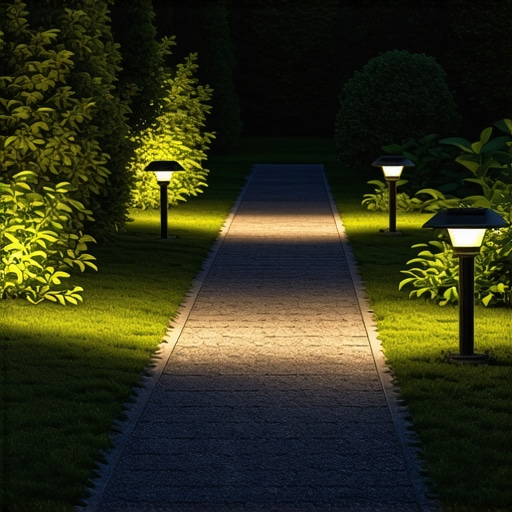
The 2026 best solar lights for dark garden paths are high-output fixtures featuring monocrystalline panels, LiFePO4 batteries, and at least 50 lumens per unit. These devices prioritize circuitry longevity and weatherproofing (IP67) to ensure navigation safety across residential hardscapes and garden beds without the need for trenching high-voltage wires.
I always drill into my new crew members: if you don’t fix the soil grading first, every plant you put in the ground is just expensive compost, and every light you stake is just a marker for a future puddle. I’ve seen rookies slap down high-end LED path lights next to a walkway that hasn’t been properly crowned. Within one season, the hydrostatic pressure from trapped water heaves the pavers, and the runoff silt buries the photovoltaic sensors. You cannot fix bad engineering with a fancy light bulb. A path must be stable, shedding water at a 2% slope, before we even talk about the Kelvin scale or lumen output. If the base layer of modified gravel isn’t compacted to 95% Proctor density, your lights will be leaning like the Tower of Pisa within six months. Soil mechanics dictate the success of your garden design. You don’t build on top of soft earth. You excavate, you fill with 2A modified stone, you tamp, and then you light. Anything else is just playing in the dirt.
“A retaining wall doesn’t fail because of the stone; it fails because of the water trapped behind it.” – Hardscape Engineering Axiom
How many lumens do I need for a garden path?
For a standard residential garden path, you require 35 to 50 lumens per fixture to provide adequate ground-plane visibility without causing glare or light pollution. If the path has elevation changes like steps or steep inclines, increase the output to 80 lumens for safety. High-quality 2026 solar models allow for adjustable brightness to match the ambient light levels of your specific micro-climate.
The Top 4 Solar Path Lights for 2026 Performance
Selecting a solar fixture in 2026 isn’t about the plastic housing; it is about the internal battery chemistry and the efficiency of the photovoltaic cells. We are looking for LiFePO4 (Lithium Iron Phosphate) batteries because they handle deep discharge cycles far better than the old NiMH junk. Here are the four standards for this year.
- The Industrial Grade Bollard: This fixture uses a 360-degree glass lens and a heavy-duty aluminum housing. It delivers 100 lumens and is designed for high-traffic hardscapes.
- The Focused Task Path Light: Best for narrow garden paths, this light uses a downward-shroud design to eliminate sky-glow while hitting the ground with a crisp 3000K beam.
- The Integrated Step Light: Designed to be surface-mounted on 6×6 timber or stone risers, these use oversized solar strips to catch low-angle winter sun.
- The Smart Mesh Solar Spike: These lights communicate via Bluetooth to ensure they all turn on at the exact same LUX level, providing a uniform look across a large property.
| Light Type | Output (Lumens) | Battery Type | Ideal Use Case |
|---|---|---|---|
| Industrial Bollard | 100 – 150 | LiFePO4 3.2V | Main Entrances / Driveways |
| Task Path Light | 40 – 60 | Li-ion 18650 | Walking Paths / Garden Beds |
| Step Light | 20 – 35 | Li-polymer | Risers / Decking / Walls |
| Smart Mesh Spike | 50 – 80 | LiFePO4 3.2V | Large Landscapes / Estates |
How long do 2026 solar batteries last?
Modern LiFePO4 batteries in high-end solar lights are rated for 2,000 to 3,000 charge cycles, which translates to roughly 5 to 8 years of nightly use. This is a significant jump from the 1-2 year lifespan of older nickel-based batteries. To maximize life, ensure the solar panel is cleaned quarterly to prevent dust-induced charging resistance.
The Engineering of Light Placement and Soil Stability
In garden design, placement is governed by the inverse square law of light. If you space your lights too far apart, you create ‘hot spots’ and ‘black holes.’ This is dangerous. For a 40-lumen light, you want a spacing of approximately 6 to 8 feet. This creates a soft overlap that guides the eye. But remember the dirt. If you are staking lights into heavy clay, you need to pre-drill the hole. Forcing a plastic or even a thin aluminum stake into sun-baked clay will snap the housing. If you have sandy loam, the stake won’t hold; you’ll need to set the base in a small pour of concrete or a packed stone sleeve.
“Soil pH and moisture content are the primary drivers of galvanic corrosion in outdoor electronic housings.” – Agronomy Manual of Infrastructure
The Ground-Up Installation Checklist
- Check Drainage: Ensure the path doesn’t pool water where the light stake enters the soil.
- Test Soil Compaction: The area surrounding the light must be firm enough to prevent tilting during freeze-thaw cycles.
- Verify Solar Orientation: Use a light meter or app to ensure the location receives at least 6 hours of unobstructed sunlight.
- Set the Grade: The light base should sit 1 inch above the mulch line to prevent rot and insect intrusion.
- Apply Dielectric Grease: On any accessible battery terminals to prevent oxidation in high-humidity zones.
Maintenance and the 2026 Standards
Solar lights are not ‘set and forget’ assets. In 2026, the efficiency of your monocrystalline panels depends on transparency. Use a microfiber cloth and a mild surfactant to remove pollen, sap, and bird droppings. If the panel becomes cloudy, a fine-grit polishing compound can sometimes restore the surface. Don’t let your lawn care crew weed-whack against the stems. I’ve seen $500 worth of lighting destroyed in ten minutes by a careless string trimmer. Protect your investment. Use a 2-inch buffer of decorative stone around the base of the light to keep the mower at a distance. If the light starts flickering, it’s usually a loose battery contact or a failing sensor, not a dead LED. LEDs are rated for 50,000 hours. The battery is the weak link. Replace it with the exact voltage and chemistry specified. Never swap a LiFePO4 for a Li-ion; the charge controllers are not cross-compatible. It will fail. Do it right the first time.