Build a $60 2026 Window Box for Modern Curb Appeal
Build a $60 2026 Window Box for Modern Curb Appeal
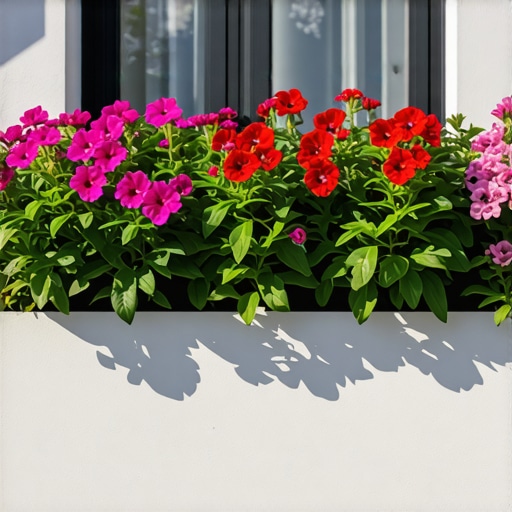
I always drill into my new crew members: if you don’t fix the soil grading first, every plant you put in the ground is just expensive compost. This applies to a massive estate and it applies to a 36-inch window box. Most homeowners treat a window box like a piece of furniture, but in my firm, we treat it like a high-performance biological reactor. If you ignore the physics of drainage and the chemistry of the substrate, you are just throwing $60 into a wooden coffin. We are looking at 2026 trends where minimalism meets functionality, moving away from the messy ‘spiller’ look toward structural, architectural plantings that can handle the heat island effect of a modern home exterior.
Engineering the Substrate: Why Most Window Boxes Fail by July
To build a high-performance 2026 window box, you must prioritize internal drainage and substrate aeration over aesthetics. Cheap boxes trap water, causing root rot and anaerobic soil conditions. Successful builds utilize a perched water table strategy with inorganic aggregates to manage moisture levels effectively. Most DIYers buy a bag of ‘potting soil’ and call it a day. That is a mistake. That peat-heavy mix will compact within 90 days, suffocating the roots. You need a mix that maintains at least 20% air-filled porosity even when saturated. We use a blend of coarse perlite, pine bark fines, and a fraction of coconut coir to ensure the cation exchange capacity remains high without sacrificing drainage.
“Container drainage is not merely about holes in the bottom; it is about the physical properties of the media which determine the height of the saturated zone at the base of the container.” – University of California Agriculture and Natural Resources
The Ground-Up Build: Materials and Engineering
For a $60 budget, you cannot afford high-end teak, but you can afford Western Red Cedar or cellular PVC if you source from a local lumber yard rather than a big-box retailer. Avoid pressure-treated lumber for window boxes; the chemicals are unnecessary for this scale and can sometimes stunt sensitive root systems. Use 304 stainless steel screws. Zinc-coated fasteners will react with the tannins in cedar, leaving ugly black streaks down your siding by the second season. It is a rookie mistake that screams ‘amateur.’ Focus on the joinery. A simple butt joint will fail under the weight of wet soil, which can top 100 pounds for a standard box. Use a pocket-hole joinery system or reinforcing corner blocks.
| Material | Quantity/Type | Estimated Cost |
|---|---|---|
| 1x8x8 Cedar Board | 1 Board | $28.00 |
| Stainless Steel Screws | 50 Count (1.25″) | $12.00 |
| Drainage Aggregates | 5 lbs (Pumice/Perlite) | $8.00 |
| Engineered Potting Media | 2 Cubic Feet | $12.00 |
| Total Cost | Project Budget | $60.00 |
How deep should a window box be for perennials?
For perennial longevity, a window box requires a minimum internal depth of 8 to 10 inches. This depth provides enough thermal mass to protect root systems from rapid temperature fluctuations and allows for a stratified root zone that prevents the plants from becoming root-bound within a single growing season.
Soil Physics and Nutrition Management
The biology of a window box is volatile. Because the root zone is elevated, it experiences extreme freeze-thaw cycles and rapid desiccation. To counteract this, we don’t just use dirt; we use an engineered substrate. In 2026, we are seeing a shift toward biochar-infused media. Biochar acts like a microscopic sponge, holding onto nutrients that would otherwise leach out every time you water. You need to manage the pH levels carefully. Most container plants thrive in the 5.8 to 6.2 range. If your water is ‘hard’ (high alkalinity), it will slowly drive the pH up, locking out essential micronutrients like iron and manganese. Your plants will turn yellow (chlorosis). Don’t blame the plant; blame your water chemistry.
“Maintaining a stable rhizosphere pH in containers is significantly more difficult than in field soil due to the limited buffering capacity of organic substrates.” – American Society for Horticultural Science
What is the best potting mix for modern window boxes?
The best potting mix for a modern window box consists of 40% composted pine bark, 30% coarse perlite, and 30% coconut coir. This specific ratio ensures capillary action moves water upward while allowing gravitational water to exit the drainage holes quickly, preventing the anaerobic conditions that kill modern cultivars.
Installation and Structural Integrity
Mounting the box is where most people fail. You are not just hanging a picture. You are hanging a heavy, wet, vibrating weight. If you are mounting into siding, you must hit the structural studs. Use lag bolts, not wood screws. We always leave a 1/2-inch air gap between the box and the house using spacers. This prevents moisture from being trapped against your siding, which causes rot. Do not skip this. It will rot your house. The box should be pitched slightly away from the structure at a 1-degree angle. This ensures that any overflow during a heavy rain event doesn’t track back toward the building envelope.
- Step 1: Dimension your cedar boards to 36″ (front/back) and 8″ (ends).
- Step 2: Drill 1/2-inch drainage holes every 6 inches along the bottom board.
- Step 3: Assemble using waterproof wood glue and stainless steel screws.
- Step 4: Install a liner or coat the interior with a food-safe asphalt emulsion.
- Step 5: Secure the box to the house using 3-inch lag bolts and spacers.
The 2026 Aesthetic: Less is More
The trend for 2026 is monochromatic structuralism. Forget the ‘thriller, filler, spiller’ mantra for a moment. Try a single row of Sansevieria for a modern, vertical look, or Carex oshimensis ‘Everillo’ for a lime-green pop that maintains its structure in the wind. These plants have a higher stomatal conductance efficiency, meaning they handle the reflected heat from windows better than soft-tissue annuals like petunias. If you want color, go with high-contrast pairings like black mondo grass against a white PVC box. It is clean. It is professional. It doesn’t look like a grandmother’s cottage garden. It looks like architecture. Keep the plant count low to allow for air circulation between the foliage, which reduces the risk of powdery mildew and spider mites.
![Build a $50 Vertical 2026 Herb Garden [Small Space]](https://lawnmajesty.com/wp-content/uploads/2026/06/Build-a-50-Vertical-2026-Herb-Garden-Small-Space.jpeg)