![Fix a Leaky 2026 Pond Liner for Under $50 [Step-by-Step]](https://lawnmajesty.com/wp-content/uploads/2026/05/Fix-a-Leaky-2026-Pond-Liner-for-Under-50-Step-by-Step.jpeg)
Fix a Leaky 2026 Pond Liner for Under $50 [Step-by-Step]
Fix a Leaky 2026 Pond Liner for Under $50 [Step-by-Step]
I recently got called out to tear up a $30,000 patio and pond installation that was sinking because the previous contractor failed to address a simple $2 puncture in the 45-mil EPDM liner. The hydrostatic pressure of the leaking water had saturated the sub-base, turning the structural soil into a slurry that could no longer support the weight of the limestone boulders. It was a complete engineering failure caused by negligence. This is why I tell my crew that a pond is not a decorative element: it is a high-pressure hydraulic system that requires mechanical precision. When a liner fails, you are not just losing water; you are losing the structural integrity of your entire landscape design. If you catch a leak early, you can remediate the issue for under $50 using professional-grade materials rather than the garbage sold at big-box home improvement stores. We are going to fix this using chemistry and physics, not guesswork.
How to Identify a Leak in a Pond Liner
To identify a leak in a pond liner, you must first distinguish between evaporation and a structural breach by performing a bucket test or monitoring the static water level. A leak is confirmed when the waterline stabilizes at a specific depth, indicating the elevation of the puncture within the EPDM or PVC membrane.
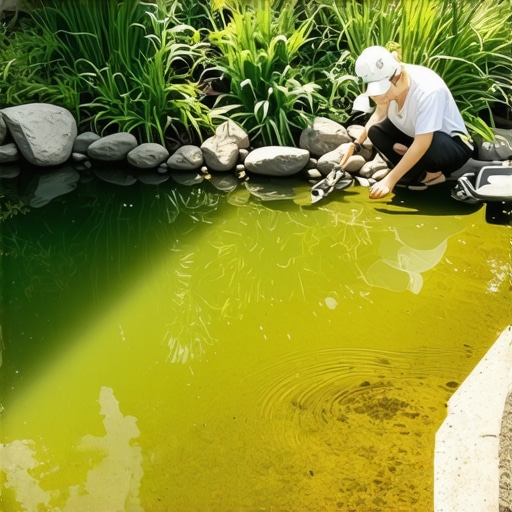
Stop guessing where the water is going. Most homeowners waste hundreds of dollars on water bills before realizing they have a breach. First, rule out the waterfall. Turn off the pump. If the water level stops dropping, the leak is in the plumbing or the stream. If it keeps dropping, the liner is the culprit. Once the water level stabilizes, that is your horizontal marker. Inspect every inch of that line. Look for punctures from heron beaks, sharp stones, or root intrusion from invasive species. Use a small squeeze bottle of condensed milk or a dedicated dye. Squirt it near suspected areas. If the milk is sucked into a point on the liner, you have found your breach. This is basic fluid dynamics at work. The weight of the water, which is 8.34 pounds per gallon, is pushing the liquid through the path of least resistance. You are looking for that exit point.
“A retaining wall doesn’t fail because of the stone; it fails because of the water trapped behind it.” – Hardscape Engineering Axiom
How do I find a hole in my pond liner?
Finding a hole requires patience and a systematic check of the perimeter shelves. After the water level settles, look for damp soil behind the liner or air bubbles trapped under the membrane. In 2026 pond designs, integrated skimmer boxes are also common failure points where silicone seals may have degraded over time. Do not ignore the edges. Often, what looks like a leak is actually capillary action where a piece of liner has sagged, allowing water to wick into the surrounding mulch. This is a grading issue, not a puncture. Check your liner tension before you start cutting patches.
The $50 Professional Repair Kit
The best pond liner repair kit consists of a primer, a pressure-sensitive EPDM cover tape, and a seam roller to ensure a molecular bond between the patch and the membrane. Avoid liquid sealants or duct tape, as these materials cannot withstand the constant UV exposure and hydrostatic pressure present in a high-end water feature.
| Material | Purpose | Estimated Cost |
|---|---|---|
| EPDM Primer (6 oz) | Chemical cleaning and prep | $15.00 |
| 6-inch EPDM Cover Tape (1 ft) | Structural patch membrane | $12.00 |
| Scrub Pad | Mechanical abrasion | $3.00 |
| Steel Penny Roller | Compression for bonding | $18.00 |
| Total | Professional Remediation | $48.00 |
Do not buy the cheap stuff. I see guys trying to fix 45-mil EPDM with roofing tar or silicone. It will fail. EPDM is a synthetic rubber (ethylene propylene diene monomer). It requires a chemical primer to break down the surface tension so the adhesive can create a vulcanized bond. Without the primer, you are just sticking a Band-Aid on a wound that is underwater. It will peel off in three months. The steel roller is also non-negotiable. You need to apply enough PSI to the patch to force out every micro-bubble of air. If there is air, there is a path for water. If there is a path for water, your repair is garbage.
Step-by-Step Pond Liner Remediation
The process for patching a pond liner involves cleaning the surface with a non-detergent scrub, applying a toluene-based primer, and then fusing the EPDM patch to the original material using a weighted roller. This creates a waterproof seal that can withstand freeze-thaw cycles and the mechanical stress of boulder placement in your landscape design.
- Drain and Clean: Drop the water level 6 inches below the leak. Scrub the area with a stiff brush and water. Remove all algae and biofilm. If the liner isn’t clean, the primer won’t work. It must be bone dry before the next step.
- Apply Primer: Use a scrub pad to apply the EPDM primer. You are not just painting it on; you are scrubbing it in. You want to see the liner change texture slightly. Wait for it to become tacky. This is a chemical reaction. Don’t touch it with your bare hands.
- Cut the Patch: Round the corners of your EPDM tape. Square corners peel. Round corners don’t. Make sure the patch extends at least 3 inches in every direction from the puncture.
- Set the Patch: Peel the backing and press the center of the patch over the hole. Work your way out to the edges to avoid trapping air.
- Roll it out: Use the penny roller. Apply heavy pressure. Start from the center and roll toward the edges. You should see a tiny bit of adhesive squeeze out. That is the sign of a successful bond.
- Cure Time: Wait at least 2 hours before refilling. The chemical bond needs time to stabilize. Don’t rush it.
“Proper pond maintenance requires monitoring water levels to prevent the exposure of the liner to UV-induced embrittlement.” – Penn State Extension
Can I use roof sealant on a pond?
Using roof sealant on a fish pond is a dangerous mistake because most roofing chemicals contain petroleum distillates and fungicides that are toxic to aquatic life. Furthermore, roofing cement is designed for gravity-shedding water, not the constant immersion and head pressure found at the bottom of a 2-foot deep garden pond. Stick to fish-safe certified EPDM tapes and primers. Your lawn care and ecosystem health depend on the purity of the water column. Chemical leaching will kill your lilies and your koi within days.
Long-Term Maintenance to Prevent Leaks
Effective pond maintenance requires managing the structural grading and sediment buildup to ensure that hydrostatic pressure remains balanced across the liner surface. Proper hardscaping around the pond edge prevents sharp aggregate from shifting and puncturing the 45-mil membrane during soil expansion or thermal contraction.
- Inspect the water level weekly for drops exceeding 1 inch.
- Maintain the rock shelf to protect the liner from UV degradation.
- Keep invasive tree roots like Willow or Bamboo at least 15 feet away.
- Check the skimmer seal and faceplate for screw tension.
- Ensure the overflow pipe is clear to prevent bank erosion.
Landscape design isn’t just about what looks good on top. It is about the engineering underneath. If you ignore your soil pH or your drainage patterns, your pond will eventually fail again. The soil under your pond should be a compacted sandy loam or a dedicated underlayment fabric. Never lay a liner directly on clay or rocky sub-soil. The earth moves. The freeze-thaw cycle in many regions will push rocks through the liner like a slow-motion bullet. Use a 6-ounce non-woven geotextile underlayment. It is cheap insurance against a $30,000 failure. Fix it right or don’t fix it at all. Your yard is a biological machine. Treat it with respect. Focus on the mechanics, and the aesthetics will follow. Skip the shortcuts. Use the right chemicals. Roll the seams. That is how you keep a pond for twenty years instead of two.
![Stop 2026 Pond Leaks: 3 Sealing Tape Rules [Fix]](https://lawnmajesty.com/wp-content/uploads/2026/06/Stop-2026-Pond-Leaks-3-Sealing-Tape-Rules-Fix.jpeg)