Build a $250 2026 Dry Creek Bed for Rain Runoff
Engineering the Flow Path: Why Dry Creek Beds Fail
A dry creek bed is a functional bioswale designed to manage stormwater runoff by mimicking the natural hydraulic conductivity of a mountain stream. To build one for under $250 in 2026, you must focus on site grading, non-woven geotextile fabric, and local aggregate sourcing to prevent soil erosion and foundation saturation.
I always drill into my new crew members: if you don’t fix the soil grading first, every plant you put in the ground is just expensive compost. I’ve seen guys spend $5,000 on ornamental river jacks only to have the first spring rain wash the silt right over the stone because they ignored the subgrade. You cannot fight gravity. You can only negotiate with it. When we talk about a dry creek bed, we aren’t talking about a ‘feature.’ We are talking about a drainage system that happens to look like a landscape element. If the water doesn’t move at 2% minimum slope, it’s just a long, skinny pond that will breed mosquitoes and rot your turf roots.
The Physics of Surface Water Management
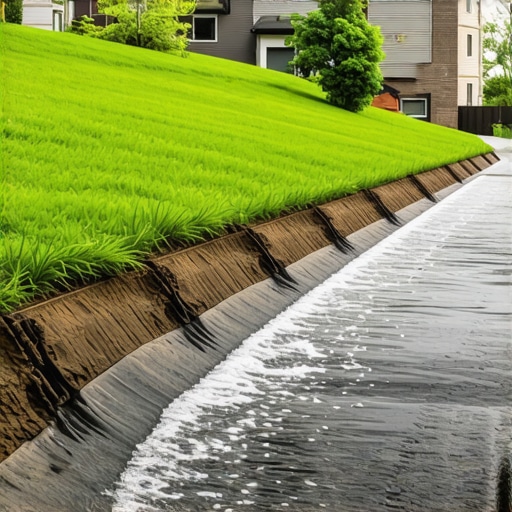
Hydraulic head and shear stress dictate whether your rocks stay put or end up in your neighbor’s yard during a microburst. You must calculate the catchment area of your roof and hardscapes to determine the cross-sectional area required for your channel.
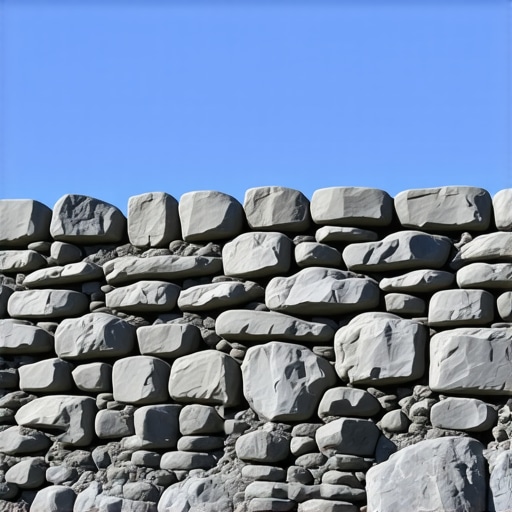
“A retaining wall doesn’t fail because of the stone; it fails because of the water trapped behind it.” – Hardscape Engineering Axiom
The same logic applies here. If your creek bed doesn’t have an outlet, the hydrostatic pressure in the surrounding soil increases. This leads to soil liquefaction. You need to understand the Infiltration Rate of your native soil. Heavy clay has a low infiltration rate, meaning you need a wider, shallower bed to allow for evaporation and slow percolation. Sandy loam allows for faster movement but erodes more quickly if the water velocity exceeds 3 feet per second.
Budgeting for 2026 Material Costs
Achieving a professional-grade install for $250 requires bypassing big-box retailers. In 2026, a single bag of decorative stone at a retail store will cost you $10. That’s a trap. Go to a local quarry. Bulk prices for #4 crushed stone and river rock are significantly lower when bought by the ton.
| Material Item | Quantity (Approx) | Estimated 2026 Bulk Cost | Functional Purpose | 0.5 Ton | $45 | Structural support and drainage |
|---|---|---|---|
| River Rock (3-6″ mixed) | 1.5 Tons | $120 | Erosion control and aesthetics |
| Non-Woven Geotextile | 50 Linear Feet | $55 | Separation of soil and stone |
| Marking Paint & Misc. | 1 Unit | $30 | Site layout and stabilization |
The Step-by-Step Excavation Protocol
Start with a transit level or a simple string level. You need a 1/4 inch drop for every foot of run. Mark your path using high-visibility marking paint. Avoid straight lines. Nature hates straight lines, and so does water velocity. Curvature creates meanders which naturally slow the water down, reducing the energy it carries.
How deep should a dry creek bed be?
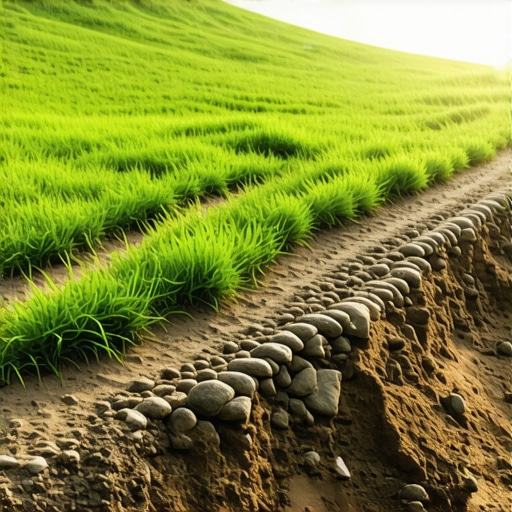
A functional dry creek bed should be excavated to a depth of 8 to 12 inches in the center, tapering upward to the edges. This creates a parabolic shape that maximizes water carrying capacity while preventing the edges from collapsing inward under hydrostatic pressure.
Once excavated, compact the subgrade. Use a hand tamper. The soil should be firm enough that you don’t leave deep footprints. This prevents the stone from sinking into the mud over time. Lay your non-woven geotextile fabric. Do not use plastic. Plastic is for hacks. It will tear, trap water where you don’t want it, and eventually float to the surface. Geotextile fabric allows the soil to breathe while keeping the silt from clogging your stone layers.
What is the best stone for drainage runoff?
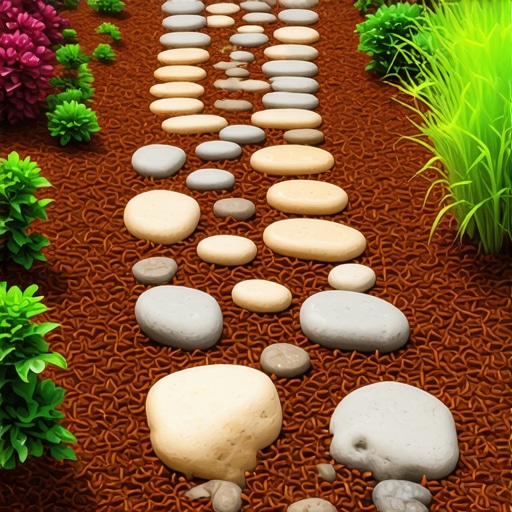
The best stone for drainage is a combination of angular crushed stone for the base and smooth river rock for the surface. Angular stone (like #57 or #4) interlocks, providing a stable foundation, while larger 3-6 inch river rocks provide the weight necessary to resist displacement during high-flow events.
“Effective erosion control depends on the roughness coefficient of the channel lining; larger, irregular stones dissipate energy more effectively than smooth, small pebbles.” – USDA NRCS Engineering Field Handbook
The 2026 Dry Creek Bed Checklist
- Call 811: Never dig without a utility mark. High-voltage lines don’t care about your drainage issues.
- Establish the Discharge Point: Ensure the water exits into a rain garden, a French drain, or a municipal storm sewer. Never dump it on a neighbor.
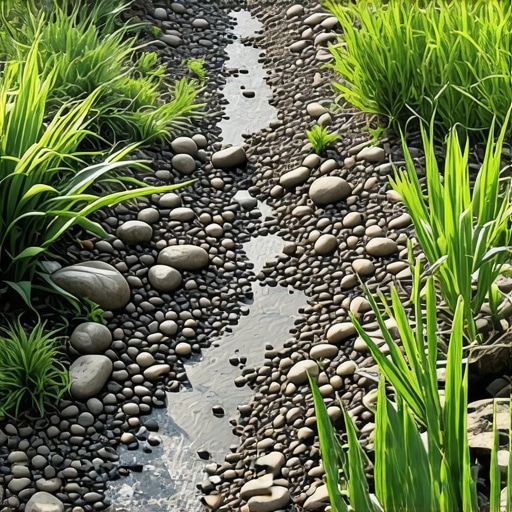
- Vary the Aggregate: Use ‘boulders’ (12-inch stones) at the bends to simulate a natural creek and redirect flow.
- Plant the Margins: Use deep-rooted native grasses like Panicum virgatum to stabilize the banks. Avoid ‘lush’ ornamentals that require high nitrogen; they will just contribute to algae in the runoff.
- Check the Grade: Pour a bucket of water at the top before you lay the rock. If it puddles, your grade is wrong. Fix it.
Maintenance is non-negotiable. Every autumn, you must clear out leaf litter. If you let organic matter decompose in your creek bed, it creates humus. Humus becomes soil. Soil grows weeds. Once weeds take hold in your creek bed, the system is compromised. It’s a tool, not a painting. Treat it with the respect engineering demands. It will last. It will work. Don’t skip the compaction. Don’t buy cheap fabric. Keep the water moving. That is the only rule that matters in this trade.