Stop Your 2026 Yard Puddles with This $50 Catch Basin
The Anatomy of a Sinking Yard and Surface Water Failure
Yard puddles and standing water are the direct results of hydrostatic pressure, poor soil percolation, and inadequate surface grading. When gravity cannot move water away from your foundation or high-traffic turf grass areas, the soil reaches its saturation point, leading to anaerobic conditions that kill root systems and destabilize hardscaping installations. Stop ignoring the squish under your boots. It is a sign of structural failure.
The Hardscape Autopsy: Why That $30,000 Patio Failed
I recently got called out to tear up a $30,000 patio that was sinking because the previous contractor ignored a simple 2 percent grade and failed to install a primary collection point. The homeowner watched in horror as their expensive pavers turned into a jagged, uneven mess within two seasons. The culprit was not the stone itself but the sub-base saturation. Water was trapped behind the retaining wall with no exit strategy. It turned the modified gravel base into a slurry. If you do not control the water, the water will control your checkbook. Every time I see a ‘pro’ throw down pavers without checking the soil compaction and drainage path, I know I will be back in three years to fix it. Landscaping is 20 percent plants and 80 percent civil engineering. If you miss the drainage, you miss everything.
“A retaining wall doesn’t fail because of the stone; it fails because of the water trapped behind it.” – Hardscape Engineering Axiom
The $50 Fix: The Catch Basin Strategy
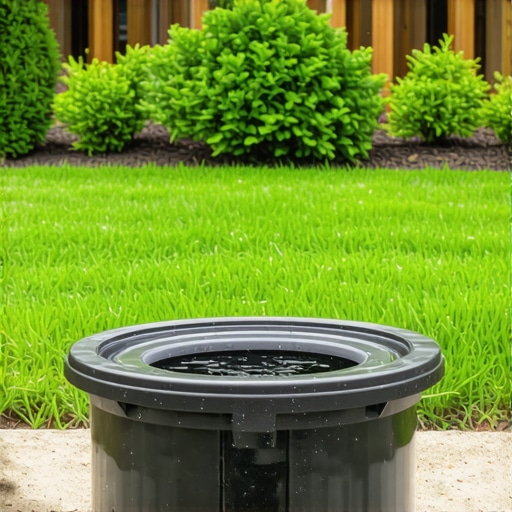
A catch basin is a 12×12 or 9×9 inch structural box designed to intercept surface runoff before it can penetrate the sub-grade. By placing this at the lowest point of your garden design, you create a direct hydraulic path for water to enter a smooth-bore PVC pipe and exit at a safe discharge point. This is the most cost-effective insurance policy for your lawn care routine.
| Material | Estimated Cost | Primary Function | Durability Rating |
|---|---|---|---|
| 9×9 Catch Basin | $45.00 | Surface water collection | High |
| SDR-35 PVC (10ft) | $18.00 | High-velocity transport | Maximum |
| Corrugated Pipe | $12.00 | Low-cost drainage | Low (clogs easily) |
| #57 Clean Stone | $4.00/bag | Base filtration | High |
How much slope does a drainage pipe need?
To ensure gravity-fed drainage works correctly, you must maintain a minimum slope of 1/8 inch to 1/4 inch per linear foot of pipe. This gradient ensures that water velocity is high enough to carry sediment out of the catch basin and prevent siltation within the drainage line. Use a transit level. Do not eyeball it.
Technical Zooming: Soil Porosity and Compaction Risks
If you live in an area with heavy clay soil, your percolation rate is likely near zero. Clay particles are microscopic and flat, stacking like plates to prevent water movement. When you install a catch basin, you are bypassing the soil’s natural inability to drain. You are creating an artificial aquifer. Without this, the water sits in the root flare of your trees, causing root rot (Phytophthora) and eventually killing the landscape. I have seen guys plant $500 nursery stock directly into ‘clay bowls’ with no drainage. It is just expensive compost. You need to understand the bulk density of your soil. If you cannot stick a screwdriver six inches into the ground when it is dry, your soil is too compacted for turf grass to survive. It will suffocate. You need to address the soil physics before you buy a single bag of fertilizer.
“Effective site drainage requires an understanding of the soil’s hydraulic conductivity and the local rainfall intensity-duration-frequency curves.” – Penn State Agricultural Extension
Can I install a catch basin in heavy clay soil?
Yes, but you must surround the catch basin and the drainage pipe with #57 washed stone and wrap the entire trench in non-woven geotextile fabric. This prevent the fine clay particles from migrating into the gravel and clogging your drainage system. This is called filter fabric, and skipping it is the hallmark of a hack.
The Installation Checklist: No-Fail Drainage
- Identify the low point using a laser level or string line.
- Excavate the hole 6 inches deeper and wider than the catch basin box.
- Fill the base with 4 inches of compacted gravel to prevent settling.
- Connect SDR-35 PVC pipe; avoid corrugated piping as it traps debris.
- Glue all joints with PVC primer and cement to prevent root intrusion.
- Backfill with clean stone to within 2 inches of the surface.
- Top with turf or decorative river rock.
The Environmental Cost of Neglect
Standing water is not just an eyesore. It is a breeding ground for Culex mosquitoes and a vector for fungal pathogens like Large Patch or Pythium Blight in your lawn. These diseases can wipe out an entire fescue or zoysia lawn in a matter of days if the humidity and soil moisture remain high. By spending $50 on a basin now, you save thousands in fungicide treatments and sod replacement in 2026. Water management is preventative medicine for your property. Don’t wait until the foundation starts efflorescing or the basement starts weeping. Fix the grade. Install the box. Move the water. It is that simple. Or it is that expensive. You choose.
![Fixing 2026 Clogged French Drains [No Digging]](https://lawnmajesty.com/wp-content/uploads/2026/07/Fixing-2026-Clogged-French-Drains-No-Digging.jpeg)
![Build a $500 Timber Retaining Wall [Step-by-Step]](https://lawnmajesty.com/wp-content/uploads/2026/09/Build-a-500-Timber-Retaining-Wall-Step-by-Step.jpeg)