The $40 French Drain Alternative for Soggy Backyards
The $40 French Drain Alternative for Soggy Backyards
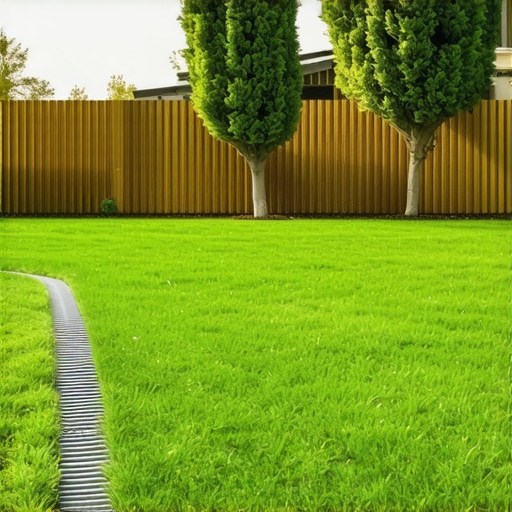
If you have ever stepped off your back porch and heard that sickening ‘thwack’ of mud or felt the ground give way like a wet sponge, you are dealing with a hydraulic failure. Most homeowners think they need a $5,000 professional French drain installation to fix a wet spot. They are wrong. You don’t need a massive excavation crew if you understand the physics of water movement and soil porosity. We are going to look at a high-efficiency, $40 alternative that utilizes the principles of a dry well and a vegetated swale to move water without the heavy price tag.
The Hardscape Autopsy: Why Most Yard Drainage Fails
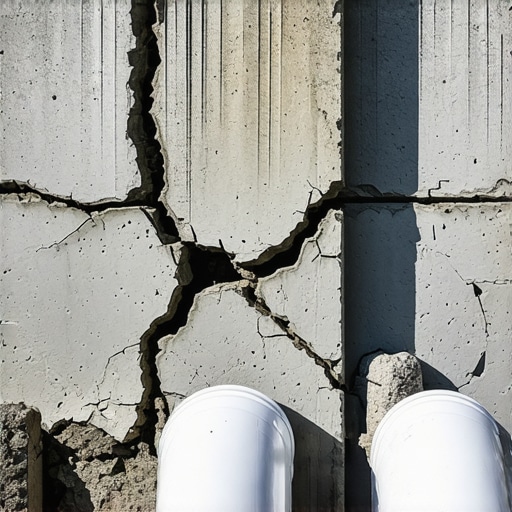
Yard drainage fails because of poor soil percolation, high clay content, and improper grading that traps surface runoff against foundations or in low points. When water has no clear exit path, hydrostatic pressure builds, saturating the soil until it becomes anaerobic, killing turf roots and eventually undermining concrete structures or basement walls.
I recently got called out to tear up a $30,000 patio that was sinking because the previous contractor didn’t account for the 3% grade coming off the neighbor’s property. They installed a standard French drain with thin, corrugated pipe that eventually crushed under the weight of the base-layer compaction. The homeowner was literally watching their investment sink into a swamp. I had to rip out two tons of Techo-Bloc pavers just to get to a base that was never properly drained. It was a $30,000 lesson in why you never trust a guy who doesn’t own a laser level. Don’t be that guy. Understand your soil before you dig.
“Soil permeability is the key factor in determining the success of any sub-surface drainage system, requiring a minimum percolation rate to avoid hydraulic failure.” – Penn State Agricultural Extension
The Physics of the $40 Fix: The Micro-Dry Well
A DIY dry well sump coupled with a shallow surface swale is the most effective $40 French drain alternative for managing localized wet spots. This system works by creating a dedicated infiltration point where gravity forces water to accumulate and slowly percolate into the deeper subsoil layers, bypassing compacted surface clay.
The traditional French drain is a horizontal solution. The $40 alternative—which I call the ‘Vertical Sump’—is a vertical solution. You aren’t trying to move the water 50 feet away; you are trying to give it a way to get *down*. Most residential yards have a layer of ‘hardpan’ or heavily compacted clay about 18 inches below the surface. Once you break through that, the soil often has much better drainage capacity. We are going to build a small-scale dry well using a 5-gallon bucket, some 3/4-inch washed stone, and a bit of non-woven geotextile fabric.
How do I fix a muddy backyard without spending thousands?
To fix a muddy yard cheaply, you must identify the ‘lowest point’ and install a localized infiltration pit. Start by performing a ‘perc test’: dig a hole 12 inches deep, fill it with water, and see how long it takes to drain. If it takes more than 24 hours, you have a compaction issue that requires a vertical sump. This $40 method uses a perforated 5-gallon bucket buried at the low point to act as a collection reservoir.
The Materials Breakdown: The $40 Budget
| Item | Purpose | Estimated Cost |
|---|---|---|
| 5-Gallon Heavy Duty Bucket | The Reservoir Core | $5.00 |
| 3/4″ Washed Limestone (3 Bags) | The Filtration Medium | $15.00 |
| Non-Woven Geotextile Fabric | Silt Prevention | $12.00 |
| Pop-up Emitter or Grated Cap | Surface Entry Point | $8.00 |
| Total Cost | Professional Grade Fix | $40.00 |
Do not use ‘all-purpose’ gravel or pea stone. You need 3/4″ washed stone. The gaps between the stones provide the ‘void space’ where the water sits while it waits to soak into the ground. Pea stone is too small; it packs together and reduces your storage capacity. Use limestone or granite. It lasts.
The Step-by-Step Installation: The Forensic Approach
First, call 811. Do not skip this. One nicked gas line or fiber optic cable will turn your $40 project into a $4,000 nightmare. Once you are clear, find the center of the soggy area. Dig a hole approximately 24 inches deep and 18 inches wide. This is your infiltration zone. You are looking for a change in soil color—often moving from dark organic matter to lighter, sandier, or rockier subsoil. That is where the drainage happens.
Take your $5 bucket and drill at least 50 holes (1/2 inch diameter) into the sides and bottom. This is your ‘percolated liner.’ Wrap the entire bucket in non-woven geotextile fabric. Do not use the cheap ‘weed barrier’ from big-box stores. You need industrial-grade non-woven fabric that allows water through but stops silt. Silt is the enemy. Silt will clog your stone and kill your drain. Wrap it tight. It will rot if you use cheap materials, so stick to the specs.
Place 3 inches of washed stone in the bottom of the hole. Set the bucket on top. Fill the space *around* the bucket with more washed stone. This creates a secondary reservoir. Finally, fill the bucket itself with stone up to 4 inches from the top. Cap it with your grated lid or a pop-up emitter. If you want to hide it, use a thin layer of stone and then a piece of sod on top, but keep in mind you’ll need to clean the silt out eventually.
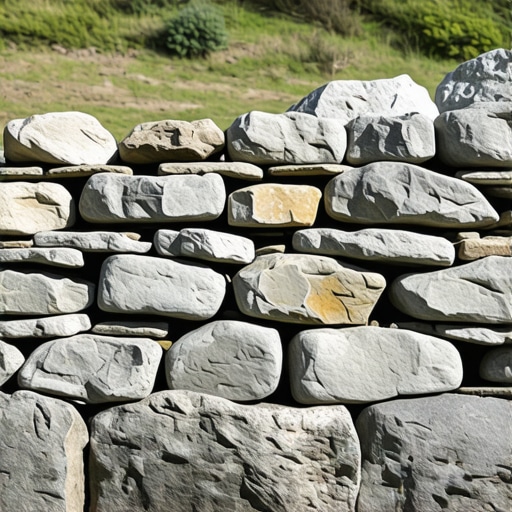
“A retaining wall doesn’t fail because of the stone; it fails because of the water trapped behind it.” – Hardscape Engineering Axiom
How much modified gravel do I need for a patio base?
While not directly related to the drain, if you are fixing the yard to build a patio, you need 6 inches of compacted 21A or 3/4″ modified gravel for a standard pedestrian walkway. For every 100 square feet, you’ll need approximately 2.5 tons of gravel. Never use sand as a base; it shifts and washes out during the very rain events you are trying to manage. Drainage starts under the pavers, not just beside them.
The Maintenance: Keeping the System Alive
Every drainage system is a ticking clock. Eventually, fines (tiny soil particles) will find their way in. To extend the life of your $40 drain, you must maintain your lawn health. A thick stand of turf acts as a natural filter, slowing down surface water and trapping silt before it reaches your sump. Don’t scalp your grass. Keep it at 3.5 to 4 inches. This forces deeper root growth, which creates natural macropores in the soil—essentially ‘organic’ French drains.
- Inspect the grate after every 1-inch rain event.
- Remove any leaf litter or mulch that has washed over the entry point.
- If the water stands for more than 12 hours inside the bucket, the surrounding soil is likely saturated, or the fabric is blinded by silt.
- Flush the system with a garden hose once a year to clear minor sediment.
- Keep ‘mulch volcanoes’ away from the area; moving mulch will clog the system instantly.
Landscaping is about managing energy. Water is energy. You can’t stop it, but you can direct it. By using this vertical sump method, you are working with the geology of your property rather than fighting it. It’s cheap, it’s effective, and it saves your foundation from the slow creep of hydrostatic damage. Don’t skip the fabric. Don’t skip the washed stone. Get to work.
![Build a $250 Stone Retaining Wall [DIY 2026]](https://lawnmajesty.com/wp-content/uploads/2026/06/Build-a-250-Stone-Retaining-Wall-DIY-2026.jpeg)