
Why You Should Never Use Landscape Fabric Under Mulch
The Suffocation of the Rhizosphere
Landscape fabric under mulch creates an artificial, semi-permeable membrane that drastically reduces the gas exchange between the atmosphere and the soil, leading to a build-up of carbon dioxide and a depletion of oxygen in the root zone. This anaerobic environment effectively chokes the life out of the rhizosphere, the critical area of soil surrounding plant roots where biology happens.
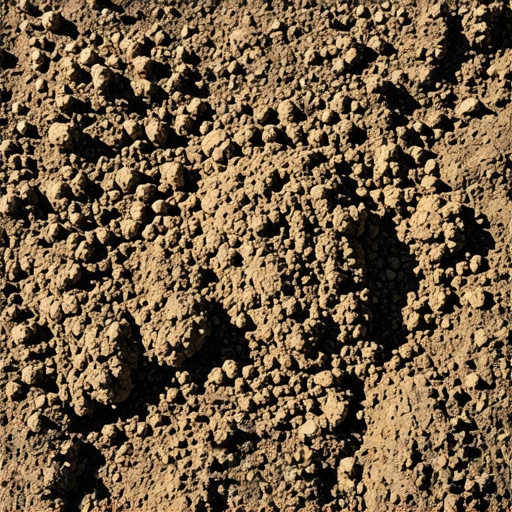
I always drill into my new crew members: if you don’t fix the soil grading first, every plant you put in the ground is just expensive compost. I have seen countless landscapes where a ‘pro’ laid down rolls of heavy-duty weed barrier, thinking they were doing the client a favor. What they actually did was build a plastic coffin for the yard. Within three years, that soil is gray, compacted, and smells like a stagnant swamp. You can’t cheat biology with a polypropylene shortcut. If the soil can’t breathe, the plants can’t thrive. It is that simple. When you peel back that fabric, you do not see healthy, crumbly soil with a high Cation Exchange Capacity (CEC). You see a hard-packed surface that resists water and kills off the mycorrhizal fungi networks that are essential for nutrient uptake.
“Soil structure is the arrangement of soil particles into aggregates. The use of impermeable or semi-permeable barriers can lead to the collapse of these aggregates, resulting in severe soil compaction and reduced biological activity.” – Penn State Extension Soil Management Guide
The Weed Seedbed Irony
The primary reason homeowners install landscape fabric is to stop weeds, but this method backfires because organic mulch (like wood chips or bark) eventually breaks down into a thin layer of fine compost sitting directly on top of the fabric. This layer becomes a perfect, nutrient-rich seedbed for wind-blown weed seeds, allowing them to germinate and send their roots directly through the weave of the fabric. Once a weed root penetrates the fabric, it is nearly impossible to pull out. You end up with a weed that is literally anchored into the structural mesh of your landscape. Instead of pulling a weed out of loose soil, you are fighting against the tensile strength of the fabric itself. This results in the fabric being ripped out of the ground, creating a messy, shredded plastic nightmare that looks terrible and functions even worse.
Does landscape fabric stop all weeds?
No, landscape fabric only prevents perennial weeds from emerging from below the surface for a limited time, while failing entirely to stop annual weeds that germinate in the decomposing mulch sitting above the barrier. Over time, these weeds weave their root systems into the fabric itself.
The Forensic Autopsy: What 5-Year-Old Fabric Looks Like
When we perform a forensic autopsy on a failing landscape, the evidence against fabric is overwhelming. We find root girdling, where the roots of trees and shrubs grow laterally along the top of the fabric because they cannot dive deep into the oxygen-starved soil. These roots become tangled in the plastic, and as they grow in diameter, they eventually choke themselves out. We also see hydrophobic soil. Water doesn’t just pass through the fabric; it often beads up or runs off the surface because the pores of the fabric have been clogged with fine silt and clay particles. This is a process called siltation. In a natural system, earthworms would move through the soil, creating macropores that allow for drainage. Under fabric, the earthworm population crashes because they cannot surface to feed on organic matter. The result is a compacted, dry, and dead sub-layer.
| Metric | Landscape Fabric + Mulch | Direct Organic Mulch (No Fabric) |
|---|---|---|
| Soil Gas Exchange (O2/CO2) | Very Low (Restricted) | High (Optimal) |
| Nitrogen Cycling | Stalled (No decomposition) | Active (Microbial driven) |
| Water Infiltration Rate | 0.5 inches per hour (Clogged) | 3.0+ inches per hour |
| Earthworm Population | Near Zero | High (Natural aeration) |
| Long-term Weed Control | Decreases annually | Increases with soil health |
Technical Alternatives for Weed Suppression
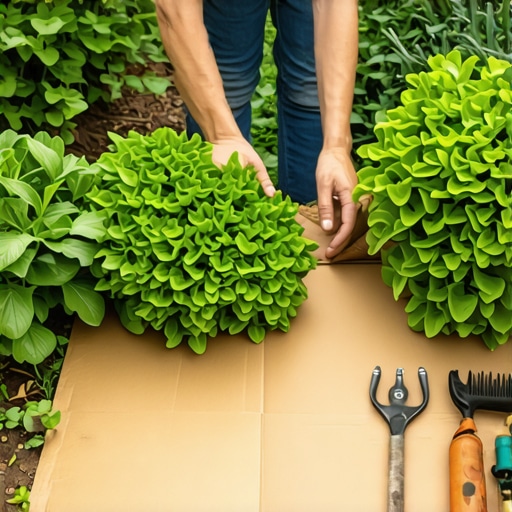
To achieve professional-grade results without destroying your soil, you must adopt a biological approach to weed suppression. This involves using a thick layer (3 to 4 inches) of arborist wood chips or double-ground hardwood mulch applied directly to the bare soil. This layer acts as a natural mulch that suppresses weeds by blocking light while simultaneously feeding the soil. As the bottom layer of mulch decomposes, it adds humus to the soil, which improves structure and water retention. If you have a particularly bad weed patch, use sheet mulching (cardboard) instead of fabric. The cardboard provides a temporary barrier that kills existing weeds but eventually rots away, allowing the soil to remain part of the living ecosystem.
How much mulch do I need for weed control?
To effectively suppress weeds without the use of landscape fabric, you must maintain a consistent mulch depth of 3 to 4 inches. This thickness is required to prevent photosynthesis in emerging weed seedlings while maintaining soil moisture and temperature for beneficial microbes.
“Successful weed management in ornamental beds relies on the maintenance of a mulch layer thick enough to exclude light from the soil surface, typically 3 to 4 inches of coarse organic material.” – Texas A&M AgriLife Extension
When Geotextiles Actually Belong in the Yard
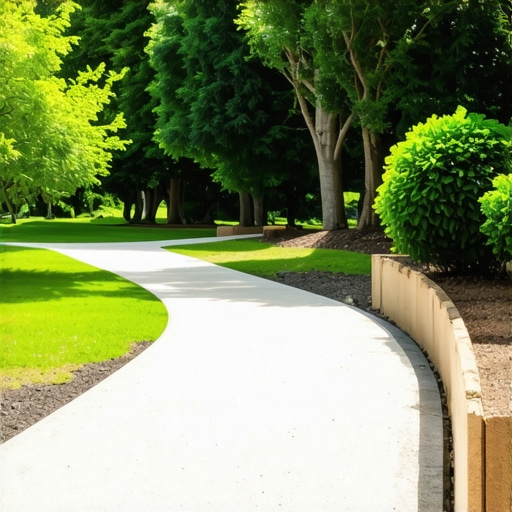
I am not saying geotextile fabrics have no place in landscaping. They are essential for hardscaping. When I build a paver patio or a retaining wall, I use heavy-duty non-woven geotextiles to separate the native soil from my modified gravel base. This prevents the soil from migrating into the gravel and compromising the structural integrity of the base. In these applications, we are not trying to grow anything; we are managing hydrostatic pressure and structural load. But in a garden bed, your goal is life. You cannot cultivate life under a sheet of plastic. If you want a garden that looks better in year five than it did on day one, throw the landscape fabric in the dumpster and start feeding your soil.
- Step 1: Remove all existing weeds by the root.
- Step 2: Test soil pH and adjust as necessary for your specific plant species.
- Step 3: Apply a 1-inch layer of high-quality compost.
- Step 4: Layer 3 to 4 inches of organic wood mulch on top.
- Step 5: Edge the beds deeply (3 to 5 inches) to prevent turf grass encroachment.
Stop looking for the easy way out. Real garden design is about working with the nitrogen cycle, not against it. Your soil is a living organism. Stop suffocating it. The cost of removing old, clogged fabric is three times the cost of the original installation. Do it right the first time. Feed the dirt, and the dirt will take care of the plants.

![Stop 2026 Leaf Wilt on Roses [Soil Fix]](https://lawnmajesty.com/wp-content/uploads/2026/07/Stop-2026-Leaf-Wilt-on-Roses-Soil-Fix.jpeg)