Why You Should Stop Raking Your Leaves Every Fall
The Forensic Autopsy of a Sterile Lawn
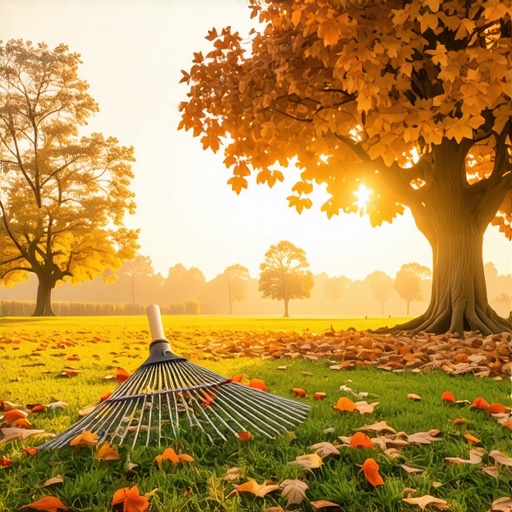
Every November, I see the same crime scene. Homeowners spend hundreds of dollars on plastic bags and hours of back-breaking labor to remove the very fuel their soil needs to survive the winter. I recently walked onto a property where the turf felt like concrete under my boots. The homeowner complained that no matter how much 10-10-10 fertilizer he threw down, the grass stayed thin and yellow. When I took a soil probe, I could barely penetrate the first two inches. The soil was devoid of life, stripped of its organic layer, and compacted to a point where the roots were literally suffocating. This is the result of decades of meticulous raking. You are not cleaning your yard; you are starving it. Soil is a living respiratory system, not a static carpet. When you remove every leaf, you break the nutrient cycle that has existed for millennia. It is a fundamental failure of lawn care management. Without that organic matter, the microbial population collapses, the soil structure tightens, and your lawn becomes a high-maintenance ward of the state, dependent entirely on synthetic inputs.
The Carbon-to-Nitrogen Ratio: Your Free Fertilizer
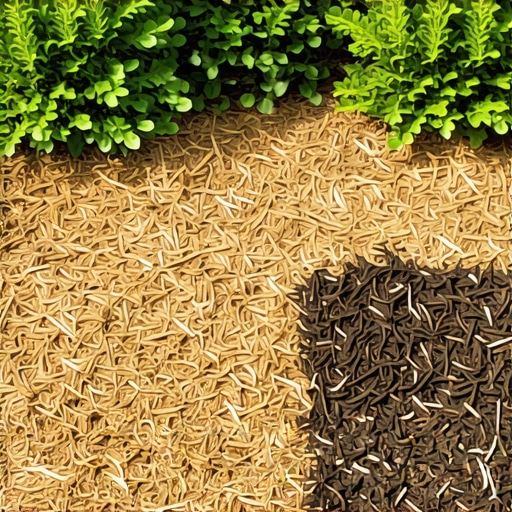
Mulching leaves back into your lawn provides a natural source of carbon and nitrogen that improves soil structure, increases water retention, and feeds beneficial microbes. By shredding leaves into small pieces, you accelerate the decomposition process, allowing nutrients to reach the root zone faster than traditional composting.
“Leaf mulch can provide up to 20 percent of the nitrogen requirements for a typical lawn, significantly reducing the need for synthetic fertilizers while improving soil organic matter content.” – Penn State Center for Turfgrass Science
I always drill into my new crew members: if you don’t fix the soil grading first, every plant you put in the ground is just expensive compost. But once that grade is right, the microbiology takes over. Leaves contain all the micronutrients trees spend all summer pulling from deep in the earth. Phosphorus, potassium, and calcium are locked in those cellular walls. When you rake them up, you are throwing away free money. I tell my apprentices that a leaf is just a slow-release fertilizer pellet that hasn’t been processed yet. If you leave them whole, they mat down and kill the grass. If you shred them, they become gold. It is about the surface area. A whole maple leaf is a shield; a shredded maple leaf is a meal. We use high-lift mulching blades to ensure the leaf particles are smaller than a dime. This allows them to settle into the thatch layer where the Basidiomycota fungi can begin the breakdown. Don’t skip this. It is the difference between a resilient turf and a fragile one.
How many leaves are too many for a lawn?
A healthy lawn can typically handle up to six inches of fallen leaves if they are shredded finely enough to disappear into the grass canopy. As long as the grass blades are still visible through the leaf mulch, the turf will continue to photosynthesize effectively while the microbes work below.
| Feature | Raked and Bagged Lawn | Mulched Leaf Lawn |
|---|---|---|
| Organic Matter % | Less than 1% | 3% to 5% |
| Earthworm Population | Minimal | High Density |
| Water Retention | Poor (High Runoff) | Excellent (Sponge Effect) |
| Synthetic Fertilizer Dependency | High | Low |
| Soil Compaction (PSI) | High Resistance | Low Resistance |
The Engineering of Soil Pore Space
Hardscaping and drainage are my bread and butter, so I look at a lawn through the lens of hydraulic conductivity. When you have bare soil or soil with zero organic matter, the pore spaces collapse. Rainwater doesn’t soak in; it sheets off, carrying your expensive topsoil with it. Leaf mulch acts as a biological buffer. It prevents the “capping” of the soil surface during heavy rain. I have seen $50,000 hardscape projects undermined because the surrounding lawn was so compacted it acted like a parking lot, directing all the hydrostatic pressure against the retaining walls.
“Excessive surface runoff caused by soil compaction is the primary driver of retaining wall failure in residential landscapes.” – ICPI Hardscape Engineering Standards
By keeping the leaves on the ground and letting the earthworms do the aeration for you, you maintain the soil’s ability to absorb water. Earthworms follow the food. If you provide leaf litter, they will tunnel through the subsoil, creating macro-pores that allow oxygen to reach the roots. It is a civil engineering solution provided by nature. We call it “biological tilling.” Stop fighting it. Your lawn needs that 1 inch of water per week to reach the roots, not the storm drain. When you mulch, you are building a reservoir.
Can leaves kill my grass over winter?
Whole leaves can kill grass by creating a damp, anaerobic layer that encourages snow mold and blocks sunlight, but shredded leaves actually protect the turf. Mulched leaves insulate the root crowns against extreme freeze-thaw cycles, preventing the “heaving” that can damage delicate root systems in early spring.
- Check mower blades for sharpness to ensure clean cuts.
- Set mower height to at least 3 inches for the final fall cuts.
- Mulch when leaves are dry to prevent clumping.
- Monitor the canopy to ensure leaf particles settle below the grass tips.
- Avoid mulching leaves from trees with active fungal blights.
The Microbiology of the Rhizosphere
We need to talk about the fungal-to-bacterial ratio. Turf grass thrives in a bacterial-dominant soil, but it needs a fungal component to break down complex lignins found in tree leaves. When you remove the leaves, you starve the fungi. This creates an imbalance that allows pathogenic organisms to take hold. I have seen entire lawns wiped out by Rhizoctonia solani (Brown Patch) because the soil was so biologically sterile it couldn’t fight back. Healthy soil is a battlefield. You want the good guys to have the tactical advantage, and that advantage is fueled by carbon. When we install a new garden design, we don’t just stick plants in the dirt. We inoculate the root balls with mycorrhizae. But that fungus won’t survive if there is no organic matter to sustain it. Raking is the equivalent of clearing out the pantry right before a long winter. It is tactical suicide for your backyard ecosystem. The nitrogen cycle depends on this decomposition. As the leaves break down, they provide a steady, low-level release of N-P-K that keeps the grass roots active even as the air temperature drops. This is how you get that early green-up in the spring without the surge growth caused by synthetic nitrogen. It will rot. Let it. That rot is the smell of a healthy engine. Use your mower, not your rake. Your soil will thank you in April. This is not just about aesthetics; it is about the long-term structural integrity of your land. Don’t be a mow-and-blow hack. Be a land manager.