How to Use Ornamental Grasses for Winter Interest
The Foundation of Winter Garden Design
Using ornamental grasses for winter interest requires a shift from viewing plants as temporary decor to treating them as structural engineering components. By selecting species with high lignin content and sturdy culms, you ensure the garden design retains its 3D form even under heavy snow loads or high wind shears. I always drill into my new crew members: if you don’t fix the soil grading and drainage first, every plant you put in the ground is just expensive compost. I’ve seen thousands of dollars in nursery stock rot out by February because the installer ignored the hydrostatic pressure and anaerobic conditions created by poor soil prep. You can’t just dig a hole and hope for the best; you have to understand the soil chemistry and physics if you want these grasses to stand tall when the mercury hits zero.
The Science of Rigid Culms and Winter Resilience
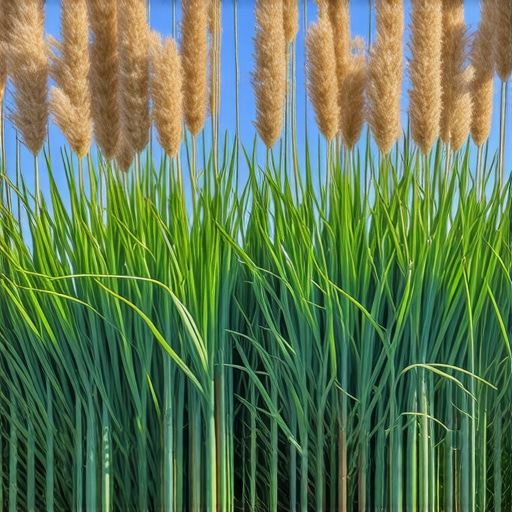
When we talk about winter interest, we are actually talking about the structural integrity of dead plant tissue. Most amateur landscapers pick grasses based on how they look in a gallon pot at the store in May. That is a mistake. To survive a harsh winter without collapsing into a mushy mess, you need to look at the vascular structure of the plant. Grasses like Calamagrostis x acutiflora ‘Karl Foerster’ are the gold standard because their stems are reinforced with enough silica to act like organic rebar. They don’t just sit there; they provide a vertical rhythm that breaks up the bleak, flat horizon of a dormant lawn care zone. If you choose a weak-stemmed variety, the first heavy sleet will flatten it, and your ‘winter interest’ becomes a soggy mat that invites voles and fungal pathogens. [image]
“The success of ornamental grasses in the winter landscape is directly proportional to the plant’s ability to resist lodging, which is often a function of both species selection and proper nitrogen management during the growing season.” – University of Missouri Extension
How much modified gravel do I need for a patio base near grass beds?
To calculate the modified gravel needed for a stable hardscape base, you must multiply the square footage by the depth (usually 4-6 inches for pedestrian paths) and divide by 27 to get cubic yards. Proper hardscaping requires a compacted base that prevents water from migrating into the root zones of nearby ornamental grasses, which could cause crown rot during freeze-thaw cycles. Most contractors skip the sub-base compaction, and that’s why their pavers shift and their plants die. You need a 95% Proctor density on that stone if you want it to last through twenty winters.
Selecting Species for Mechanical Strength
Not all grasses are created equal when the frost hits. You have to categorize them by their mechanical properties. Heavy-hitters include the Panicum genus (Switchgrass) and Miscanthus (Maiden Grass). Switchgrass, specifically cultivars like ‘Northwind’, has a strictly upright habit that resists splaying. We use these as ‘biological fences.’ They catch the light in a way that green plants can’t, turning a translucent amber that glows during the low-angle winter sun. But you have to watch the USDA hardiness zones. If you’re in Zone 4 and you try to push a Zone 6 grass, the crown will freeze-kill because the cell walls aren’t equipped for that level of expansion. It’s simple biology. Don’t fight the zone; work with it.
| Grass Species | Winter Structure Rating | Typical Height (ft) | Soil Preference |
|---|---|---|---|
| Calamagrostis ‘Karl Foerster’ | Elite | 3-5 | Moist, Heavy Clay |
| Panicum ‘Northwind’ | High | 4-6 | Wide Range/Drought Tolerant |
| Schizachyrium ‘The Blues’ | Moderate | 2-4 | Well-Drained/Poor Soil |
| Miscanthus ‘Gracillimus’ | High | 5-8 | Loamy/Rich |
Do ornamental grasses stay green in winter?
Most ornamental grasses do not stay green; they enter a state of senescence where chlorophyll breaks down, revealing the structural carbon frame of the plant. This golden or tan hue is the primary aesthetic driver for winter landscaping, providing contrast against dark evergreens or grey hardscape elements. While some ‘evergreen’ sedges exist, the majority of high-impact winter grasses are warm-season varieties that go dormant. This dormancy is a survival mechanism. The plant pulls its energy down into the rhizomes or crown, leaving the top growth as a sacrificial barrier against the elements. If you cut them back in November, you’re exposing the crown to direct ice contact. That’s a rookie move. Keep the tops on until March.
The Engineering of the Root Zone
I’ve seen too many ‘mow-and-blow’ hacks throw these plants into a hole filled with cheap peat-based potting soil. Within a year, the peat decomposes, the plant settles three inches too deep, and the root flare is buried. This causes girdling and eventual death. In my firm, we analyze the Cation Exchange Capacity (CEC) of the site soil. If you have heavy clay, you don’t just add sand—that creates concrete. You add organic matter to break up the electrical bonds of the clay particles. We plant ‘high’—about an inch above the existing grade—to ensure that water sheds away from the crown. This is critical for Schizachyrium scoparium (Little Bluestem), which hates ‘wet feet’ in the winter. If that crown stays wet while frozen, the ice crystals will shred the dormant tissue.
“Structural failure in ornamental grasses during winter is frequently attributed to excessive nitrogen fertilization in late summer, which produces ‘soft’ growth that lacks the necessary lignin to support winter snow loads.” – American Society of Agronomy
The Installation Checklist for Winter Success
- Verify USDA Hardiness Zone: Ensure the plant is rated at least one zone colder than your location for safety.
- Check Root Flare: Never bury the crown; keep it slightly above the soil line to prevent rot.
- Assess Drainage: If water stands for more than 2 hours after rain, install a French drain or move the bed.
- Skip Late-Season Fertilizer: Avoid high-nitrogen inputs after July to ensure the plant hardens off properly.
- Spacing for Airflow: Leave at least 3-4 feet between large clumps to prevent moisture-trapping microclimates.
- Mulch Management: Use 2-3 inches of shredded hardwood, but keep it away from the actual stems (no mulch volcanoes).
The Maintenance Reality: When to Cut
Pragmatism dictates the schedule. You don’t cut these back when they start to look ‘dead.’ You cut them back when the new green shoots just begin to emerge at the base, usually late February or early March depending on the latitude. We use power hedge trimmers for large stands and hand shears for the delicate stuff. The goal is to leave about 4-6 inches of stubble. This stubble acts as a cage that protects the tender new growth from late-season frost. If you scalp it to the ground, you’re inviting the frost to penetrate deep into the meristematic tissue. It’s about protection. Every choice in the field should be a calculated move to preserve the biological health of the specimen. Landscapes aren’t static pictures; they are evolving systems of growth and decay. Use the decay to your advantage. The sound of wind moving through dried Panicum is something you can’t get from a boxwood hedge. It’s audible architecture. Don’t over-manage it. Let it stand. Let it work.