How to Design a Low-Maintenance Rock Garden for Sun-Baked Slopes
Designing a rock garden on a sun-baked slope involves integrating angular boulders, permeable weed barriers, and deep-rooted xeric species to mitigate solar gain and erosion. Success depends on the angle of repose and establishing a gravity-locked base that prevents soil migration during peak precipitation events. Most DIY attempts fail because they treat the slope as a decorative surface rather than a structural challenge involving gravity and thermal mass.
The $30,000 Hardscape Autopsy: Why Most Slope Projects Slide
I recently got called out to tear up a $30,000 patio and rock garden that was literally migrating toward the neighbor’s fence. The previous contractor had used rounded river rock on a 35-degree incline. If you know anything about physics, you know that rounded stones have zero friction. They acted like ball bearings. Every time the sky opened up, the water lubricated the soil beneath, and the whole installation moved three inches. We found that they had used cheap black plastic sheeting instead of a heavy-duty non-woven geotextile. This created a slip-plane that trapped water, increased hydrostatic pressure, and eventually led to total structural failure. We had to excavate 40 tons of material and start from the subgrade up. It was a textbook case of a ‘mow-and-blow’ crew trying to play engineer. If you do not respect the angle of repose, gravity will win every single time. It is not a matter of if, but when.
“A retaining wall doesn’t fail because of the stone; it fails because of the water trapped behind it.” – Hardscape Engineering Axiom
The Mechanics of Slope Stabilization: Physics Before Plants
Before you buy a single plant, you must understand the soil mechanics of your slope. A sun-baked slope faces two primary enemies: high-velocity runoff and intense solar radiation. When soil dries out on a slope, it loses its cohesive properties, making it susceptible to wind and water erosion. You are dealing with a vertical-to-horizontal ratio that dictates your stone placement. For most residential slopes, an angular stone with a size of 6 to 12 inches is the minimum required to create an interlocking matrix. This matrix breaks the momentum of rainwater, forcing it to percolate into the soil rather than stripping the topsoil. Soil compaction is another factor. I have seen crews skip the plate compactor because ‘the slope is too steep.’ If you do not compact your base to at least 95 percent Proctor density, your rock garden will settle unevenly, creating pockets where water will pool and rot your root systems. You are building a structural system, not a flower bed. Every stone must be placed with its heaviest side down and at least one-third of its mass buried into the slope to anchor it against gravity.
How do I stop soil from washing away on a steep hill?
To stop soil erosion on a steep hill, you must install **terraced stone anchors** and use **non-woven geotextile fabric** to separate the soil from the rock mulch. Planting **deep-rooted groundcovers** such as creeping juniper or sedum helps bind the soil particles through their extensive root networks. High-velocity water must be diverted using a **French drain** or a swale at the top of the incline to prevent surface scouring during heavy rain.
Material Comparison for High-Heat Slopes
Not all rocks are created equal when it comes to thermal mass and stability. In a sun-baked environment, certain stones will reflect heat and scorch your plants, while others will absorb and radiate it throughout the night. I prefer using local granite or limestone because they offer the sharp, angular edges necessary for mechanical interlock. Avoid slate or shale on steep inclines as they tend to flake and slide. The following table breaks down common materials used in rock garden engineering:
| Material Type | Angular Index | Thermal Retention | Erosion Resistance | Best Use Case |
|---|---|---|---|---|
| Angular Granite | High | Moderate | Excellent | Steep structural slopes |
| Limestone Rip-Rap | High | Low (Reflective) | High | High-heat south-facing hills |
| River Rock | None | High | Poor | Flat drainage swales only |
| Lava Rock | High | Extreme | Moderate | Small aesthetic pockets |
The Biological Selection: Choosing Survivors, Not Victims
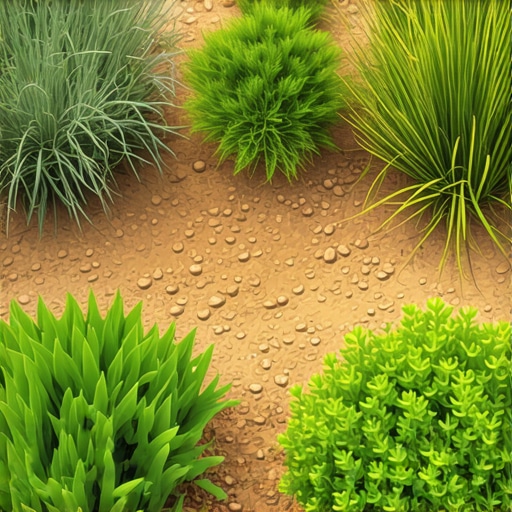
When you are planting on a sun-baked slope, you are essentially creating a high-altitude micro-climate. The soil will be hotter and drier than the surrounding lawn. You need plants with sclerotic leaves (thick and waxy) or tomentose foliage (hairy) to reduce transpiration. This is where most homeowners fail. They go to a big-box store and buy whatever looks pretty in a 1-gallon pot. Those plants were raised in a greenhouse with 100 percent humidity and daily liquid fertilizer. Putting them on a sun-blasted slope is a death sentence. You want nursery stock that has been ‘hardened off’ and is rated for at least one USDA zone warmer than your current location to account for the heat reflected from the rocks. Focus on the root flare. If you bury the crown of a xeric plant too deep in a rock garden, the trapped heat and moisture will cause stem rot within six months. I drill this into my crew: plant high or the plant will die. This is especially true for lavender, thyme, and rosemary, which are staples of the rock garden palette.
“Effective erosion control on slopes exceeding 15 percent requires a combination of mechanical stabilization and vegetative cover to manage runoff velocity.” – USDA Natural Resources Conservation Service
What are the best rocks for a sunny rock garden?
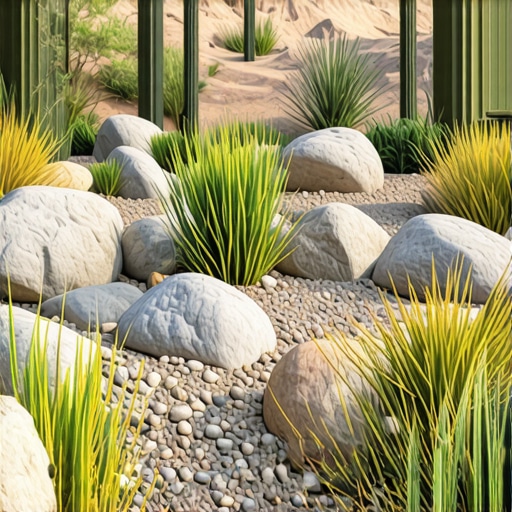
The best rocks for a sunny rock garden are **weathered limestone** or **decomposed granite boulders** because of their high friction coefficient and neutral thermal properties. These rocks provide stable planting pockets and do not reach the extreme temperatures of dark volcanic rock, which can desiccate the root systems of nearby perennials. Use **angular stone** rather than rounded cobble to ensure the garden does not shift over time.
The Ground-Up Installation Protocol
Follow this checklist to ensure your rock garden survives the first five years without sliding into your patio. Do not skip steps. 80 percent of the durability of this project is invisible once finished.
- Site Excavation: Remove all turf and 4 inches of topsoil. You need a clean, mineral-heavy subgrade.
- Grade Check: Use a transit level to identify any areas where water will naturally collect. Install 4-inch perforated HDPE pipe if drainage is an issue.
- Fabric Placement: Lay down 4-ounce non-woven geotextile. Overlap seams by at least 12 inches and pin them every 2 feet with 6-inch sod staples.
- Boulder Anchoring: Place your largest ‘keystone’ boulders at the base of the slope. Bury them 30 to 50 percent into the ground. These act as the foundation for everything above.
- Infill: Use a 50/50 mix of native soil and coarse sand or expanded shale to fill the pockets between rocks. Do not use potting soil or heavy organic compost; it will shrink and leave voids.
- Planting: Cut an ‘X’ in the fabric for each plant. Tease the roots and ensure the crown sits 1 inch above the final rock mulch level.
- Mulching: Apply 2 to 3 inches of 1-inch angular gravel mulch. This acts as a vapor barrier and further stabilizes the slope.
The First Year: Establishing Dominance Over the Elements
Your rock garden is most vulnerable in the first twelve months. Until the root systems have knit the soil and the rocks together, you must monitor for ‘piping’—small holes where water is finding a way under your fabric. If you see them, pack them with crushed stone immediately. Watering should be deep and infrequent. You are trying to force the roots to chase the water table down 12 to 18 inches. Shallow watering creates weak plants that will shrivel the first time your local temperature hits 95 degrees. Weed management is also critical. Even with fabric, wind-blown seeds will land in your rock mulch. Pull them while they are small. If you let a tap-rooted weed like thistle get established in your rock matrix, you will have to move boulders to get the root out. It will rot if you leave it. Stay on top of it. A well-engineered rock garden is a legacy project, but it requires a disciplined eye in the beginning. Use these metrics and your slope will stand for decades.
![Best 2026 Groundcover for Steep Slopes [No-Mow]](https://lawnmajesty.com/wp-content/uploads/2026/07/Best-2026-Groundcover-for-Steep-Slopes-No-Mow.jpeg)
![Building a Hidden Trash Can Screen [DIY 2026]](https://lawnmajesty.com/wp-content/uploads/2026/09/Building-a-Hidden-Trash-Can-Screen-DIY-2026.jpeg)