7 Fragrant Vines for a Scented Pergola
The Engineering Logic of Scented Vertical Landscapes
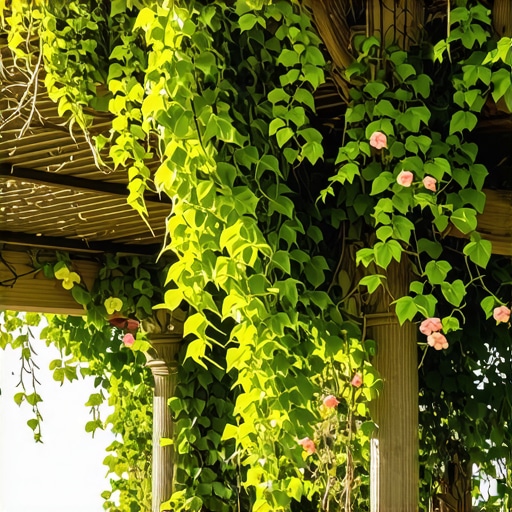
Successful fragrant vine integration on a pergola requires a deep understanding of structural load bearing, soil microbiology, and aromatic VOC emission cycles to ensure the installation does not fail under its own weight or biological stress. I always drill into my new crew members: if you don’t fix the soil grading first, every plant you put in the ground is just expensive compost. Most homeowners see a pretty flowering vine and think about the smell, but they forget that a mature Wisteria can exert enough torque to pull a poorly anchored 4×4 post clean out of its footing. We treat vertical gardening as a branch of civil engineering. Before a single root hits the dirt, we assess the bulk density of the soil and the hydrostatic pressure of the surrounding grade. If your drainage is stagnant, your Rhizobium bacteria die, nitrogen fixation stops, and your expensive vines become a buffet for pathogens. We only install specimens that have been hardened off and show clear root flare visibility at the nursery container level. [image_placeholder_1]
“A retaining wall doesn’t fail because of the stone; it fails because of the water trapped behind it.” – Hardscape Engineering Axiom
1. Wisteria Sinensis (Chinese Wisteria)
Wisteria sinensis is a powerful woody climber known for its intense aromatic racemes and aggressive twining habit that requires heavy-duty structural support. This is not a plant for a flimsy vinyl kit. You need 6×6 pressure-treated posts or steel columns. The scent is a heavy, musky sweet profile that peaks in mid-spring. To maximize bloom count, you must manage the carbon-to-nitrogen ratio in the soil; too much nitrogen leads to all leaf and no flower. We prune these twice a year to maintain lateral spur development. It will rot a weak structure. Don’t skip the pruning.
2. Trachelospermum Jasminoides (Star Jasmine)
Star Jasmine acts as a high-density evergreen screen that produces a massive olfactory payload of sweet, floral notes during the late spring and summer months. It is hardy in USDA Zones 8-10. We use this often in hardscaping projects to soften the transition between stone patios and vertical structures. It requires a well-drained sandy loam with a pH level between 6.0 and 7.0. Because it is a scandent shrub, it needs initial training on galvanized wire tensioners to reach the top of the pergola. It is a reliable workhorse for privacy.
3. Lonicera Periclymenum (Common Honeysuckle)
Lonicera periclymenum provides a complex nocturnal fragrance that increases in intensity at dusk to attract sphingid moth pollinators. Avoid the invasive Japanese variety. The ‘Graham Thomas’ or ‘Serotina’ cultivars are professional-grade choices. These vines prefer their root zones in the shade and their foliage canopy in the sun. We achieve this by placing flagstone pavers or low-growing perennials over the root flare to maintain soil moisture tension. Deep, infrequent watering is the rule here. 1 inch per week.
4. Clematis Armandii (Evergreen Clematis)
Clematis armandii is a vigorous evergreen climber that emits a distinct almond-like scent from its white cruciform flowers in early spring. This vine uses petiole twining to climb, meaning it needs a mesh or thin trellis attached to your pergola posts. It is sensitive to Clematis wilt, so we always plant the root ball 2-3 inches deeper than the nursery line to encourage adventitious budding from below the soil surface. This is a technical move that saves the plant if the top growth gets hit by fungus. It needs space.
5. Rosa ‘New Dawn’ (Climbing Rose)
The Climbing Rose is a staple of garden design, providing a moderate spicy fragrance and repeat blooms throughout the season. Roses are heavy feeders. They require a high Cation Exchange Capacity (CEC) in the soil to process macro-nutrients like phosphorus and potassium. We install drip-line irrigation directly to the base to avoid wetting the foliage, which prevents Diplocarpon rosae (black spot). You must tie the canes horizontally to the pergola to break apical dominance and force more flower-bearing side shoots. It takes work.
6. Gelsemium Sempervirens (Carolina Jessamine)
Gelsemium sempervirens is a native early-season bloomer that provides a light, honey-like aroma and bright yellow funnel-shaped flowers. It is highly drought-tolerant once the root system is established. We use this in xeriscaping or low-maintenance lawn care transitions. Note that all parts of this plant are toxic if ingested; keep it away from livestock. Its tensile strength is lower than Wisteria, making it safer for lighter timber structures. It handles heat well.
7. Akebia Quinata (Chocolate Vine)
Akebia quinata offers a unique spicy-chocolate scent and semi-evergreen palmately compound leaves that provide excellent summer shade. This vine is a rapid colonizer. If you don’t manage the rhizomatous spread, it will jump from the pergola into your lawn and become a weed management nightmare. We recommend installing polyethylene root barriers if planting near sensitive turf areas. It is remarkably pest-resistant and thrives in partial shade where other vines might fail. Control its growth.
“The physiological success of a woody climber depends entirely on the mechanical strength of the supporting structure and the porosity of the rhizosphere.” – International Society of Arboriculture
How do you secure heavy vines to a wooden pergola?
To secure heavy woody vines like Wisteria, use heavy-duty galvanized eye bolts and 1/8 inch stainless steel aircraft cable. Avoid plastic ties which degrade under UV radiation. Create a tensioned grid that allows the vine to distribute its weight across the entire structural frame rather than a single point.
Which fragrant vine grows fastest in shade?
Akebia quinata and certain Lonicera species exhibit the highest photosynthetic efficiency in low-light conditions. While most flowering vines require 6+ hours of direct solar radiation to produce fragrant oils, Chocolate Vine will maintain dense foliage and moderate flowering in dappled shade. Ensure soil percolation rates are high to prevent root rot in cooler, shaded zones.
| Vine Species | Growth Rate | Scent Intensity | Structural Load |
| Wisteria sinensis | Extremely High | High | Critical/Heavy |
| Star Jasmine | Moderate | Extreme | Light/Medium |
| Honeysuckle | High | Medium | Medium |
| Clematis armandii | Moderate | Medium | Light |
| Climbing Rose | Slow/Moderate | High | Medium |
| Carolina Jessamine | Moderate | Light | Light |
| Chocolate Vine | Extremely High | Moderate | Medium |
- Perform a Soil Test: Check for pH balance and nutrient deficiencies before planting.
- Structural Audit: Ensure pergola posts are set in concrete footings below the frost line.
- Irrigation Setup: Install low-volume emitters to target the root zone directly.
- Pruning Schedule: Mark your calendar for dormant season pruning to maintain airflow.
- Mulching: Apply 3 inches of arborist wood chips to regulate soil temperature.