Stop 2026 Mulch Washout with This Simple Trench Edge Trick
The Anatomy of a Failed Garden Bed and Why Your Mulch Won’t Stay Put
Mulch washout occurs when surface water velocity exceeds the friction coefficient of the organic material, typically due to improper soil grading or the lack of a functional catchment basin. By implementing a 4-inch deep Victorian trench edge, you create a hydraulic break that traps moving debris and allows water to infiltrate the soil profile rather than sweeping across your turf grass.
I recently got called out to tear up a $30,000 patio that was sinking because the previous contractor failed to manage the hydrostatic pressure and surface runoff from the adjacent planting beds. The mulch was constantly washing over the pavers, but the real crime was underneath. Water was pooling against the modified gravel base because there was no escape route. The homeowner thought it was just an aesthetic mess; in reality, it was a slow-motion engineering disaster. This is why I tell my crews: if you don’t control the water, the water will control your profit margins. Landscapes are not static paintings. They are dynamic drainage systems. When mulch migrates onto your lawn, it is not a ‘mulch problem.’ It is a grade and edge failure. Stop looking for ‘heavy’ mulch and start looking at your soil morphology.
“A retaining wall doesn’t fail because of the stone; it fails because of the water trapped behind it.” – Hardscape Engineering Axiom
The Science of Surface Tension and Mulch Migration
Every piece of mulch has an angle of repose. This is the steepest angle at which the material remains stable without sliding. When rain hits a flat bed, it creates a sheet-flow effect. Without a physical barrier or a trench reservoir, that water gains enough kinetic energy to lift wood chips and transport them. Hardwood mulch that is triple-shredded has interlocking fibers that provide better mechanical stability than pine bark nuggets, which are essentially tiny boats designed to float away at the first sign of a summer storm. Use 40-pound per cubic foot density materials if you are dealing with a slope over 5 percent.
The Professional’s Choice: The Victorian Trench vs. Plastic Edging
Professional landscapers prioritize hand-cut trench edges because mechanical plastic or metal edging often fails during freeze-thaw cycles, leading to heaving and frost-jacking. A spade-cut edge at a 45-degree angle provides a 90-degree vertical wall against the turf, which severs rhizomatous grass roots and prevents turf encroachment into the garden beds.
| Edging Method | Installation Depth | Durability | Root Control |
|---|---|---|---|
| Plastic Strip | 2-3 inches | Low (Frost Heave) | Poor |
| Metal (Steel/Alum) | 4 inches | Medium | Moderate |
| Victorian Trench | 4-5 inches | High (Renewable) | Excellent |
| Stone Border | Varies | High | Poor (Gaps) |
How deep should a landscape trench edge be?
To effectively stop mulch washout and Bermuda grass or Kentucky Bluegrass runners, a trench edge must be exactly 4 to 6 inches deep. A shallower cut allows water to jump the gap, while a deeper cut risks damaging the fine feeder roots of established shrubs and trees. Measuring with a trenching spade ensures consistency across the entire bed perimeter.
Why does my mulch wash away every time it rains?
Your mulch washes away because the infiltration rate of your soil is lower than the precipitation rate, leading to surface runoff. In compacted clay soils, water cannot move downward, so it moves laterally, carrying your expensive carbon source with it. Increasing soil porosity through core aeration or the addition of organic matter can mitigate this, but the trench edge remains the primary physical defense.
Step-by-Step: The Trench Edge Trick
Do not use a power edger for the initial cut. You need the precision of a sharpened spade. First, flag your line. Use a garden hose to create natural, flowing curves. Avoid sharp 90-degree angles; they are a nightmare for mower clearance. Second, drive your spade vertically into the turf to a depth of 5 inches. This is your severing cut. Third, move your spade 4 inches into the bed and drive it in at a 45-degree angle toward the bottom of your first cut. You are essentially removing a triangular wedge of soil.
- Step 1: Clear the perimeter of all existing debris and old, rotted mulch.
- Step 2: Cut the vertical wall against the grass side.
- Step 3: Create the 45-degree slope back into the bed.
- Step 4: Remove the soil wedges and top-dress them into low spots in the lawn.
- Step 5: Fill the bed with 2 to 3 inches of triple-shredded hardwood mulch, keeping the mulch 1 inch below the lawn height.
“Applying mulch thicker than 3 inches can lead to oxygen deprivation in the soil and promotes the growth of fungal mats that repel water.” – Penn State Extension
The Physics of the Catchment Basin
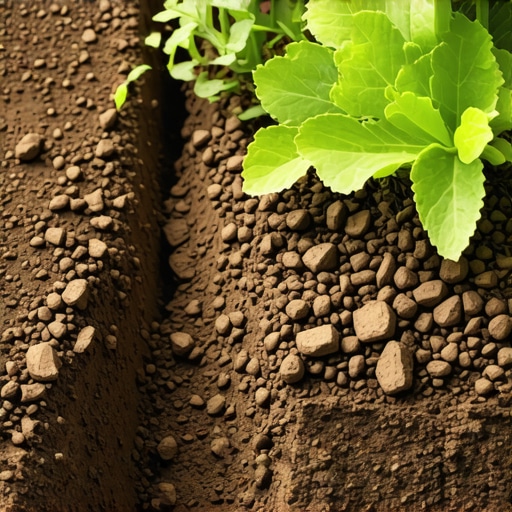
The trick works because of hydraulic deceleration. As water moves toward the edge of the bed, it falls into the 4-inch deep trench. This drop kills the water’s forward momentum. The water then pools in the bottom of the V-cut, where it has more time to soak into the subsoil. Any mulch that was moving with the water settles at the bottom of the trench instead of floating onto the grass. It is simple civil engineering applied to a flower bed. It works. Don’t skip it.
Check your edges every spring. Sedimentation will eventually fill the bottom of the trench. You don’t need to re-dig the whole thing every year, but a quick clean-out pass with a hand-held hoe will maintain the hydraulic capacity of the system. If you see mycelium growth (white spider-web looking stuff) in your mulch, don’t panic. That is beneficial fungi breaking down the carbon. However, if that fungi creates a hydrophobic crust, you must rake the mulch to break the surface tension, otherwise, the water will just skip right over your new trench and cause a washout anyway.
How to Handle Steep Slopes
If your yard looks like the side of a mountain, a trench edge alone won’t save you. You need jute netting or erosion control blankets pinned beneath the mulch. Use 6-inch staples to secure the netting into the mineral soil. This provides a structural matrix that holds the mulch in place while the roots of your groundcovers (like creeping phlox or sedum) establish themselves. In these scenarios, I also recommend using a larger aggregate mulch or even river rock in high-flow channels.