Stop Overwatering Your 2026 Tomatoes: 3 Signs of Root Rot
Stop Overwatering Your 2026 Tomatoes: 3 Signs of Root Rot
I always drill into my new crew members: if you don’t fix the soil grading first, every plant you put in the ground is just expensive compost. You aren’t just digging a hole; you’re building a life-support system that requires constant gas exchange at the root level. Last season, I walked onto a job site where a homeowner had spent four figures on heirloom tomato starts only to watch them turn into a mushy, yellow mess within three weeks. They thought it was a nutrient deficiency. It wasn’t. They had effectively waterboarded their garden by ignoring the 25 percent air-to-soil ratio required for root respiration. When you saturate the rhizosphere, you displace oxygen, creating a tomb where anaerobic pathogens thrive. For the 2026 growing season, understanding the mechanics of soil drainage is the difference between a record harvest and a pile of rot.
The Anatomy of a Saturated Rhizosphere and Fungal Invasion
Root rot in tomatoes, primarily caused by waterborne pathogens like Phytophthora and Pythium, manifests through leaf chlorosis, wilting despite wet soil, and a putrid odor from the root zone. Detecting these signs early prevents total crop loss and soil contamination in 2026 gardens. These Oomycetes are not true fungi but water molds that swim through the soil pores using flagellated zoospores. When your soil moisture exceeds field capacity for more than 24 hours, these pathogens find their targets. This is not a cosmetic issue; it is a vascular systemic collapse. The plant’s ability to transport water is severed by the very water it is sitting in. It is a biological irony that many landscapers fail to grasp until the crop is dead.
“Soil oxygen is essential for root respiration and the uptake of nutrients; when water fills the pore spaces, the roots effectively suffocate, leading to opportunistic infections by Pythium and Phytophthora species.” – Texas A&M AgriLife Extension Service
Sign 1: The False Thirst Paradox and Vascular Failure
When tomatoes exhibit wilted stems that do not recover overnight while the soil remains saturated, it indicates the xylem is failing due to root decay. This vascular collapse prevents water transport, causing the plant to starve for moisture even in a flood. You will see the upper foliage drooping during the heat of the day. A novice gardener will see a wilting plant and reach for the hose. Don’t. If the soil is damp two inches below the surface and the plant looks thirsty, the roots are already compromised. The fine feeder roots, which are responsible for the bulk of water absorption, are the first to die. Without these microscopic structures, the plant is a cut flower sitting in a pot of mud. We measure this failure in the turgor pressure of the stems. Once that pressure drops below critical levels, the cell walls collapse. It is a one-way trip for most 2026 cultivars.
How can I tell if my tomato plant has root rot or just needs water?
Perform the finger test: insert your finger three inches into the soil. If the medium feels like a wrung-out sponge or wetter, yet the plant is wilting, you have root rot. True thirst occurs when the soil is dusty or hard-packed, and the plant usually recovers within an hour of deep irrigation.
Sign 2: The Scent of Anaerobic Decay and Cortex Sloughing
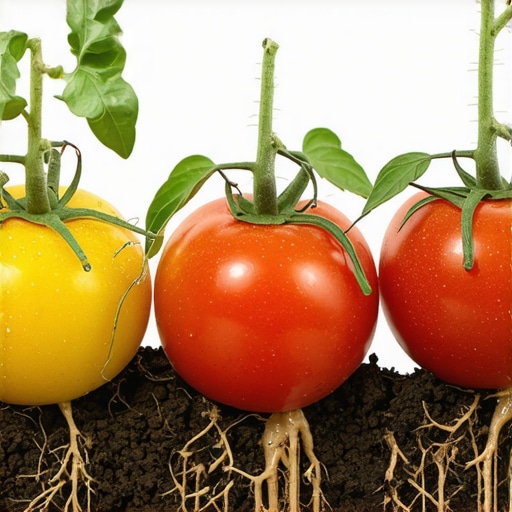
Healthy tomato roots should be firm and white; roots suffering from rot will appear slimy, brown, or black and easily slide off the inner core. This cortex sloughing is accompanied by a foul, sulfurous smell caused by anaerobic bacteria thriving in compacted, waterlogged dirt. This is the forensic evidence of a dying garden. If you pull a plant and the outer layer of the root slides off like a wet noodle, leaving behind a thin, wiry thread, the plant is medically dead. The smell comes from hydrogen sulfide gas, a byproduct of bacteria that only exist where oxygen is absent. In heavy clay soils common in the Southeast or parts of the Midwest, this happens faster than in sandy loam. You must maintain a soil pH between 6.2 and 6.8 to optimize nutrient availability, but no amount of lime will fix a lack of oxygen. Check your drainage. If water stands for more than 30 minutes after a rain, your 2026 tomato bed is a swamp. [image placeholder]
“Fungal pathogens thrive in soils where drainage is impeded, as the lack of gas exchange weakens the plant’s natural immune response, making it susceptible to damping off and crown rot.” – Penn State Extension
Sign 3: Stunted Growth and Ethylene-Induced Abscission
Excess water triggers the production of ethylene gas in the root zone, leading to stunted terminal buds and premature fruit drop, or abscission. If your 2026 tomatoes stop growing mid-season despite heavy watering, the plant is likely suffocating at the microbial level. Ethylene is a stress hormone. In a waterlogged environment, the plant produces it in excess, which causes the leaves to twist downward in a process called epinasty. This is often confused with viral infections or herbicide drift. However, look at the nodes. If the distance between nodes is shrinking and the new growth is pale yellow, the roots have stopped processing nitrogen. The plant is essentially shutting down non-essential functions to survive the flood. Fruit will drop while still green and small because the plant cannot support the metabolic cost of ripening.
Can a tomato plant recover from root rot once it starts?
Recovery is rare but possible if less than 20 percent of the root mass is affected. You must immediately stop irrigation, improve drainage by digging peripheral French drains, and potentially apply a biological fungicide containing Trichoderma harzianum to combat the pathogens. In most cases, it is better to remove the plant and solarize the soil.
The Engineering Solution: Fixing the 2026 Growing Environment
To prevent these issues, you must look at your garden as a civil engineer would look at a building site. Soil texture dictates the movement of water. Sand has large pores and high permeability; clay has microscopic pores and high water retention. For a successful tomato crop, you need a mixture that balances these. If you are building raised beds, do not use 100 percent compost. It will settle, compact, and become anaerobic. Use a mix of 60 percent screened topsoil, 30 percent organic compost, and 10 percent coarse perlite or expanded shale. This ensures that even during a heavy 2026 storm, the water can exit the root zone via gravity. Before you plant, call 811 to ensure you aren’t digging over utility lines that could be damaged by drainage improvements.
| Soil Component | Drainage Speed | Oxygen Retention | Recommended Use |
|---|---|---|---|
| Heavy Clay | Very Low | Poor | Foundation stabilization only |
| Sandy Loam | High | Excellent | Primary garden beds |
| Pure Compost | Moderate | Varies (Compacts) | Soil amendment only |
| Perlite/Shale | Instant | Maximum | Aeration in containers |
The 2026 Soil Health Checklist
- Test soil pH and ensure it is within the 6.0-7.0 range for optimal microbial activity.
- Measure drainage by digging a 12-inch hole, filling it with water, and timing how long it takes to empty. (Should be under 4 hours).
- Check for the presence of earthworms; their tunneling provides natural aeration.
- Inspect irrigation emitters to ensure they aren’t leaking or pooling water at the base of the stems.
- Evaluate the root flare of established plants; never bury the stem deeper than the first set of true leaves unless the soil is exceptionally well-drained.
Stop treating your garden like a hobby and start treating it like a biological system. Water management is the hardest part of the job. It requires more discipline to keep the hose off than it does to turn it on. Deep, infrequent watering is the rule. You want to force those roots to chase the water table down, not sit on the surface waiting for a handout. One inch of water per week is the standard. If you exceed that without the drainage infrastructure to back it up, you are just waiting for the rot to set in. Fix your soil. Save your tomatoes. Don’t be the homeowner who calls me to dig up a dead garden in July.