
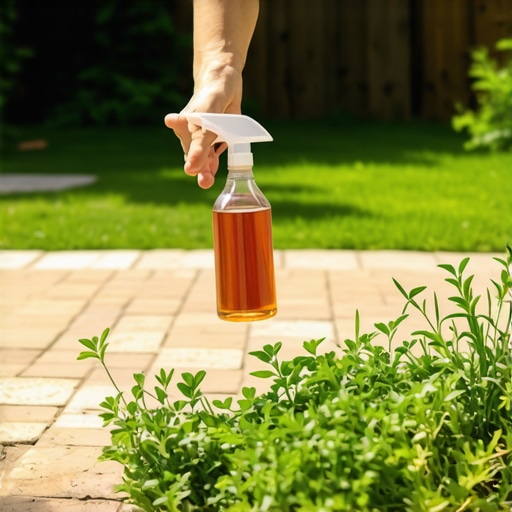
The $20 Vinegar Trick to Kill Patio Weeds Permanently
The Hardscape Autopsy: Why Patios Fail and Weeds Win
The $20 vinegar trick involves using 20% horticultural-grade acetic acid mixed with a surfactant like dish soap to desiccate weed foliage instantly. For permanent results, this must be followed by clearing debris and re-installing polymeric sand to eliminate the organic environment where seeds germinate. If you do not address the substrate, you are just killing time.
I recently got called out to tear up a $30,000 patio that was sinking because the previous contractor skipped the drainage layer. The homeowner was complaining about weeds, but the weeds were just the symptoms. The real disease was the two inches of organic silt that had accumulated in the joints because the base-layer compaction was non-existent. When I dug it up, the modified gravel was saturated. Hydrostatic pressure was pushing the pavers up, and the gap was being filled by wind-blown dust. That dust is the perfect nursery for Poa annua and crabgrass. You can spray all the chemicals in the world, but if you have a biological medium sitting between your pavers, you have a garden, not a patio. It will rot. Don’t skip the excavation depth. Weeds are lazy; they only go where the environment allows them to thrive. If your patio is built to ICPI standards, there is no place for them to live.
“A retaining wall doesn’t fail because of the stone; it fails because of the water trapped behind it.” — Hardscape Engineering Axiom
The Chemistry of the $20 Vinegar Trick
Horticultural vinegar is not the 5% acidity stuff you find in your kitchen cabinet. You need 20% or 30% acetic acid. This concentration is a non-selective herbicide that works by dissolving the cell membranes of the plant on contact. This leads to rapid desiccation. It is purely mechanical at a microscopic level. The surfactant—usually a high-phosphate dish soap—is critical because it breaks the surface tension of the weed’s waxy cuticle. Without it, the vinegar just beads off. You must apply this on a still, sunny day when the temperature is above 70 degrees. The UV light accelerates the cellular breakdown. Beware of the overspray. This stuff doesn’t care if it’s hitting a dandelion or your prize-winning boxwoods. It kills everything it touches. Also, be aware that high-concentration acetic acid can etch the surface of natural stone, particularly limestone and travertine. It reacts with the calcium carbonate. Use it with precision.
How do I mix vinegar for patio weeds?
To create the most effective solution, mix one gallon of 20% horticultural vinegar with two ounces of liquid dish soap and one cup of salt. The salt acts as a soil sterilizer, but use it sparingly as it can lead to efflorescence on your pavers. This white, powdery salt deposit is a nightmare to clean and can cause long-term spalling in concrete products. I recommend skipping the salt if you plan on re-sanding the joints immediately. The vinegar alone is enough to kill the foliage. If you use salt, you are making that specific patch of earth toxic to all life for years. That might sound good for a patio, but remember that salt migrates with groundwater. It will find your lawn. It will kill your grass. Stick to the vinegar and soap for most applications.
| Treatment Method | Initial Cost | Efficacy (0-10) | Environmental Impact | Labor Intensity |
|---|---|---|---|---|
| Household Vinegar (5%) | $3.00 | 3 | Low | High (Multiple Apps) |
| Horticultural Vinegar (20%) | $20.00 | 9 | Moderate | Low |
| Glyphosate (RoundUp) | $25.00 | 10 | High | Low |
| Propane Torch | $50.00 | 8 | Low | Moderate |
| Manual Extraction | $0.00 | 5 | Zero | Extreme |
Does vinegar damage patio pavers?
Yes, vinegar can damage certain types of patio pavers if left to sit. Concrete pavers and natural stones like limestone, marble, and travertine are sensitive to acids. The acetic acid reacts with the alkaline minerals in the stone, leading to surface etching and loss of color. To prevent this, spray the weeds directly using a targeted nozzle and rinse the surrounding stone with water after 15 minutes. Never use vinegar on a brand-new paver installation until the efflorescence cycle has completed, usually after one full season. If you are working with slate or granite, the risk is lower, but caution is still mandatory. Test a small, inconspicuous area first. If it bubbles, stop immediately. That bubble is the stone literally dissolving.
The Structural Fix: Polymeric Sand and Compaction
Killing the weed is only 20% of the battle. The other 80% is preventing the next one. This requires a forensic approach to joint maintenance. Once the weeds are dead and brittle, you must remove them entirely, including the root mass. Use a stiff-bristled wire brush or a pressure washer, but be careful not to blow out the bedding sand beneath the pavers. If you undermine the bedding layer, your pavers will shift. After the joints are clean and bone-dry, you must install polymeric sand. This is a mixture of graded sand and binders (polymers) that harden when exposed to water. It creates a semi-rigid joint that resists washouts and, most importantly, prevents weed seeds from finding a home. It is not a “set it and forget it” product. It requires precise installation. If you leave a haze on the pavers before wetting it, you will ruin the finish. Use a leaf blower to get every grain of sand off the surface before the misting phase.
“Jointing sand must comply with ASTM C144 standards to ensure proper interlocking and drainage within the pavement system.” — International Interlocking Concrete Pavement Institute (ICPI)
While the internet tells you to water every day, turf grass actually needs deep, infrequent watering—exactly 1 inch per week—to force roots to chase the water down. The same logic applies to patios, but in reverse. You want a dry environment in the joints. High-quality polymeric sand like those used in commercial hardscaping contains antimicrobial agents that inhibit moss and fungal growth. If your patio is constantly damp, you have a drainage problem, likely a lack of a 2% slope away from the house. A patio should never be perfectly level. It should be a plane that sheds water. If you see standing water, your base is failing. No amount of vinegar will fix a 1-inch dip in the center of your living space.
The 5-Step Patio Restoration Checklist
- Phase 1: Desiccation. Apply 20% acetic acid solution to active weeds during peak sunlight.
- Phase 2: Extraction. Remove all dead organic matter and old, fouled sand from the joints to a depth of at least 1 inch.
- Phase 3: Sanitization. Use a pressure washer to clear the vertical faces of the pavers, ensuring no root fragments remain.
- Phase 4: Re-Sanding. Sweep in high-performance polymeric sand while the pavers are 100% dry. Vibrate the pavers to settle the sand.
- Phase 5: Activation. Mist the joints according to the manufacturer’s specific timing to set the polymers without washing them out.
Environmental Impact and Long-Term Maintenance
We need to talk about the soil microbiology. When you dump high-octane vinegar onto your patio, it doesn’t just vanish. It lowers the soil pH significantly in the immediate area. This can kill beneficial soil bacteria and mycorrhizal fungi that your surrounding landscape needs to survive. I see too many “pros” soak a patio and then wonder why the expensive Japanese Maple three feet away starts looking chlorotic. Use a targeted sprayer. Don’t be a hack. Landscaping is about applied biology. You are managing an ecosystem, even in the cracks of your bricks. If you maintain the integrity of your polymeric joints and keep the surface clear of organic debris (like grass clippings and fallen leaves), you won’t need the vinegar trick more than once every three years. The goal is to create a sterile, structural environment. Anything else is just gardening on your hands and knees. Wear gloves. 20% vinegar will burn your skin just as fast as it burns the weeds. This isn’t salad dressing; it’s an industrial tool. Treat it with respect, or it will bite you. Stay off the big-box store weed-and-feed and focus on the physics of your patio base. That is how you win the war.
![Stop Killing Your 2026 Boxwoods: 3 Blight Fixes [Tested]](https://lawnmajesty.com/wp-content/uploads/2026/07/Stop-Killing-Your-2026-Boxwoods-3-Blight-Fixes-Tested.jpeg)
![Why Your 2026 Boxwoods are Turning Yellow [3 Soil Rules]](https://lawnmajesty.com/wp-content/uploads/2026/05/Why-Your-2026-Boxwoods-are-Turning-Yellow-3-Soil-Rules.jpeg)