How to Prune Roses for Maximum Blooms Without Getting Pricked
Why Professional Rose Pruning is Essential for Plant Health and Flower Production
Rose pruning is a critical horticultural practice that redirects energy from old wood to new growth by breaking apical dominance. This process increases airflow, reduces fungal pathogens, and stimulates dormant buds to produce the heavy flower loads desired in professional garden design. It is not about aesthetics alone; it is about managing the vascular efficiency of the plant.
I always drill into my new crew members: if you don’t fix the soil grading first, every plant you put in the ground is just expensive compost. The same logic applies to pruning. I have seen million-dollar estates where the roses were hacked with dull shears, leaving jagged wounds that invited Botrytis and Cercospora. My apprentices learn early that a rose bush is a hydraulic system. If you do not understand how water and nutrients move through the xylem and phloem, you have no business holding a pair of bypass pruners. We are surgeons, not butchers. You need to understand the physics of the cut and the biology of the response. Most homeowners fail because they fear the plant. They snip at the tips, creating a ‘mulch volcano’ equivalent in the canopy, leading to a tangled mess of weak wood and zero airflow. You have to be aggressive. You have to be precise.
“Pruning is the most effective method for managing the growth and health of woody ornamentals by removing unproductive tissue and stimulating new, vigorous growth cycles.” – North Carolina State Extension
The Science of the Cut: Plant Physiology and Auxin Distribution
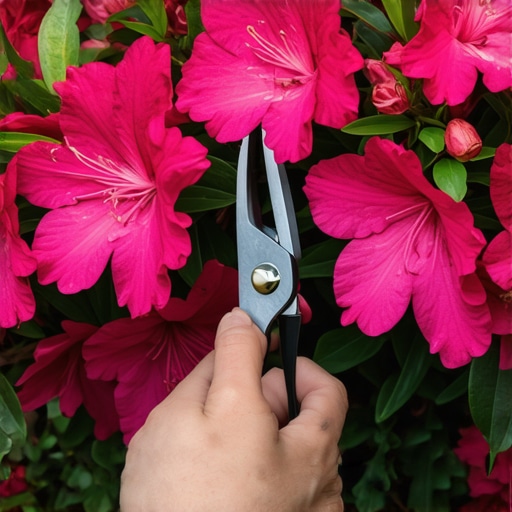
To maximize blooms, you must manipulate the plant’s hormonal balance, specifically the distribution of auxins. These hormones are produced in the terminal buds and suppress the growth of lateral buds lower down the stem. By removing the terminal bud through a strategic cut, you release those lateral buds from dormancy, leading to multiple flowering stems instead of just one leggy cane. This is the foundation of high-end landscaping. We use a 45-degree angle cut exactly one-quarter inch above an outward-facing bud eye. Why 45 degrees? To ensure moisture sheds away from the bud. If water sits on the cut surface, you invite rot. If the cut is too flat, the wood stays wet. If it is too steep, the wound surface area is too large for the plant to callus over efficiently. It is simple math applied to biology.
How do you prune roses without getting scratched?
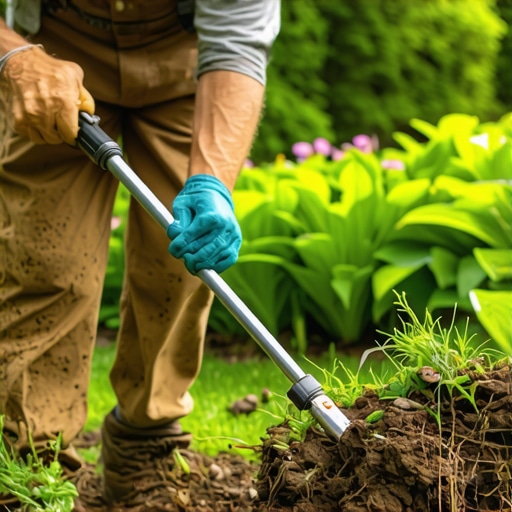
To avoid injuries while pruning roses, you must use puncture-resistant gauntlets and bypass pruners that allow for one-handed operation, keeping your secondary hand clear of the thorns. Strategic positioning is key: always prune from the outside in, removing exterior canes first to create a clear path to the center of the plant. Long-handled loppers are essential for deep structural cuts to maintain a safe distance from the thorns and prickles.
The Professional Tool Kit: Engineering the Perfect Cut
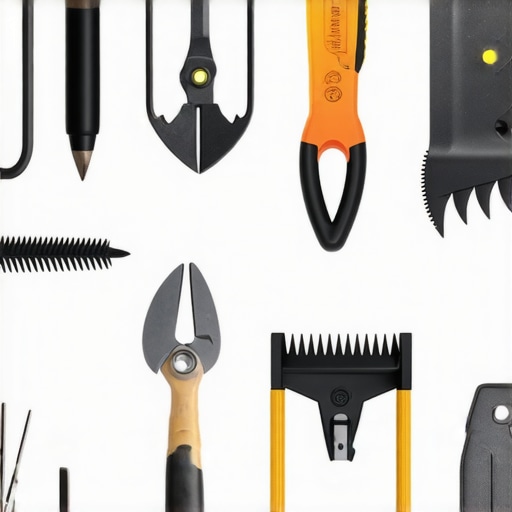
A $10 pair of shears from a big-box store will ruin a $50 rose bush. These cheap tools often use anvil-style blades that crush the delicate vascular tissue instead of slicing it. This creates a necrotic zone where disease flourishes. We use high-carbon steel bypass blades that are sharpened daily. The PSI required to slice through a one-inch cane should be minimal if the tool is maintained. If you have to struggle, the tool is dull, and the plant will suffer. It is that simple.
| Tool Type | Primary Purpose | Professional Recommendation |
|---|---|---|
| Bypass Pruners | Detailed cuts on canes up to 0.75 inches | High-carbon steel with replaceable blades |
| Long-Handled Loppers | Structural removal of old wood and thick canes | Geared action for maximum leverage |
| Folding Saw | Removing dead stumps at the graft union | Triple-ground teeth for clean finishes |
| Leather Gauntlets | Protection of hands and forearms from thorns | Goatskin for dexterity and puncture resistance |
The Step-by-Step Professional Pruning Protocol
Before you make a single cut, you must assess the USDA hardiness zone and the specific variety. A Grandiflora requires different handling than a Floribunda. We follow a strict hierarchy of removal that ensures the plant’s energy is never wasted on failing wood. The goal is a vase-like shape that allows sunlight to penetrate the center of the shrub, drying out the foliage quickly after rain and preventing the spread of black spot fungus. It is an engineering challenge as much as a gardening one.
- Identify the Five D’s: Immediately remove any wood that is Dead, Damaged, Diseased, Dying, or Deranged (growing inward).
- Clear the Center: Remove any canes that cross through the middle of the plant to maximize airflow and sunlight penetration.
- Target the Bud Eye: Locate an outward-facing bud and cut 1/4 inch above it at a 45-degree angle.
- Seal the Wounds: In areas with high borer activity, use a drop of wood glue on the cut ends of larger canes to prevent insect entry.
- Clean the Base: Remove all debris from the soil surface to eliminate overwintering spores and pests.
“Proper tool maintenance is not a suggestion; it is the first line of defense against the spread of Rose Rosette Disease and other viral pathogens in the landscape.” – American Rose Society Standards
When is the best time to prune roses in my region?
The optimal time for heavy pruning is late winter or early spring, just as the bud eyes begin to swell but before full leaf-out. In northern climates, wait until the threat of a hard freeze has passed to avoid frost damage on new cuts. In southern regions, pruning can occur as early as late January to jumpstart the growing season before the heat of summer sets in. Observe the local phenology; when the forsythia begins to bloom, it is time to prune your roses.
Post-Pruning Nutrition and Soil Management
Pruning is only half the battle. Once you have structurally optimized the plant, you must provide the chemical fuel for growth. We avoid generic fertilizers. A rose needs a specific NPK ratio, typically something like 5-10-5, to support root development and flower production without forcing excessive, weak green growth. We also integrate mycorrhizal fungi into the soil to enhance nutrient uptake. Most lawn care companies ignore the soil microbiology, but that is where the real work happens. If your soil pH is off, those expensive nutrients are chemically locked away from the plant. We aim for a slightly acidic pH of 6.0 to 6.5. This is the sweet spot for nutrient solubility. Anything else is just wasting money. Don’t be a hack. Test your soil. Manage your grading. Prune with purpose. Your roses will respond with a display that no big-box store chemical can replicate. The plant wants to grow; your job is just to stay out of its way and give it the right structure to do so. It is not magic. It is biology.