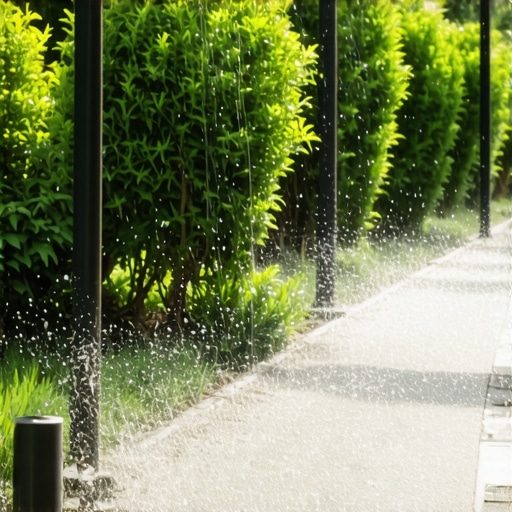
Why Your 2026 Automatic Sprinklers are Wasting Water
The Forensic Autopsy of a Saturated Disaster
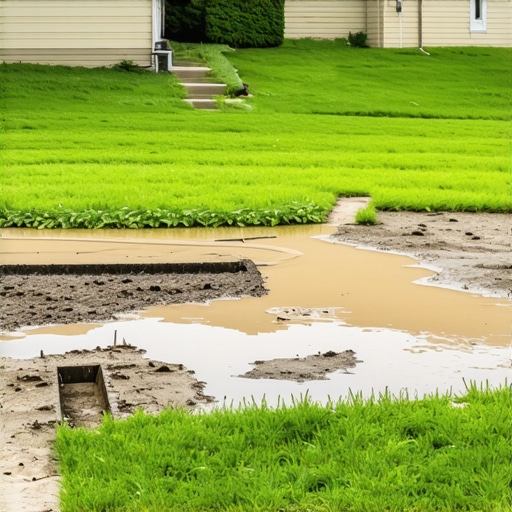
I recently walked onto a job site where the homeowner had spent $15,000 on a brand-new 2026 smart irrigation system, yet their lawn looked like a rotting swamp in some areas and a desert in others. This is the Chemical Nightmare I see too often: a homeowner who relies on automation while ignoring the fundamental physics of soil field capacity. They had combined a high-nitrogen fertilizer application with an improperly calibrated 2026 smart controller that triggered every time the surface felt dry, despite the subsoil being completely anaerobic. The result was a massive soil burn that literally cooked the roots from the inside out because the water could not reach the rhizosphere. It was a total loss of high-end fescue. This is what happens when you trust a computer over basic biology. The soil was so compacted that the water just sat there, creating a breeding ground for Pythium blight instead of nourishing the grass.
The Anatomy of an Irrigation Failure
Modern 2026 automatic sprinklers fail because of miscalibrated evapotranspiration (ET) sensors and hydrostatic soil imbalances that prevent deep root penetration. Owners often ignore soil field capacity, leading to surface runoff and anaerobic soil conditions that kill turf. When water cannot penetrate the top two inches of the soil profile, it either evaporates or runs off into the street, carrying your expensive fertilizers with it. This is not just a waste of water; it is a structural failure of your landscape design. You are essentially paying for water to move your topsoil into the storm drain.
“A retaining wall does not fail because of the stone; it fails because of the water trapped behind it.” – Hardscape Engineering Axiom
How much water does my lawn actually need per week?
Your lawn needs exactly one inch of water per week, delivered in two deep sessions rather than daily misting. This forces the root system to grow downward to find moisture, which is the only way to survive a heatwave. If you water for ten minutes every morning, you are training your grass to be weak. You are keeping the surface moist, which encourages thatch buildup and shallow roots. When the temperature hits 95 degrees, those shallow roots will desiccate in hours. Stop doing it. Deep and infrequent is the law of the land.
Can an automatic sprinkler system cause root rot?
Yes, excessive irrigation in poorly drained soils leads to pore space saturation, which effectively suffocates the root system. Roots need oxygen just as much as they need water. When every pore in the soil is filled with liquid, the roots cannot breathe, leading to phytophthora and other fungal pathogens. This is especially prevalent in heavy clay soils common in the suburbs. If you don’t have a French drain or proper grading to handle the excess, you are just building a slow-motion pond. It will rot.
Why Your Smart Controller is Actually Dumbing Down Your Soil
High-tech systems waste water when they ignore site-specific drainage and local percolation rates. Without a manual catch-can test, your 2026 smart sensors are merely guessing at your lawn’s gravitational water needs, resulting in 30% more waste than necessary. These sensors often read surface moisture, but they have no idea what is happening six inches down where the real work is done. You must calibrate your system to the specific soil texture of your yard. Sandy soil needs more frequent, shorter bursts. Clay needs long, slow applications with significant soak time to prevent runoff. Most people just set it to ‘Auto’ and wonder why their water bill is $400.
| Soil Type | Infiltration Rate (Inches/Hour) | Irrigation Strategy |
|---|---|---|
| Sandy Loam | 0.5 – 1.0 | High frequency, low volume |
| Silt Loam | 0.3 – 0.5 | Moderate frequency, moderate volume |
| Heavy Clay | 0.05 – 0.15 | Low frequency, cycle-and-soak method |
The Engineering of Hardscape Drainage
When we talk about hardscaping, the irrigation system is often the enemy of the retaining wall. If your sprinkler heads are spraying directly against a stone wall or into the backfill area, you are increasing the hydrostatic pressure behind that wall. This leads to efflorescence, which is that white crusty salt you see on stones, and eventually, it leads to structural leaning or collapse. Every hardscape project must include a dedicated drainage plan. I tell my crew every day: if you don’t fix the soil grading first, every plant you put in the ground is just expensive compost. You cannot out-water a bad grade. You cannot out-tech a lack of drainage.
“Irrigation scheduling should be based on the water-holding capacity of the soil and the depth of the root zone to ensure maximum efficiency.” – Texas A&M Agrilife Extension
- Perform a Catch-Can Test: Place tuna cans around the yard to see how much water is actually hitting the ground in 20 minutes.
- Check for Head-to-Head Coverage: Ensure every sprinkler head is reaching the next one to avoid dry spots.
- Audit Your Nozzles: Replace old spray heads with high-efficiency rotary nozzles to reduce wind drift.
- Check Your Rain Sensor: Ensure it is not blocked by overhanging branches or debris.
- Inspect the Manifold: Look for slow leaks in the solenoid valves that cause constant seepage.
Remediating a Water-Wasted Landscape
If you find that your soil is compacted and water is pooling, the first step is core aeration. You need to pull physical plugs out of the earth to break the surface tension and allow oxygen and water to reach the roots. Next, you must adjust your 2026 controller to a cycle-and-soak program. Instead of running a zone for 30 minutes, run it for 10 minutes, wait an hour for it to soak in, and then run it for another 10. This mimics a natural rain event and prevents the water from simply sliding off the surface. Don’t skip this step. It is the difference between a functional ecosystem and a muddy mess. You should also check your water pressure (PSI). If your pressure is too high, the water atomizes into a fine mist that blows away before it ever hits the grass. Use pressure-regulated heads to keep the droplets heavy and on-target. This is physics, not magic. Stop wasting resources on a system that is poorly calibrated. Your 2026 technology is only as good as the soil it is trying to feed. Fix the soil, fix the schedule, and you will fix the waste.
![Fixing 2026 Yellowing Leaves on Gardenia [Soil Fix]](https://lawnmajesty.com/wp-content/uploads/2026/06/Fixing-2026-Yellowing-Leaves-on-Gardenia-Soil-Fix.jpeg)