Fix 2026 Garden Weeds with This $40 Cardboard Hack
The Foundation of Soil Health: Why I Tell My Crew to Stop Tilling
I always drill into my new crew members: if you don’t fix the soil grading and biology first, every plant you put in the ground is just expensive compost. Most homeowners see a patch of weeds and immediately reach for a rototiller or a jug of glyphosate, but as a professional with 20 years in the dirt, I know those are short-term fixes for long-term failures. Tilling actually wakes up dormant weed seeds by exposing them to light and oxygen, effectively resetting the weed cycle you are trying to break. Sheet mulching, or what many call the cardboard hack, works because it uses biological suppression and light deprivation to kill existing vegetation while simultaneously building soil tilth and microbial density. This is the professional standard for preparing a 2026 planting bed today.
“Sheet mulching is a slow-release composting method that improves soil structure and nutrient availability without the soil inversion that leads to erosion.” – USDA Natural Resources Conservation Service
The Science of the $40 Sheet Mulch
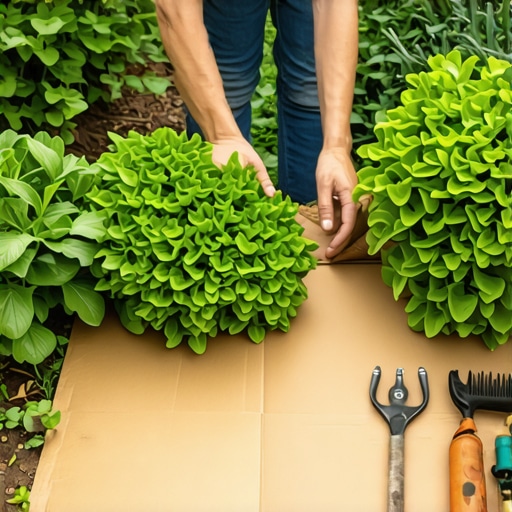
Professional sheet mulching involves layering high-carbon materials like corrugated cardboard over nitrogen-rich green matter to create a composting environment directly on top of the soil. This process effectively starves weeds of the UV spectrum needed for photosynthesis while attracting epigeic earthworms that tunnel through the cardboard, aerating the soil profile naturally. For about $40—the cost of a few bags of high-quality mulch and some fuel for transport—you can convert 500 square feet of weed-choked yard into a premium landscaping bed by the 2026 season.
How long does cardboard take to decompose in soil?
In most temperate climates with moderate moisture, corrugated cardboard takes between 6 to 9 months to fully decompose. This timeline is dictated by the activity of lignin-decomposing fungi and soil temperature; in dry or frozen conditions, the process stalls. By starting now, you allow the cellulose fibers to break down into humus, providing a nutrient-rich foundation for the 2026 growing season.
| Method | Cost (500 sq ft) | Soil Impact | Weed Suppression |
|---|---|---|---|
| Rototilling | $80 (Rental) | Destroys structure | Low (Wakes seeds) |
| Chemical Spray | $60 (Herbicides) | Kills microbes | Medium (Resistant species) |
| Sheet Mulching | $40 (Mulch/Free Cardboard) | Builds topsoil | High (Light blockage) |
The Forensic Breakdown of Materials
You cannot use just any cardboard. I have seen guys use glossy, wax-coated boxes from big-box retailers, and it is a disaster. Waxed cardboard is hydrophobic; it repels water, meaning your soil stays bone-dry underneath while the plants around the edges drown in runoff. You need brown corrugated cardboard. Remove every single piece of plastic packing tape and every heavy-duty staple. Those do not break down. They are contaminants. If you leave them in, you are just burying trash in your garden design. We are looking for the C:N ratio (Carbon to Nitrogen) of approximately 30:1. Cardboard is almost pure carbon. When it hits the nitrogen in your weeds and grass, the chemical reaction is basically a slow-motion fire that consumes the weeds and feeds the mycelium.
“A retaining wall doesn’t fail because of the stone; it fails because of the water trapped behind it, and a garden doesn’t fail because of the weeds, but because of the lack of soil competition.” – Hardscape Engineering Axiom
Can I put cardboard over weeds and mulch on top?
Yes, laying cardboard directly over mowed weeds and topping it with 4 inches of wood chip mulch is the most efficient way to clear ground for landscaping. This lasagna layering technique prevents nitrogen draft, where the soil microbes steal nitrogen from the plants to break down the carbon-heavy mulch, by keeping the decomposition process on the surface rather than buried in the root zone.
The Step-by-Step Professional Installation
- Scalp the Area: Set your mower to the lowest setting. We want the weeds as short as possible to accelerate the nitrogen release.
- Hydrate the Base: Soak the ground before laying cardboard. Dry soil under a barrier stays dry for a long time.
- The Overlap Rule: Overlap your cardboard edges by at least 6 to 8 inches. Weeds are opportunistic; they will find a 1-inch gap.
- Weight it Down: Immediately apply 3-4 inches of arborist wood chips or composted mulch. This holds the cardboard in place and retains moisture.
- The Wait: Do not touch it for 12 months. Let the microbiology do the engineering.
Avoiding the Hardscape Integration Failure
When you are planning your hardscaping, such as a patio or a walkway, do not sheet mulch right up to the edge restraint. I have seen $30,000 patios sink because the contractor used organic mulch near the base layer. Organic matter decomposes and shrinks. If your sheet mulch is part of the soil grading near a foundation or a stone wall, it will settle and create hydrostatic pressure issues. Keep your organic beds at least 12 inches away from structural footings. Use a modified gravel base for the hardscape and transition to your sheet-mulched garden beds with a clear edging profile. This keeps the lawn care clean and prevents grass from creeping into your stone work.

![Stop Killing 2026 Lavender: 3 Clay Soil Drainage Fixes [Zone 7]](https://lawnmajesty.com/wp-content/uploads/2026/05/Stop-Killing-2026-Lavender-3-Clay-Soil-Drainage-Fixes-Zone-7.jpeg)