Fix 2026 Hillside Erosion with This $300 Stone Wall
Fix 2026 Hillside Erosion with This $300 Stone Wall
The ground beneath your feet is heavier than you think. When a hillside begins to bleed silt onto your driveway after a spring rain, you are witnessing a structural failure of soil cohesion. Most homeowners ignore the early warning signs—exposed tree roots, ‘alligator’ cracking in the turf, or the subtle tilt of a fence post—until they are looking at a $15,000 remediation bill. You can stop the bleed now for under $300 if you understand the physics of gravity walls. Landscaping is not about aesthetics; it is about managing hydrostatic pressure and gravitational load.
The Hardscape Autopsy: Why Cheap Walls Fail
I recently got called out to tear up a $30,000 patio that was sinking because the previous contractor thought ‘dirt was dirt.’ They used rounded river rock for the base and forgot the geotextile fabric. Within two seasons, the fines from the soil migrated into the gaps of the river rock, causing the entire structure to settle four inches. It was a mess. The homeowner was furious, and rightly so. If you don’t fix the soil grading and drainage first, every dollar you spend on stone is just expensive trash. It is the same with hillsides. A wall is only as good as the 2A modified gravel sitting underneath it. Compaction is everything. If your base is soft, your wall is a ticking clock.
“A retaining wall doesn’t fail because of the stone; it fails because of the water trapped behind it.” – Hardscape Engineering Axiom
Why Your Hillside is Melting (The Soil Mechanics)
Hillside erosion occurs when shear stress from water saturation exceeds the shear strength of the soil, often caused by poor drainage and gravity. When gravity wins, the soil particles lose their friction and begin to flow as a liquid. To stop this, you must introduce a physical barrier that can handle the weight of the saturated earth while allowing water to escape. This is why ‘mow-and-blow’ crews fail; they throw some mulch on a hill and call it a day. Mulch does not stop a moving hillside. Structural stone does.
The $300 Solution: Building a Dry-Stack Gravity Wall
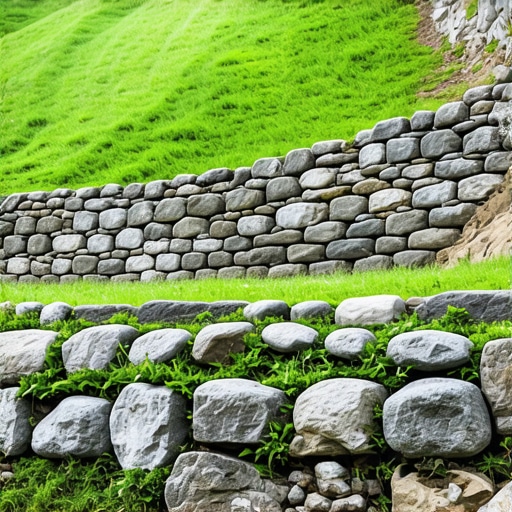
A $300 dry-stack wall uses natural fieldstone or retained blocks to create a low-profile mass that resists soil movement. For this budget, you are targeting a wall height of 12 to 18 inches. This is the sweet spot where you do not need an engineered permit but still gain massive stabilization. You are looking for ‘one-man’ stones—pieces weighing 20 to 40 pounds that you can set by hand. Use angular stone, never rounded boulders. Angularity creates friction. Friction creates stability. It is basic civil engineering applied to your backyard.
What is the best stone for a DIY retaining wall?
For a $300 budget, your best bet is locally sourced gray fieldstone or weathered limestone. These materials offer the high friction coefficients needed for a dry-stack system. Avoid the decorative ‘river jacks’ or smooth pebbles often sold at big-box stores. They have no grip. If the stone is smooth, the wall will slide. You want rough edges that bite into each other. Look for ‘heavy flats’ at your local quarry. They are cheaper than palletized stone and much more effective for erosion control.
| Material Type | Cost per Ton | Stability Rating | Drainage Capability |
|---|---|---|---|
| Angular Fieldstone | $65 – $90 | High | Excellent |
| Round River Rock | $50 – $75 | Low | Poor (Slips) |
| Concrete Gravity Blocks | $110 – $150 | Very High | Moderate |
| Pressure Treated Timber | $80 – $120 | Moderate | Poor (Rots) |
The Engineering of the Base
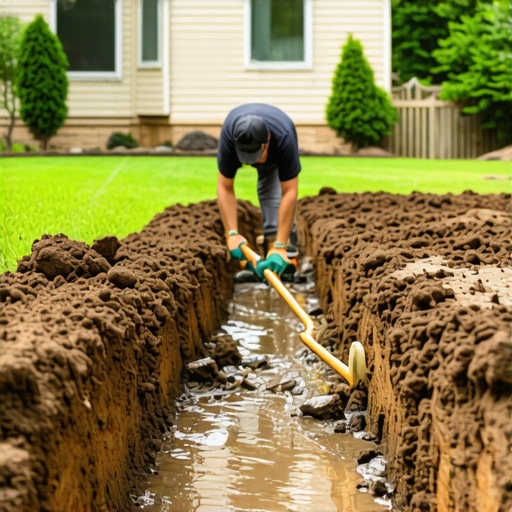
You cannot build a wall on grass. You must excavate a trench at least 6 inches deep and 12 inches wide. Fill this with 4 inches of 2A modified crushed stone. This is not ‘clean’ stone; it contains ‘fines’ that lock together when compacted. Use a hand tamper or rent a plate compactor. The base should be so hard that a hammer would bounce off it. This prevents the wall from ‘heaving’ during the freeze-thaw cycles of winter. In 2026, as weather patterns become more volatile, a deep base is your only insurance policy.
“Soil compaction is the most critical step in hardscape longevity; 95% Proctor density is the standard for structural stability.” – ICPI Installation Manual
How much gravel base do I need for a small retaining wall?
You need approximately 0.5 cubic yards of gravel for every 10 linear feet of a low-profile wall. Always calculate for a 4-inch minimum depth after compaction. If you skip the compaction, the first heavy rain will turn your base into soup. Use a string line to ensure your base is level. A wall that starts crooked stays crooked. Use a 1% pitch leaning back into the hill. This is called ‘batter.’ It forces the weight of the wall to work against the soil pressure rather than with it.
The Installation Checklist
- Call 811: Never dig without marking utility lines. Even a 6-inch trench can hit a shallow gas line.
- Excavate the Toe: Dig the trench at the base of the slope.
- Filter Fabric: Lay non-woven geotextile fabric behind the wall to prevent soil from clogging your drainage.
- First Course: Set your largest, flattest stones first. Bury half of the first course for ‘toe-in’ stability.
- Backfill: Use 3/4-inch clean stone behind the wall. Never backfill with dirt. Dirt holds water; stone sheds it.
- Cap Stones: Use heavy, flat stones for the top layer to lock everything in place.
The Myth of the ‘Quick Fix’
The internet will tell you to just plant some creeping phlox and call it a day. They are wrong. While plants help, they cannot stop a structural failure of a 30-degree slope. You need the mass of the stone to provide the initial resistance. Once the wall is set, then you can plant. Think of the wall as the skeleton and the plants as the skin. You cannot have one without the other. This $300 investment is about protecting your property value before the erosion becomes a structural threat to your foundation. Do it right the first time. It is cheaper than doing it twice. Avoid the temptation to use ‘weed-and-feed’ near the wall; high nitrogen counts can actually destabilize the soil microbiology that helps hold the upper slope together. Use native grasses instead. Their roots go deeper than your wall ever will.