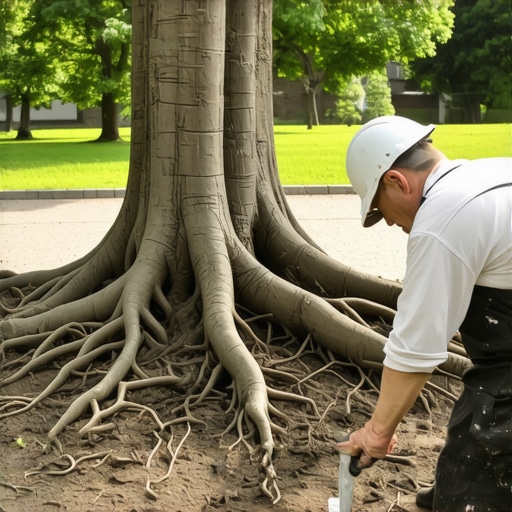
Stop 2026 Tree Root Heave with This $40 Shaving Hack
The Ground-Up Reality: Why Soil Engineering Trumps Aesthetics
I always drill into my new crew members: if you don’t fix the soil grading first, every plant you put in the ground is just expensive compost. I have seen too many rookies spend ten grand on nursery-stock specimens only to watch them decline because they ignored the root flare or the subsurface drainage. In the world of high-end landscaping, we don’t just plant things; we manage biological assets that are constantly trying to expand their footprint. Tree root heave is the inevitable result of a tree doing its job in a space that was poorly prepared. If you are seeing pavers lifting or concrete cracking, you are witnessing the physical manifestation of secondary growth in the root system’s vascular cambium. It is a slow-motion car crash that ends with a five-figure demolition bill.
What is Tree Root Heave and Why Does It Destroy Hardscaping?
Tree root heave is the upward displacement of soil and hardscape materials caused by the diameter expansion of woody roots as they seek oxygen and moisture near the surface. To prevent this, contractors must use physical bio-barriers, root shaving techniques, and structural soil to redirect growth away from structural foundations. This process usually occurs when roots encounter compacted sub-base layers that lack the air gaps necessary for deep penetration. Instead of going down, they go out, right under your patio pavers. They are opportunistic. They follow the path of least resistance, which is often the sand bed of your hardscape. One inch of root growth can exert enough PSI to lift a three-ton slab of poured concrete over a five-year cycle.
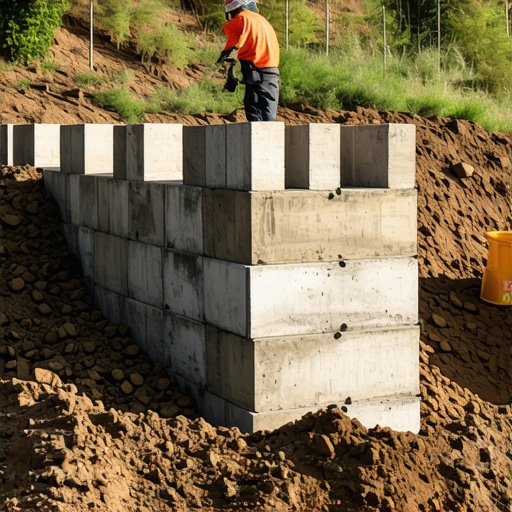
“A retaining wall doesn’t fail because of the stone; it fails because of the water trapped behind it, and often, the roots that use that water to gain leverage against the structure.” – Hardscape Engineering Axiom
The $40 Shaving Hack: Precision Root Management
The hack involves a $40 investment in a specialized reciprocating saw blade or a handheld rasp, but the real value is in the execution. Most ‘hacks’ tell you to just cut the root. That is a death sentence for the tree. Instead, we use the shaving method. You identify the specific root collar that is making contact with the bottom of the paver base. You shave no more than 25% of the upper diameter of the root, only in the area where it creates a high point. You then seal that area with a bio-barrier or a heavy-duty geotextile fabric infused with trifluralin. This doesn’t kill the root; it stops the growth in that specific direction. It is a surgical strike. You are creating a 2-inch void that allows the tree to live while protecting the integrity of the 3/4-inch modified stone base. It is a temporary fix that buys you a decade, but for $40, it’s the highest ROI in the industry.
How much modified gravel do I need for a patio base?
To calculate the modified gravel required for a stable patio base, multiply the square footage of the area by the depth (standard is 4 to 6 inches for walkways, 8 to 12 inches for driveways) and divide by 324 to find the cubic yards needed. Always add 10% for compaction loss. A 4-inch base of 2A modified stone is the bare minimum for preventing frost heave and managing minor root expansion. If you are dealing with heavy clay soil, you must increase this depth to ensure adequate drainage and stability. Without proper 95% Proctor density compaction, your base will settle, and the roots will find the resulting gaps immediately.
Can I cut a tree root without killing the tree?
Cutting a tree root is possible without killing the tree if the cut is made outside the Critical Root Zone (CRZ) and involves less than 20% of the total root mass. The CRZ is typically calculated as one foot of radius for every inch of trunk diameter at breast height. Never cut roots larger than 2 inches in diameter close to the trunk, as these are structural anchors. Instead of a clean chop, use the shaving method on surface roots to preserve the downward-facing feeder roots. If you sever a major lateral root, you compromise the tree’s ability to take up water and its structural stability during high-wind events.
The Anatomy of Failure: Compaction vs. Expansion
Roots need three things: water, oxygen, and pore space. In a typical backyard, the soil is compacted to the point where oxygen only exists in the top two inches. This is why you see surface roots. It is not the tree’s fault; it is the soil’s fault. When you install a patio, you are essentially putting a lid on the soil, trapping moisture but cutting off air. The roots will migrate to the edges of the pavers where oxygen is available. This creates a ring of pressure. We use structural soil—a mix of crushed stone and clay loam—to provide a load-bearing medium that still has 20% air-filled porosity. This allows roots to grow through the base rather than under it. It’s a game of engineering. You are building a subterranean environment that dictates where biology can and cannot go.
| Material Choice | Cost per Sq Ft | Durability (Years) | Root Resistance |
|---|---|---|---|
| Poured Concrete | $8 – $12 | 15 – 20 | Low (Cracks) |
| Interlocking Pavers | $15 – $25 | 25 – 40 | Medium (Adjustable) |
| Natural Flagstone | $20 – $35 | 50+ | High (Weight) |
| Decomposed Granite | $5 – $8 | 5 – 10 | Zero (Easy repair) |
Don’t buy the cheap geotextile from the big-box store. It is basically glorified landscape fabric that roots will punch through in a single season. You need a non-woven needle-punched fabric with a high grab tensile strength. This acts as a separation layer. It keeps your expensive aggregate from migrating into the native clay soil. When the soil and the aggregate mix, you lose all your structural integrity. The base turns into soup. The roots love soup. They will weave through that mixture and lift your entire project. Use a 12.5-gauge wire to pin your fabric down. Do it right the first time.
“Root systems are not static pipes; they are hydraulic engines capable of displacing tons of earth through cellular expansion and turgor pressure.” – International Society of Arboriculture (ISA) Handbook
The Root Heave Prevention Checklist
- Measure the Caliper of the tree to determine the Critical Root Zone.
- Excavate at least 8 inches below the finished grade for any hardscape within the drip line.
- Install a 12-inch vertical Root Barrier (HDPE) along the edge of the hardscape.
- Use 3/4-inch clean stone for the first 2 inches of the base to provide air gaps.
- Apply the $40 shaving hack to any surface roots that are non-structural.
- Top with polymeric sand to create a water-resistant seal that prevents weed growth but allows for slight movement.
Maintenance: The Year One Transition
After you have performed a root shave and installed your barrier, the tree will go into a minor state of shock. You need to monitor the canopy. Look for chlorosis or early leaf drop. This is why we avoid nitrogen-heavy fertilizers immediately after pruning roots; you don’t want to force top growth when the root system is recovering. Instead, focus on mycorrhizal fungi inoculants. These fungi form a symbiotic relationship with the shaved roots, increasing their surface area for water absorption without increasing their physical diameter. It is the smartest way to keep a tree healthy in a confined space. Check your paver joints every spring. If you see a gap widening, it means a root has found a way around your barrier. Address it immediately. Don’t wait until 2026. A small adjustment now saves a total rebuild later. Landscaping is not a ‘set it and forget it’ industry. It is a constant negotiation with nature. You win by being the better engineer.