Stop 2026 Winter Kill: 3 Shrub Protection Hacks
Understanding the Physiology of 2026 Winter Kill
To prevent 2026 winter kill in your landscaping, you must address physiological drought by applying anti-desiccant sprays, installing structural burlap windbreaks, and ensuring deep-root hydration before the first hard freeze. These methods protect the vascular systems of evergreens and deciduous shrubs from cellular rupture caused by rapid temperature fluctuations and moisture loss through the leaf cuticle.
I have spent twenty years digging in the dirt, and I have seen it all. A homeowner called me in a panic after they completely torched their front lawn and a dozen expensive Boxwoods by applying a high-nitrogen ‘winterizer’ fertilizer way too late in the season. They thought they were feeding the plants for winter. Instead, they forced a flush of tender, new growth just as the first frost hit. The nitrogen salts combined with the freeze-thaw cycle created a chemical burn that effectively mummified the plant tissue. The new growth had no chance to harden off, and by March, those shrubs were brown, brittle, and dead. This is the reality of poor garden design and a lack of horticultural understanding. You cannot cheat the biological clock of a plant without paying the price in expensive compost. If you want your landscaping to survive until 2026, you need to stop thinking like a weekend warrior and start thinking like an agronomist.
“The physiological drought of winter kill occurs when transpiration exceeds the ability of the frozen root system to replace lost water.” – Cornell University Cooperative Extension
How much water does a shrub need before winter?
Shrubs require at least 1 to 2 inches of water per week through late autumn until the ground is physically frozen. This hydration creates a thermal buffer in the soil. Dry soil freezes faster and deeper, which can lead to root death when temperatures drop below 15 degrees Fahrenheit. We use tensiometers to measure soil moisture at the 6 inch depth because that is where the majority of the fibrous feeder roots reside. If the soil is dusty at that depth, your plants are in danger. Do not wait for the leaves to wilt. By then, the cellular damage is already done.
The Anti-Desiccant Hack: Stopping Moisture Loss at the Pore
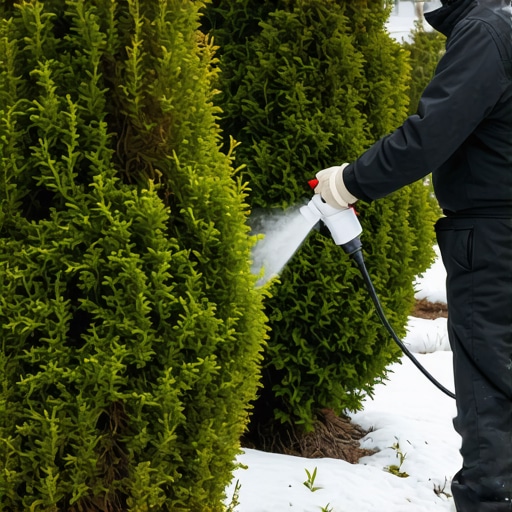
Anti-desiccants protect shrubs by creating a physical wax or polymer barrier over the stomata, which significantly reduces the rate of transpiration during dry winter winds. This is particularly vital for broadleaf evergreens like Rhododendrons and Hollies that keep their leaves all winter and continue to lose moisture even when the ground is frozen solid.
When the temperature drops, the soil moisture freezes, making it inaccessible to the roots. However, the sun and wind continue to pull moisture out of the leaves. This is the ‘death by a thousand cuts’ for your landscaping. I recommend a pinene-based anti-desiccant. Pinene is a natural resin derived from pine trees. It is more flexible than plastic-based polymers and won’t crack when the leaf expands or contracts. Apply this when temperatures are between 40 and 50 degrees Fahrenheit. If you apply it when it is too cold, the spray will not emulsify properly and you will end up with a sticky, ineffective mess. You must coat both the top and the underside of the leaf. The underside is where the stomata, the tiny pores the plant breathes through, are located. If you miss the bottom, you are wasting your time. One application in December and another during a mid-winter thaw in late January is usually enough to prevent the dreaded bronzing of the foliage.
Do anti-desiccants actually work for all plants?
Anti-desiccants are highly effective for broadleaf evergreens but should be avoided on certain species like Blue Spruce or Concolor Fir. The wax in the spray can strip away the epicuticular wax that gives these trees their blue color. For most garden design applications involving Boxwood, Holly, or Laurel, it is a mandatory tool in the winter kit. Always test a small branch first if you are unsure of the species reaction. We avoid using these on deciduous trees that have already dropped their leaves as there is no surface area for the spray to protect.
The Burlap Windbreak: Engineering Airflow and Thermal Mass
A burlap windbreak functions as a structural barrier that reduces wind speed and prevents the rapid temperature swings that cause bark splitting and sunscald. Unlike plastic wraps, burlap is breathable, which prevents the buildup of heat on sunny winter days that can trick a shrub into breaking dormancy too early.
I see hacks every year wrapping their shrubs in tight plastic. It is a death sentence. The plastic creates a greenhouse effect. On a sunny 30 degree day, the temperature inside that plastic can hit 70 degrees. The plant wakes up, the sap starts flowing, and then the sun goes down and the temperature drops back to 20 degrees. The sap freezes and expands, literally exploding the vascular tissue from the inside out. We call this sunscald or frost cracking. Instead, drive three wooden stakes into the ground around the shrub. Staple the burlap to the stakes, leaving a 12 inch gap between the fabric and the foliage. You want to create a micro-climate, not a straightjacket. This setup breaks the wind, which is the primary driver of winter desiccation, while allowing for gas exchange. It is basic civil engineering applied to horticulture. The stakes should be driven at least 12 inches into the ground to resist the lateral pressure of winter gusts.
| Material Type | Best Use Case | Main Disadvantage |
|---|---|---|
| Burlap Fabric | Windbreaks and salt protection | Can hold moisture if touching foliage |
| Anti-Desiccant | Broadleaf evergreens (Holly, Boxwood) | Requires reapplication after heavy rain |
| Mulch (Hardwood) | Root zone insulation | Can attract rodents if piled too high |
| Tree Wrap | Young deciduous trees (Thin bark) | Must be removed in early spring |
Latent Heat Irrigation: Why Mud is Your Best Winter Defense
Deep-root irrigation before the ground freezes utilizes the latent heat of water to insulate the root system and provide a reservoir of moisture for the plant to draw upon during winter thaws. Moist soil holds more heat than dry, porous soil, which prevents the frost line from penetrating as deeply into the earth.
This is where most lawn care companies fail. They blow out the irrigation systems in October and forget about the plants. If we have a dry November, those shrubs are entering dormancy in a state of stress. I tell my crew: if the ground is not frozen, you should be watering. We focus on the drip line, the area directly under the outer circumference of the branches. This is where the active roots are. We apply water slowly to allow for deep percolation. If you see runoff, you are going too fast. You want the water to reach at least 12 inches deep. This creates a thermal mass. Think of it like a battery of heat. It takes a lot more energy to freeze saturated soil than it does to freeze dry dirt. This extra time can be the difference between a shrub that survives a cold snap and one that ends up on the brush pile in April. Don’t skip this step. It is the cheapest and most effective way to protect your landscaping investment.
“A retaining wall doesn’t fail because of the stone; it fails because of the water trapped behind it.” – Hardscape Engineering Axiom
While that quote usually applies to hardscaping, the same logic follows for planting. Drainage is key. If your shrubs are sitting in a ‘bathtub’ of clay soil, that water will freeze and heave the plant right out of the ground. This is why soil grading and the use of modified gravel in the planting hole can be life-savers. We often find that winter kill is actually just the final blow to a plant that was already suffering from root rot caused by poor drainage during the fall rains.
Winter Protection Checklist
- Hydrate the root zone with 2 inches of water per week until the ground freezes.
- Apply a 3 inch layer of organic mulch around the base, keeping it 2 inches away from the trunk.
- Spray anti-desiccants on broadleaf evergreens when temps are in the 40s.
- Install burlap screens around sensitive species located in wind corridors.
- Inspect for rodent damage and apply repellents if necessary.
Proper winter protection is about understanding the physics of the yard. It is about moisture management, thermal mass, and structural integrity. If you treat your plants like the living organisms they are, they will reward you. If you treat them like lawn furniture, you will be buying new ones next year. Stop the 2026 winter kill now by getting your hands dirty and doing the work before the frost locks the gate. The health of your lawn care and garden design depends on these critical weeks of preparation. Build it right, or don’t build it at all. It is that simple.
![Stop 2026 Mildew on Your Phlox [Pruning Hack]](https://lawnmajesty.com/wp-content/uploads/2026/07/Stop-2026-Mildew-on-Your-Phlox-Pruning-Hack.jpeg)