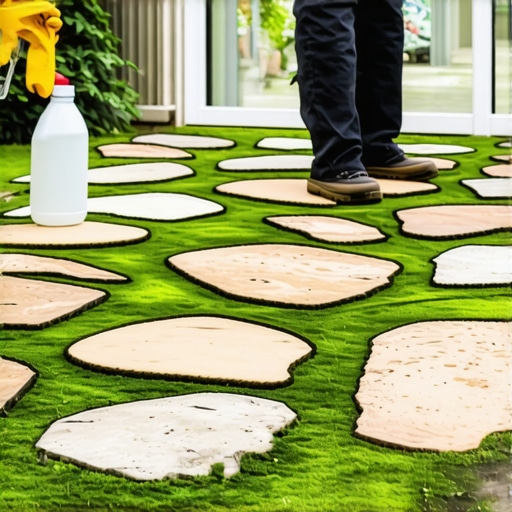
The $20 Trick to Clean Algae Off Your Stone Path
The Science of Slip: Why Your Stone Path Is Growing Green
Cleaning algae off stone paths requires breaking the organic bond between the spore and the substrate using Sodium Percarbonate. This oxygen-based cleaner costs under $20 and works by releasing hydrogen peroxide and soda ash, which lifts the biofilm without damaging the stone’s structural integrity or neighboring landscape plants.
I recently got called out to tear up a $30,000 patio that was sinking because the previous contractor failed to address hydrostatic pressure and surface drainage. The homeowner thought the green slime was just a cosmetic issue. It wasn’t. That algae was a symptom of a much larger engineering failure. The stone was constantly saturated because the base layer was holding water like a sponge. When you see algae, you aren’t just looking at a plant; you are looking at a failure of moisture management. The stone’s porosity acts as a petri dish for spores that thrive in the micro-crevices of natural flagstone or concrete pavers. Most homeowners reach for the pressure washer or a bottle of chlorine bleach, but those are the tools of the uninformed. High-pressure water (exceeding 1,500 PSI) can actually pit the surface of the stone, creating even more surface area for future algae colonies to anchor. You are literally making the problem worse for next season.
“A retaining wall doesn’t fail because of the stone; it fails because of the water trapped behind it.” – Hardscape Engineering Axiom
The Biofilm Reality: More Than Just Green Gunk
Algae on a stone path is actually a complex community of cyanobacteria and fungal spores wrapped in a protective layer of extracellular polymeric substances (EPS). This EPS layer is what makes it slippery. It is a biological lubricant. To kill it, you have to oxidize it at the root. Standard chlorine bleach (Sodium Hypochlorite) is a harsh oxidant that kills the surface but leaves the deeper spores intact, while simultaneously wrecking the soil pH of your surrounding turf. It’s a scorched-earth policy that fails. Instead, I use technical-grade Sodium Percarbonate. It is an addition compound of sodium carbonate and hydrogen peroxide. When mixed with water, it releases a massive burst of oxygen that physically rips the algae away from the stone’s pores. It costs about $15 to $20 for a 5-pound tub, which will clean a standard 200-square-foot path easily.
How do I stop algae from coming back on my patio?
Preventing algae recurrence requires altering the surface tension of the stone and ensuring positive drainage away from the hardscape. Professionals use breathable silane-siloxane sealers that allow moisture vapor to escape while preventing liquid water from penetrating the stone’s capillaries, thereby starving the algae of its primary life source.
| Cleaning Method | Cost | Plant Safety | Effectiveness |
|---|---|---|---|
| Pressure Washing | $0 (if owned) | High Risk (Soil Erosion) | Short-term (Pits stone) |
| Chlorine Bleach | $5 – $10 | Toxic (Kills roots) | Medium (Yellows stone) |
| Sodium Percarbonate | $15 – $20 | Safe (Oxygen-based) | Long-term (Deep clean) |
| Vinegar (Acetic Acid) | $5 | Mild (Alters soil pH) | Poor (Weak acid) |
The Step-by-Step Remediation Process
Don’t just spray and pray. Follow the engineering protocol. First, clear the path of all organic debris. Leaves and pine needles contain tannins that stain the stone and provide nutrients for the algae. Second, mix 1/2 cup of Sodium Percarbonate per gallon of warm water. The warmth is critical to activate the oxygen release. Third, apply the solution to a dry surface. If the stone is already wet, the cleaner won’t penetrate the pores. Fourth, let it dwell for 20 minutes. You will see it bubbling. This is the chemical work happening. Fifth, use a stiff-bristled deck brush (not wire!) to agitate the surface. Finally, rinse with a garden hose. No pressure washer is needed. The oxygen did the heavy lifting.
- Temperature Check: Only apply when the stone is between 50 and 85 degrees Fahrenheit.
- Safety Gear: Wear gloves. Even though it is eco-friendly, it will dry out your skin instantly.
- Saturation: Keep the area wet with the solution; do not let it dry out during the 20-minute dwell time.
- Rinse Pattern: Always rinse toward the lowest point of your property’s grading.
Will bleach damage my pavers?
Sodium hypochlorite (bleach) can cause efflorescence, which is the migration of salts to the surface of the concrete, resulting in a white, powdery residue that is difficult to remove. Over time, the high pH of bleach can also degrade the pigments used in manufactured stone, leading to a faded, washed-out appearance that ruins the curb appeal of your hardscaping.
“Standard installation of interlocking concrete pavements requires a minimum of 1 inch of bedding sand over a compacted aggregate base to ensure proper drainage.” – ICPI Manual
If your path is constantly green, you likely have a grading issue. In the landscaping world, we say “Water always wins.” If your path is at the bottom of a slope, or if the pavers have settled, you have a drainage problem, not a cleaning problem. You need to check the pitch. A professional path should have a 2 percent slope (a 1/4-inch drop per foot) to ensure water runs off before it can soak into the stone. If your path is flat, you are fighting a losing battle against biology. You might need to install a French drain or a gravel-filled trench along the edge of the path to catch the runoff. Soil grading is the foundation of all successful landscaping. It’s not glamorous, but it’s the difference between a 30-year patio and a 3-year mess. Stop buying cheap chemicals and start looking at the physics of your yard. It will rot if you don’t. Hardscaping isn’t just about the stones you see; it’s about the gravel you don’t. Properly compacted 21A or 57 stone base layers are the lungs of your patio. If they are clogged with silt, the path will suffocate and turn green. Keep it clean. Keep it dry. Use the right chemistry.
![Fix 2026 Yard Puddles with a $150 Dry Well [DIY]](https://lawnmajesty.com/wp-content/uploads/2026/06/Fix-2026-Yard-Puddles-with-a-150-Dry-Well-DIY.jpeg)