5 Plants That Love Clay Soil and Full Sun
Stop Fighting Your Soil: Why Clay is Actually a Landscaping Asset
Gardening in heavy clay requires moving beyond the surface and understanding that clay soil and full sun provide a high nutrient-holding capacity that, when managed with proper landscaping techniques, supports some of the most resilient species in the trade. While DIYers complain about ‘brick-like’ ground, professionals value clay for its cation exchange capacity (CEC), which keeps minerals available for root uptake longer than sandy alternatives.
The Apprentice Lesson: Soil Grading and the Expensive Compost Trap
I always drill into my new crew members: if you don’t fix the soil grading first, every plant you put in the ground is just expensive compost. I remember a job in a new subdivision where the developer had scraped off all the topsoil, leaving a compacted pan of gray clay. The homeowner spent four grand on nursery stock and just plopped them into holes that acted like literal buckets. Within three weeks, the root balls were anaerobic mush. We had to rip it all out, regrade the entire lot to ensure a 2 percent slope away from the foundation, and use a subsoil ripper to break the compaction before a single plant went back in. It was a $10,000 lesson they could have avoided by listening to a pro first. Proper garden design starts with the topography, not the color of the petals. If the water doesn’t move, the plant doesn’t breathe. It is that simple.
“Clay soils have a high water-holding capacity due to the small size of the pores between the clay particles; however, this same property often leads to poor aeration if the soil is not managed correctly.” – USDA Natural Resources Conservation Service Soil Manual
How do you prepare clay soil for planting in full sun?
Preparing clay soil for landscaping success involves breaking the surface tension and incorporating coarse organic matter to facilitate flocculation, which aggregates tiny clay particles into larger clumps to improve drainage and airflow. Do not use sand; sand plus clay equals concrete. Use composted leaf mulch or aged manure to build soil structure over time.
Top 5 Plants for Heavy Clay and Intense Sun
When selecting species for these conditions, you need ‘utility players’—plants that can handle the hydraulic pressure of wet clay in spring and the cracked, baked reality of August heat. These five species are the backbone of high-end garden design in challenging environments.
1. Echinacea purpurea (Purple Coneflower)
Coneflowers are the workhorses of lawn care transitions. They possess a fibrous root system that navigates the tight pore spaces of clay without complaining. In full sun, they develop thick cuticles on their leaves to prevent desiccation. They don’t just survive; they stabilize the soil. Don’t over-water them. They thrive on neglect once the roots are established.
2. Baptisia australis (False Indigo)
This is the king of clay. Baptisia develops a massive, deep taproot that acts like a biological drill. Once it hits its stride, you aren’t moving it. It is a legume, meaning it fixes nitrogen into the soil, actually improving the ground it grows in. It takes three years to ‘pop,’ but it will outlive your mortgage. It ignores heat. It ignores drought. It is bulletproof.
3. Panicum virgatum (Switchgrass)
If you have a drainage issue near a hardscaping project, like a patio runoff area, Switchgrass is the answer. Its roots can reach depths of ten feet. This verticality provides a massive surface area for water transpirations. It creates a structural screen that stays standing even in winter. It loves the mineral density of heavy clay.
4. Rudbeckia fulgida ‘Goldsturm’ (Black-Eyed Susan)
Unlike some finicky perennials, Rudbeckia thrives in the high-heat, high-moisture-retention environment of sun-baked clay. It spreads via rhizomes, creating a dense mat that acts as a living mulch, cooling the soil surface and reducing the need for lawn care chemicals or supplemental irrigation. It is a biological carpet.
5. Hemerocallis (Daylilies)
Daylilies are often mocked as ‘gas station plants’ because they are so hardy, but in professional landscaping, we use them for erosion control on clay slopes. Their tuberous roots store water for the dry months and hold the soil against hydrostatic pressure during heavy rains. They are practically immortal. Even the ‘mow-and-blow’ hacks can’t kill them.
Comparative Analysis of Clay-Tolerant Species
| Plant Species | Root Type | Drought Tolerance | Growth Rate |
|---|---|---|---|
| Echinacea | Fibrous | High | Moderate |
| Baptisia | Deep Taproot | Very High | Slow |
| Panicum | Deep Fibrous | High | Fast |
| Rudbeckia | Rhizomatous | Moderate | Fast |
| Hemerocallis | Tuberous | High | Fast |
“A retaining wall doesn’t fail because of the stone; it fails because of the water trapped behind it, and the same principle applies to plant roots in clay.” – Hardscape Engineering Axiom
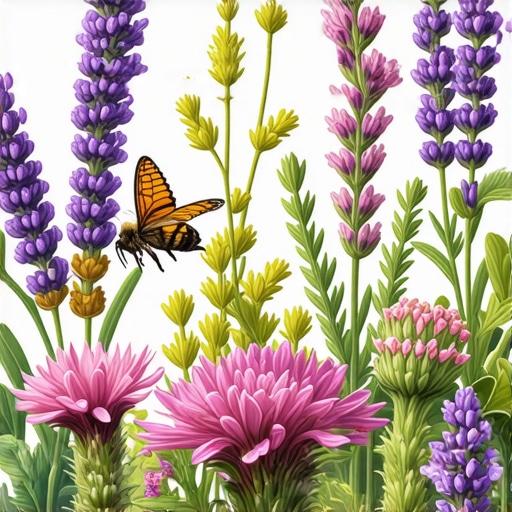
Will lavender grow in clay soil?
Most Mediterranean herbs like lavender will fail in heavy clay because their roots require rapid drainage and high oxygen levels, leading to root rot in the winter months. If you must plant lavender in clay, you must build a hardscaping raised bed or a rock mound to ensure the root flare stays dry.
The Installation Protocol: How to Plant in Clay
Don’t just dig a hole. Follow this checklist to ensure your 20-dollar plant doesn’t become 2-cent compost.
- Check the Moisture: If you can roll the soil into a ball and it stays together, it is too wet to work. Wait. Working wet clay destroys soil structure.
- The Rough-Sided Hole: Use a spade to scarify the sides of the planting hole. Smooth sides create a ‘pottery bowl’ effect that roots can’t penetrate.
- High-Head Planting: Set the plant two inches above the surrounding grade. This allows for settling and ensures the root flare isn’t buried in muck.
- The Mulch Gap: Apply two inches of wood chips but keep them three inches away from the plant stem. No mulch volcanoes. They cause rot.
Maintaining the Clay Garden
In landscaping, the first year is the most critical. While these plants love clay, they need consistent hydration until those specialized root systems can penetrate the native soil. Once established, stop the pampering. Clay holds onto nutrients; over-fertilizing with cheap synthetic products will lead to ‘leggy’ growth that flops over in the first summer storm. Use a slow-release organic approach or, better yet, just let the leaf litter decompose in place. Your soil is a living organism. Treat it like one. Avoid heavy machinery over the root zones to prevent soil compaction, which is the silent killer of all garden design. If you walk on it too much, you kill the pore space. Use hardscaping paths for foot traffic. Keep your boots off the beds. It matters.