

How to Fix a Soggy Backyard Corner with a Simple French Drain
The Anatomy of a Failed Yard: Why Your Corner is a Swamp
If your boots sink two inches into the turf every time it rains, you do not just have a ‘wet spot’—you have a site grading failure that is actively compromising your property’s foundation. To fix a soggy backyard corner, you must install a French drain consisting of a perforated pipe surrounded by 3/4-inch clean stone and wrapped in non-woven geotextile fabric to facilitate subsurface water movement via gravity to a safe discharge point. I recently got called out to tear up a $30,000 patio that was sinking because the previous contractor ignored the hydrostatic pressure building up in the corner of the lot. They threw some pretty pavers over raw clay and called it a day. Within two seasons, the freeze-thaw cycles turned that expensive hardscape into a roller coaster. The water had nowhere to go, so it sat under the base, turned the subgrade into mush, and heaved the entire installation. This is what happens when you prioritize aesthetics over civil engineering. Landscaping is 90% what you don’t see—the drainage, the compaction, and the soil chemistry. If you don’t respect the physics of water, the water will eventually destroy your investment.
“A retaining wall doesn’t fail because of the stone; it fails because of the water trapped behind it.” – Hardscape Engineering Axiom
The Science of Soil Saturation
Soil is not a solid mass; it is a collection of pores. In a healthy backyard, these pores hold a balance of air and water. In a ‘soggy corner,’ usually characterized by heavy clay or high silt content, the percolation rate is near zero. When the soil reaches its liquid limit, it loses all structural integrity. This is where the French drain comes in. Unlike a surface swale, a French drain addresses subsurface hydrostatic pressure. It provides a path of least resistance. By creating a trench filled with clean, angular stone, you are essentially building an underground highway for water. It doesn’t just sit there; it moves. You need a minimum slope of 1%—that is a 1-inch drop for every 8 feet of pipe—to ensure the water actually flows. Without that pitch, you’ve just built a very expensive underground pond.
How to Diagnose Subsurface Drainage Issues
Identifying the root cause of backyard ponding requires observing the site during a heavy rain event to see if the water is surface runoff from a neighbor’s lot or groundwater seepage. Look for ‘spongy’ turf even days after the rain stops. This indicates the water table is high or the soil is too compacted to drain.
| Material Type | Drainage Efficiency | Lifespan in Trench | Best Use Case |
|---|---|---|---|
| Pea Gravel | Moderate | 10-15 Years | Decorative only; clogs easily |
| 3/4″ Clean Crushed Stone | High | 30+ Years | Structural French drains |
| Recycled Concrete | Low | 5-10 Years | Never use; leaches lime and clogs fabric |
How much modified gravel do I need for a patio base?
To calculate the gravel volume for a drainage project or patio base, multiply the trench length by the width and depth in feet, then divide by 27 to get cubic yards; for a standard French drain, expect to use 1 ton of stone for every 20-25 linear feet of trench. Do not guess. If you under-order, you’ll end up using native soil as ‘filler,’ which will contaminate your clean stone and cause the system to fail within three years. Use a plate compactor on your base layers. If the tamper doesn’t bounce off the surface, it isn’t compacted enough.
Step-by-Step Remediation: Installing the French Drain
The installation of a professional-grade French drain involves trenching to a depth of 18-24 inches, lining the cavity with 8-ounce non-woven geotextile, and using Schedule 40 perforated PVC rather than cheap corrugated black plastic.
- Locate Utilities: Call 811. If you hit a gas line, your drainage problems are the least of your worries.
- Excavation: Dig the trench 12 inches wide. The depth must account for 2 inches of stone base, the 4-inch pipe, and at least 10 inches of stone cover.
- Fabric Liner: Use non-woven needle-punched fabric. Do not use the ‘weed barrier’ from big-box stores. It will clog with fines in months.
- The Pipe: Lay the PVC with the holes facing DOWN. This sounds counterintuitive to amateurs, but water enters the pipe from the bottom as the water table rises.
- The Backfill: Fill with clean 3/4″ stone. Do not mix in dirt.
“Effective drainage systems must be designed to handle peak flow events, not just average rainfall, to prevent soil liquefaction and structural shifting.” – USDA Soil Conservation Service
Does a French drain need an outlet?
A French drain outlet, also known as a daylight point, is mandatory because water collected in the pipe must be discharged to a lower elevation, such as a dry well, a pop-up emitter at the curb, or a designated stormwater management area. If you ‘dead-end’ a pipe into the soil, you are simply concentrated the swamp into a smaller hole. That water will eventually back up. In many jurisdictions, it is illegal to pipe your backyard water directly onto a neighbor’s property or into the sanitary sewer. Check your local municipal codes before you dig.
Maintenance and Long-Term Performance
A properly installed French drain is a ‘set it and forget it’ system, but it requires an annual inspection of the discharge point to ensure no debris, mulch, or rodent nests are blocking the flow. If you notice the corner getting ‘squishy’ again, your fabric might be blinded by silt or your pipe might be crushed. This is why I refuse to use corrugated pipe. It’s flimsy. One heavy mower or a delivery truck over the lawn and that thin plastic pipe is flat as a pancake. Use Schedule 40 PVC. It’s harder to work with, but it lasts a lifetime. It will not rot. Your soil pH also matters. High-acid soils can degrade certain cheap fabrics. Stick to industrial-grade geotextiles. If you skip these details, you are just burying money in the dirt. Keep your gutters clean too. A clogged gutter can dump 500 gallons of water directly onto your drain site in a single storm, overwhelming the system. Precision matters. Engineering matters. Don’t be a hack.
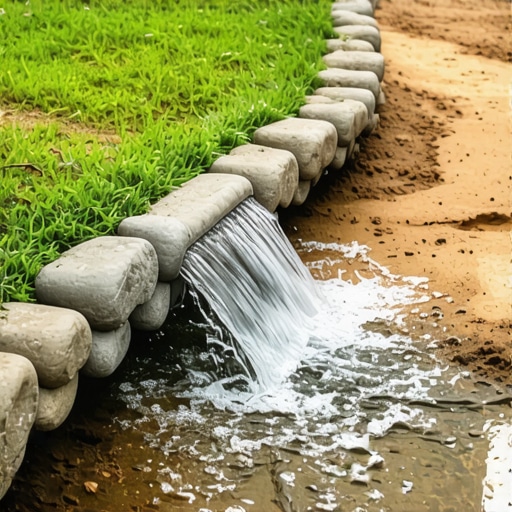
![Build a $200 Gravel Path for Wet Side Yards [Fast]](https://lawnmajesty.com/wp-content/uploads/2026/06/Build-a-200-Gravel-Path-for-Wet-Side-Yards-Fast.jpeg)
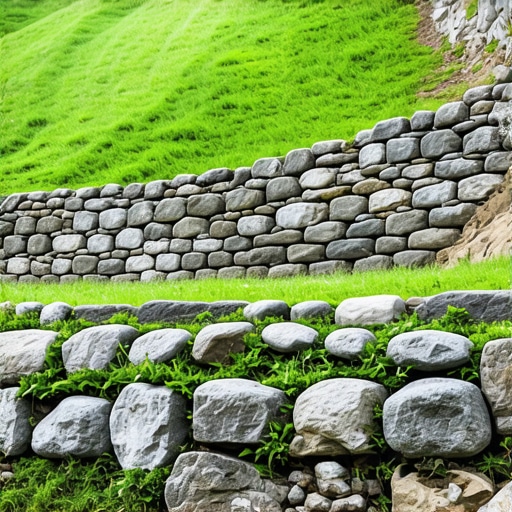
![Why Your Retaining Wall Is Bulging [2026 Drainage Fix]](https://lawnmajesty.com/wp-content/uploads/2026/09/Why-Your-Retaining-Wall-Is-Bulging-2026-Drainage-Fix.jpeg)