![5 Native Perennials for 2026 Pollinator Gardens [Zone 5]](https://lawnmajesty.com/wp-content/uploads/2026/06/5-Native-Perennials-for-2026-Pollinator-Gardens-Zone-5.jpeg)
5 Native Perennials for 2026 Pollinator Gardens [Zone 5]
The Ground-Up Reality of Zone 5 Pollinator Habitats
Stop buying pre-packaged pollinator kits from big-box retailers. They are the horticultural equivalent of fast food—designed for a quick show before they inevitably fail in the harsh freeze-thaw cycles of USDA Zone 5. I always drill into my new crew members: if you don’t fix the soil grading and chemistry first, every plant you put in the ground is just expensive compost. I’ve seen $50,000 landscapes turn into weed-choked mud pits because the contractor ignored the bulk density of the soil and the cation exchange capacity (CEC). We are here to build systems, not scenery. A successful 2026 pollinator garden requires a pragmatic understanding of soil biology and the structural requirements of native perennials that can survive a -20°F wind chill and 90°F humidity. If you skip the prep, you’re just throwing money into a hole.
“A retaining wall doesn’t fail because of the stone; it fails because of the water trapped behind it.” – Hardscape Engineering Axiom
Soil Chemistry: The Invisible Foundation of Your 2026 Garden
Soil preparation for Zone 5 involves more than just dumping a bag of peat moss; it requires a deep dive into soil pH levels, nitrogen cycles, and ensuring a 6.5 pH balance for optimal nutrient uptake. Before a single shovel hits the dirt, you must conduct a professional soil test to determine your soil texture and macronutrient levels. Most Zone 5 soils are heavy in illite or smectite clays, which hold water like a sponge. This creates hydrostatic pressure that can heave poorly installed hardscaping and drown the root systems of sensitive natives. You need macropores for air and micropores for water. Without them, your roots will suffocate. It is that simple. Don’t skip the drainage check.
How deep should a pollinator garden soil bed be?
For high-performance native perennials, you need at least 18 to 24 inches of loose, non-compacted soil to allow for taproot development and rhizome expansion. Compacted subsoil acts like a concrete slab, forcing roots to grow laterally and making them susceptible to drought stress and heaving during winter.
The Core 5: Engineering a 2026 Pollinator Habitat
Native plant selection for Zone 5 must prioritize species that offer high nectar loads and host plant utility while maintaining structural integrity through heavy snow loads. We focus on plants that have evolved over millennia to handle our specific micro-climates. These are the workhorses of the Midwestern and Northeastern landscape. They are not delicate; they are engineered for survival. Below is the 2026 blueprint for pollinator garden design.
| Asclepias tuberosa | June – August | Well-drained Sandy | 18 – 24 inches |
| Echinacea pallida | June – July | Rocky / Loam | 2 – 3 feet |
| Monarda fistulosa | July – Sept | Moist / Clay | 3 – 4 feet |
| Symphyotrichum novae-angliae | Aug – Oct | Mesic / Moist | 4 – 5 feet |
| Baptisia australis | May – June | Deep Loam | 3 – 4 feet |
1. Asclepias tuberosa (Butterfly Weed): This is the gold standard for Monarch butterflies. It has a massive taproot. Once it is in, do not move it. It requires zero fertilization once established. 2. Echinacea pallida (Pale Purple Coneflower): Unlike the hybridized nursery versions, the straight species has a deep root system that can survive Zone 5 droughts. 3. Monarda fistulosa (Wild Bergamot): This is a bumblebee magnet. However, it needs air circulation. If you crowd it, powdery mildew will set in. It’s an engineering problem, not a plant problem. 4. Symphyotrichum novae-angliae (New England Aster): This provides the critical late-season fuel for migrating insects. It can handle heavy clay soil common in Zone 5. 5. Baptisia australis (Blue False Indigo): Think of this as a structural anchor. Its root system is so dense it can actually stabilize soil erosion on small slopes. It’s basically a perennial that thinks it’s a shrub.
“Native plants are the primary producers in the food web; without the specific chemical signatures of native leaves, most insect herbivores cannot feed, leading to an immediate collapse in local bird populations.” – Penn State Agricultural Extension
Hardscape Integration and Drainage Logistics
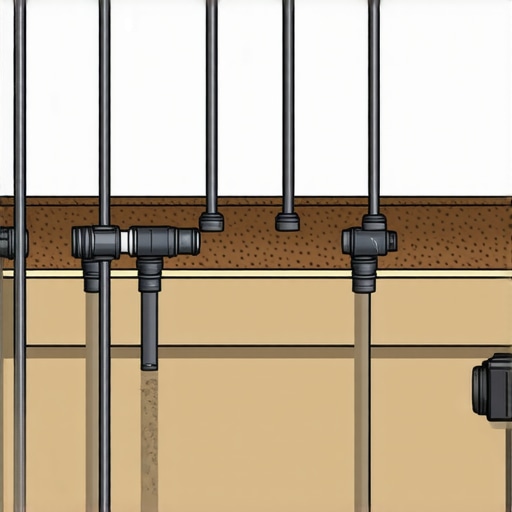
Garden design is secondary to civil engineering when you are dealing with hardscaping like patios or retaining walls adjacent to your pollinator beds. If your paver base isn’t compacted to a 98% Standard Proctor Density, your garden will eventually settle into a low spot that collects standing water. We use a modified gravel base with screed pipes to ensure a perfectly flat, draining surface. Every retaining wall we build near a garden includes a perforated French drain and non-woven geotextile fabric. This prevents fines from clogging the drainage stone. If water sits behind a wall or under a plant’s root flare, it will rot. It’s that simple. Do not trust a contractor who doesn’t talk about hydrostatic pressure.
What is the best mulch for native plants in Zone 5?
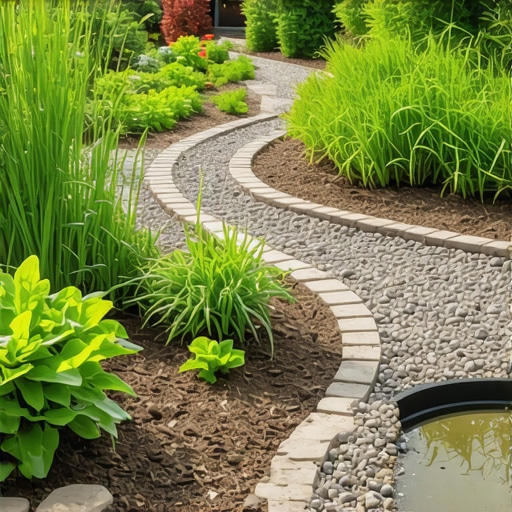
Avoid dyed wood chips or thick layers of hardwood mulch which can tie up nitrogen as they decompose. Use arborist wood chips or a living mulch of ground-cover plants. For native perennials, a 2-inch layer of leaf mold is superior as it mimics the natural forest floor and supports soil microbiology.
Installation Mechanics: Avoiding the Mulch Volcano
The biggest mistake in landscaping is planting too deep. I see it every day. The root flare—the point where the roots meet the trunk or stem—must be at or slightly above the finish grade. If you bury it, you’re creating a hypoxic environment. The plant will die in three years, and you’ll wonder why. We use drip-line irrigation for the first two seasons to ensure deep root penetration. After that, we turn it off. Native plants should be self-sufficient. If they aren’t, you picked the wrong plant or the wrong spot.
- Step 1: Soil test and pH adjustment to 6.0-7.0 range.
- Step 2: Rough grading to ensure 2% slope away from foundations.
- Step 3: Incorporation of 5% organic matter by volume.
- Step 4: Layout plants based on mature spread, not current size.
- Step 5: Initial deep watering to 6-inch depth.
It’s about the long game. You’re building an ecosystem. Don’t skip the science. Your yard isn’t a decoration; it’s an applied biology project. Do it right the first time.