Stop Killing 2026 Peonies: 3 Stake Support Rules
I always drill into my new crew members: if you do not fix the soil grading first, every plant you put in the ground is just expensive compost. I have seen guys spend six figures on specimen trees only to watch them drown because they ignored the three-degree slope directing runoff toward the root ball. Peonies are no different. Most homeowners treat them like annuals, but a well-managed herbaceous peony can outlive the mortgage. When I walk onto a property and see Paeonia lactiflora flopped over in the mud, it is not a lack of beauty; it is a failure of structural engineering. You are asking a biological water-tube to support a heavy, water-retentive bloom head. Without intervention, physics wins every time.
Why Do Peonies Fall Over Every Year?
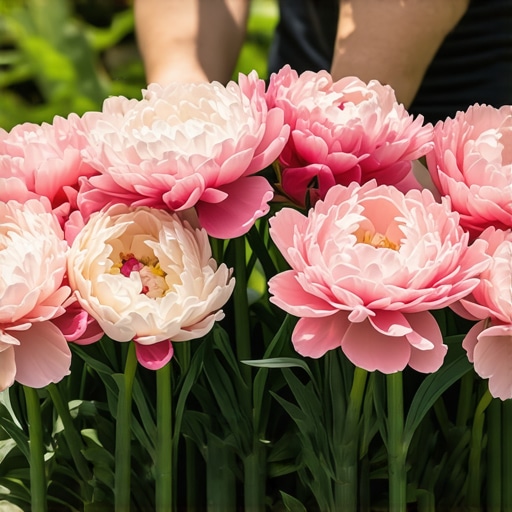
Peonies collapse because their double-bloom heads weigh significantly more than the vascular strength of their stems can support, especially during heavy rain events that add hydrostatic load to the petals. Without a proactive structural support system installed before the stems reach 6 inches, the plant will inevitably buckle under its own weight, causing permanent vascular crimping. It is a structural failure, plain and simple.
“Herbaceous peonies should be planted with the eyes no deeper than 2 inches below the soil surface to ensure flowering and avoid crown rot.” – Penn State Extension
Rule 1: The Pre-Emergent Structural Grid
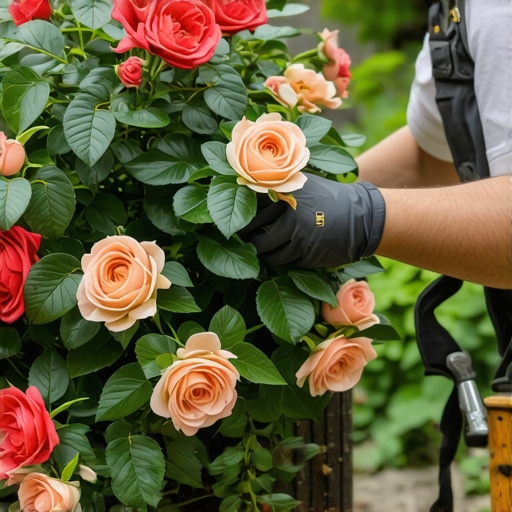
The biggest mistake in garden design is waiting until the plant is 2 feet tall to think about support. You must install your staking system when the red shoots are just breaking the soil surface. This allows the stems to grow through the support rather than being shoved into it later. Shoving a mature peony into a hoop is like trying to put a corset on a grizzly bear; you will snap the stems at the base. We use a heavy-gauge wire grid. By the time the plant is at full height, the foliage completely obscures the metal. The plant supports itself from the inside out. Don’t skip this. If you see green leaves, you are already late.
How do I support peonies without them looking messy?
To support peonies without a messy appearance, use matte-finished steel peony rings or grow-through grids placed 4 inches above the crown in early spring. As the foliage expands, it naturally covers the structural frame, creating a self-concealing architecture that maintains the plant’s upright habit without visible ties or plastic. Low-quality plastic stakes will UV-degrade and snap. Use powder-coated steel. It lasts. It works.
[IMAGE_PLACEHOLDER]
Rule 2: High-Tensile Material Selection (Steel Over Bamboo)
In the world of professional landscaping, we do not use bamboo for heavy perennials. Bamboo is for light-duty staking. A mature 2026 peony needs high-tensile steel. We are talking about 8mm to 10mm thickness for the perimeter rings. Anything thinner will bow under the weight of a rain-soaked bloom. When we talk about landscaping durability, we are looking at the PSI of the soil grip. Your stakes need to be driven at least 12 inches into the subsoil layers, past the loose mulch and topsoil, to prevent the entire support from tipping over during a summer thunderstorm. It is about leverage. A 3-foot plant acts as a lever; if the anchor is shallow, the plant wins.
| Material Type | Structural Integrity | Lifespan | Recommended Use |
|---|---|---|---|
| Bamboo Stakes | Low (Flexes) | 1 Season | Light annuals only |
| Plastic Coated Wire | Medium | 2-3 Seasons | Small shrubs |
| Powder-Coated Steel | High (Rigid) | 15+ Years | Heavy Double Peonies |
| Rebar (Custom) | Extreme | 25+ Years | Large Intersectional Hybrids |
Rule 3: Anatomical Placement and Node Protection
You cannot just wrap a string around the middle of a peony bush and call it a day. This creates a waisted effect that restricts sap flow and prevents air circulation in the center of the plant. Poor airflow is a direct invitation to Botrytis paeoniae (gray mold). Your support must be wide enough to allow the plant to breathe. We set our support rings at two levels: one at 12 inches for lateral stability and one at 24 inches for bloom weight management. This dual-zone support ensures that even if the top flops, the main stem remains upright. Do not constrict the nodes. Let the plant move. It needs to sway slightly to build cellulose strength.
“A retaining wall doesn’t fail because of the stone; it fails because of the water trapped behind it. Similarly, a peony doesn’t fail because of the flower, but because of the lack of drainage and structural support.” – Hardscape Engineering Axiom
How much modified gravel do I need for a peony bed border?
Peony beds require a well-drained perimeter; for a standard 4-inch deep stone border, you need approximately 0.5 cubic yards of #57 modified gravel per 50 linear feet. This prevents soil compaction around the root zone and ensures that surface runoff does not pool at the crown, which is the primary cause of peony fungal rot in heavy clay soils.
The Critical Peony Maintenance Checklist
- March 1-15: Inspect crowns for eye depth. If deeper than 2 inches, lift and replant.
- March 20: Apply a low-nitrogen (5-10-10) fertilizer to the drip line. Avoid the crown.
- April 1: Drive steel stakes 12 inches into the ground. Set the first grid.
- May 15: Monitor for ants; they are harmless and actually help clear nectar from buds.
- Post-Bloom: Deadhead immediately to redirect energy from seed production back to the roots.
Stop buying those flimsy green hoops from the big-box stores. They are junk. If you want 2026 to be the year your peonies actually stand up, treat your garden like a job site. Grade the soil, anchor your supports in the subsoil, and use materials that can handle a North American thunderstorm. Your plants are not ornaments; they are living machines. Give them the frame they need to function. It is that simple. Hardscaping isn’t just about patios; it is about the structural integrity of the entire landscape. Do it right or do it twice.