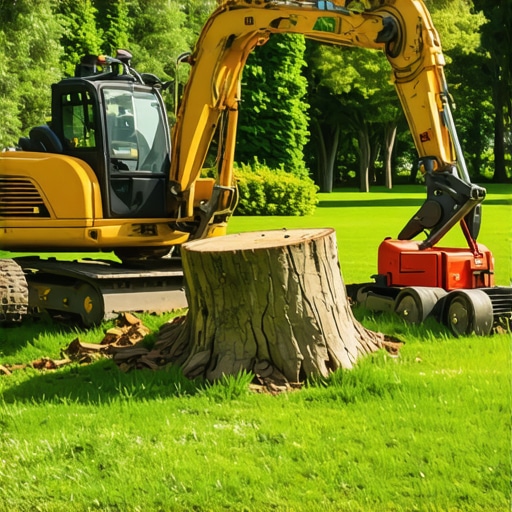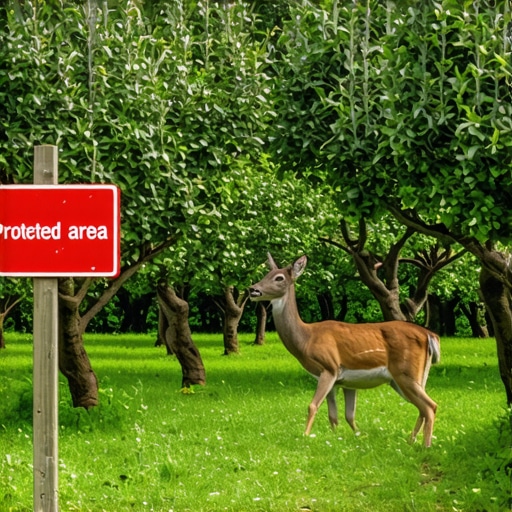
Stop 2026 Deer Rubbing on New Fruit Trees
Stop 2026 Deer Rubbing on New Fruit Trees: A Field-Tested Engineering Approach
The Critical Mechanics of Preventing Buck Rub on High-Value Saplings
To stop 2026 deer rubbing on new fruit trees, professional landscapers must implement rigid physical exclusions, specifically 14-gauge welded wire cages at least 5 feet in height, anchored by dual heavy-duty T-posts. These structural barriers prevent the buck from engaging the cambium layer of the tree, ensuring the hydraulic vascular system remains uninterrupted during the autumn rutting season.
I always drill into my new crew members: if you do not fix the physical protection before the first frost, every plant you put in the ground is just expensive compost. I have seen guys spend three days installing a high-end orchard only to come back in November to find every single trunk shredded to the white wood. It is a biological certainty: if a tree has a diameter between one and four inches, it is a target. We do not gamble with sprays or soap bars. We build for structural integrity. Most homeowners think a thin plastic wrap is enough. It is not. A 200-pound whitetail buck has enough torque to snap a young sapling or rip that plastic to shreds in seconds. We are looking at this through the lens of civil engineering. We are creating a perimeter that can withstand lateral force and environmental stressors. If the cage moves when you kick it, it is a failure.
Why Do Deer Target New Fruit Trees in 2026?
Understanding the enemy is the first step in horticultural defense. Deer do not rub trees because they are hungry. They rub to remove antler velvet and to deposit scent from their forehead glands. This behavior peaks when the photoperiod shortens, signaling the start of the breeding season. The specific bark texture of young fruit trees – whether it is apple, pear, or cherry – provides the ideal resistance for their needs. When that bark is stripped, the tree loses its phloem, the specialized tissue responsible for transporting sugars from the leaves to the roots. Loss of more than 50 percent of the circumference results in girdling. It will rot. It will die. There is no middle ground here. We are managing the biological reality of the local biome. You must anticipate the pressure before the buck ever sets foot on the property.
“Damage to the cambium layer exceeding 50 percent of the circumference often results in irreversible hydraulic failure of the tree, as the nutrient transport system is fundamentally severed.” – Arboricultural Standards Manual
The Physics of the 5-Foot Welded Wire Cage
If you want to stop 2026 deer rubbing, you stop using flimsy materials. We use 2×4 inch mesh welded wire. This size prevents the deer from getting their snout or antlers through the gaps while allowing enough airflow to prevent fungal pathogens on the trunk. The cage must be at least 18 inches in diameter. If the wire is too close to the trunk, the buck will just push the wire into the bark. Distance is your friend. We secure these with 5-foot T-posts driven 18 inches into the subsoil. We do not use wooden stakes; they rot at the ground line within two seasons. We use galvanized steel because it handles the lateral pressure of a rubbing buck without bending.
How Much Modified Gravel Do I Need for a Patio Base?
While often asked in the context of hardscaping, soil stability under your trees matters too. For a standard 10×10 patio, you would need approximately 4 tons of modified gravel to reach a 6-inch compacted depth, but for tree cages, we focus on the density of the soil where the posts are driven. If you are working in heavy red clay, your T-posts will hold like they are set in concrete. If you have sandy loam, you might need 7-foot posts to get deep enough to find resistance. Always call 811 before driving any metal into the ground. A T-post through a lateral sewer line is a $5,000 mistake you do not want to make. Engineering a landscape requires knowing what is beneath the surface as much as what is above it.
Material Comparison for Deer Protection
| Material Type | Durability Rating | Estimated Lifespan | Effectiveness |
|---|---|---|---|
| 14-Gauge Welded Wire | Industrial | 15+ Years | 99% |
| Plastic Mesh Fencing | Low | 2 Years | 40% |
| Corrugated Drain Pipe | Moderate | 5 Years | 65% |
| Burlap Wraps | None | 1 Season | 10% |
We avoid plastic wraps because they create a micro-climate that encourages borers and bark rot. Moisture gets trapped against the trunk, and in the freeze-thaw cycles of late winter, this leads to frost cracks. A metal cage allows the bark to harden off naturally. It is about biological logic. We want the tree to experience the environment while being protected from mechanical damage. This is the difference between a contractor and a hack. A hack hides the problem; a professional solves the environment.
The Installation Checklist for Fruit Tree Defense
- Identify the root flare and ensure it is not buried by mulch volcanoes.
- Drive two T-posts on opposite sides of the tree, outside the root ball.
- Cut the welded wire to a length of 6 feet to create an 18-to-22-inch diameter circle.
- Secure the wire to the T-posts using 12-gauge galvanized tie wire.
- Check the cage annually to ensure the tree trunk is not expanding into the wire.
“Mechanical protection is the only statistically significant method for reducing buck rub damage in high-pressure riparian zones where chemical deterrents fail due to environmental degradation.” – Extension Forestry Research
Will a Fruit Tree Survive if the Bark is Rubbed Off?
Survival depends on the percentage of the circumference damaged. If the rub is vertical and narrow, the tree can often compartmentalize the wound – a process called CODIT (Compartmentalization of Decay in Trees). However, if the rub goes all the way around the trunk, the tree is functionally dead. No amount of fertilizer or watering will save it because the “plumbing” is gone. In some cases, we can perform a bridge graft, where we take scion wood and bridge the gap between the healthy bark above and below the wound, but this is a high-level surgical procedure with a variable success rate. It is far cheaper and more efficient to build the cage correctly the first time. Do not wait until you see the damage to act.
Soil Drainage and Post Stability
When we install these systems, we also look at the grading. If the soil stays saturated, the T-posts will lean. Poor drainage is the silent killer of both hardscapes and landscapes. We ensure the area around the fruit tree is graded to shed water away from the trunk. This prevents crown rot and ensures the structural integrity of our deer cages. We are not just planting; we are managing a site’s civil footprint. Every element, from the NPK ratio of the spring fertilizer to the PSI of the soil compaction around the posts, contributes to the 2026 success of that orchard. This is the pragmatic reality of high-end land management. We don’t hope for success; we engineer it.
![Stop Watering Hostas at Night (Do This Instead) [2026]](https://lawnmajesty.com/wp-content/uploads/2026/06/Stop-Watering-Hostas-at-Night-Do-This-Instead-2026.jpeg)
![Stop 2026 Rust on Garden Tools [Maintenance Tips]](https://lawnmajesty.com/wp-content/uploads/2026/07/Stop-2026-Rust-on-Garden-Tools-Maintenance-Tips.jpeg)
![Stop Killing Your 2026 Boxwoods: 3 Blight Fixes [Tested]](https://lawnmajesty.com/wp-content/uploads/2026/07/Stop-Killing-Your-2026-Boxwoods-3-Blight-Fixes-Tested.jpeg)