Stop Lawn Moss: Why You Need High-Zinc Soil Spray
The Forensic Autopsy of a Dying Lawn
The first sign of a failing lawn is the squelch. When you walk across your yard in late spring and your boots sink into a spongy, emerald carpet that peels away from the dirt with zero resistance, you are looking at a horticultural failure. That is not grass. That is moss. Moss is a bryophyte that lacks a vascular system, meaning it does not have roots to pull moisture from deep in the earth. Instead, it sits on the surface, choking out the oxygen supply to your turf roots. I have seen hundreds of homeowners ignore this until their yard is a monoculture of primitive spores. They think it is just a bit of dampness. It is actually a structural and chemical collapse of your soil profile. It will rot your lawn from the bottom up. Do not wait for it to disappear on its own. It won’t.
The Chemical Nightmare: A Cautionary Tale
I recently walked onto a property in a high-end neighborhood where the homeowner had tried to solve their moss problem by dumping fifty pounds of pelletized lime every three months. They heard on some generic gardening blog that moss likes acid, so they figured more lime meant less moss. By the time I arrived, the soil pH was north of 8.2, which is essentially alkaline concrete. The grass was yellowing from iron chlorosis because the pH was too high for the roots to uptake nutrients, yet the moss was still thriving in the shade of a massive oak tree. They had created a chemical desert. This is what happens when you treat symptoms instead of biology. We had to core aerate the entire lot, apply sulfur to drop the pH, and pivot to a high-zinc soil spray to actually kill the moss without further damaging the soil chemistry. If you do not test your soil before dumping chemicals, you are just throwing money into a hole.
“A lawn is a biological system that requires precise chemical balance; applying the wrong amendment is often worse than applying nothing at all.” – Agronomy Field Manual 4th Edition
The Science of Zinc Soil Spray for Moss Control
To stop lawn moss, you must address the underlying soil conditions while applying high-zinc soil spray, which works by denaturing the moss cell proteins. Unlike iron sulfate, which often just burns the top of the moss and leaves the spores intact, zinc provides a longer-lasting residual barrier in the soil that prevents moss spores from germinating during damp, cool cycles. Zinc is a heavy metal that, in small, controlled doses, is an essential micronutrient for turf but a lethal toxin to bryophytes. The zinc ions interfere with the moss’s ability to photosynthesize at a cellular level. It effectively starves the moss while the grass, which has a much more robust cellular structure and vascular system, remains unaffected. You need a chelated zinc solution for maximum penetration into the moss crown. Most box-store products are too weak. You want a professional grade concentrate.
How much zinc spray do I need per 1000 square feet?
For a standard moss infestation, you should apply approximately 2 to 4 ounces of a 10 percent zinc sulfate concentrate diluted in one gallon of water per 1000 square feet. This concentration ensures that the zinc ions reach the rhizoids of the moss without reaching phytotoxic levels for your perennial ryegrass or fescue. Always recalibrate your sprayer before starting. Consistency is the only way to win this.
| Control Method | Action Mechanism | Duration of Effect | Soil Impact |
|---|---|---|---|
| Zinc Soil Spray | Cellular Denaturation | 6 to 9 Months | Provides Micronutrients |
| Iron Sulfate | Dehydration/Desiccation | 2 to 4 Weeks | Can Lower pH Rapidly |
| Mechanical Raking | Physical Removal | None | Disrupts Turf Roots |
| Liming | pH Adjustment | Years | No Direct Moss Toxicity |
When is the best time to apply moss killer to my lawn?
The best time to apply a high-zinc moss killer is during the active growth phases of the moss, which typically occur in early spring or late autumn when temperatures are between 45 and 65 degrees Fahrenheit and moisture is high. Applying during a summer heatwave is a waste of product. The moss is dormant then. It will not absorb the zinc. You must catch it while it is actively respiring. Precision timing beats heavy volume every single time.
The Anatomy of Moss Infestation
Moss does not have true roots; it has rhizoids. These are hair-like anchors that do not penetrate the soil more than a few millimeters. This is why moss can grow on a brick or a sidewalk. In your lawn, it occupies the space between the soil surface and the air, creating a hydrophobic layer that prevents water from reaching the grass roots. When the humidity rises, the moss swells, holding water like a sponge. This creates a perpetual dampness that invites fungal pathogens like Pythium blight and Rhizoctonia. If you have moss, you likely have a drainage problem or a compaction issue. You cannot just spray your way out of a swamp. You have to fix the grading. If the water does not move, the moss will return.
“Soil compaction is the primary driver of turf failure in residential landscapes, as it eliminates the pore space necessary for gas exchange.” – Penn State Center for Turfgrass Science
I tell my crew that every yard we step on is a civil engineering project. We look at the PSI of the soil. If it is over 300 PSI, grass roots cannot penetrate. The moss, however, does not care. It sits on top of the hard-pack like a squatter. High-zinc sprays are your tactical strike to clear the area so you can get a core aerator in there to break up that compaction. Without the zinc, the moss just fragments during aeration and spreads even faster. You have to kill it before you stir it up.
The Moss Eradication Protocol
Follow these steps exactly. If you skip one, you are just inviting the moss back for a second round. I have seen it happen a thousand times.
- Conduct a professional soil test to check pH and nutrient levels.
- Identify drainage failures and install French drains or adjust grading if necessary.
- Apply high-zinc soil spray during cool, damp weather when moss is green.
- Wait 7 to 10 days for the moss to turn brown and brittle.
- Power-rake or dethatch the lawn to remove the dead organic matter.
- Overseed with a shade-tolerant fescue or specialized turf mix.
- Apply a high-phosphorus starter fertilizer to encourage rapid root development.
The Long-Term Maintenance Schedule
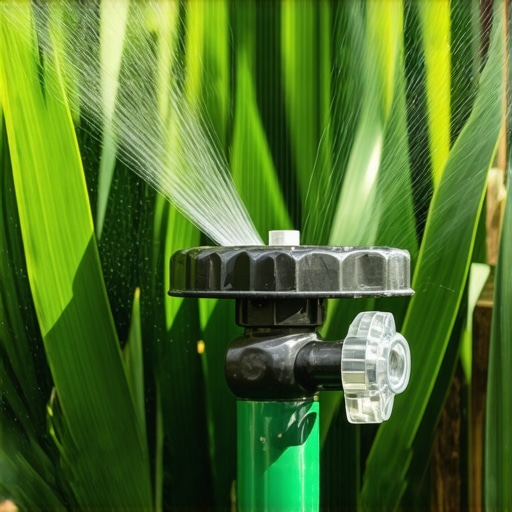
Once the moss is gone, your job is not over. You have to maintain an environment where moss cannot compete. This means deep, infrequent watering. Most people water for ten minutes every morning. That is a recipe for moss. You are keeping the surface wet while the deep soil stays bone dry. You should be watering once or twice a week, long enough to put down one inch of water. This forces the grass roots to grow deep into the soil profile to find moisture. The surface stays dry, and moss cannot survive on a dry surface. It is simple physics. You also need to keep your mower height at 3 or 4 inches. Tall grass shades the soil, which sounds like it would help moss, but it actually strengthens the turf and crowds out the bryophytes. Short, scalped grass is a moss’s best friend. Do not scalp your lawn. It is lazy and it kills your grass.
![Stop 2026 Nitrogen Burn on Yellow Fescue [3-Step Fix]](https://lawnmajesty.com/wp-content/uploads/2026/05/Stop-2026-Nitrogen-Burn-on-Yellow-Fescue-3-Step-Fix.jpeg)