Stop 2026 Nitrogen Burn: 3 Fertilizer Rules
The Anatomy of a Chemical Lawn Burn
To stop nitrogen burn in 2026, you must understand that excessive urea or ammonium salts pull moisture out of plant tissues through osmotic pressure, causing rapid cellular dehydration. This process results in yellow or brown desiccation that can permanently kill the turf crown if not remediated through heavy irrigation and soil flushing. I recently witnessed a homeowner who completely torched their front lawn by applying 46-0-0 straight urea during a 90 degree heatwave. The grass did not just turn yellow; it turned a brittle, metallic grey within 48 hours. By the time they called me, the soil salinity levels were high enough to kill a cactus. We had to core aerate to a depth of 4 inches and flush the area with thousands of gallons of water just to lower the parts per million of nitrogen to a level where the soil was not toxic. Most people think they are feeding their grass, but without understanding the salt index of their fertilizer, they are effectively pouring acid on their root systems. This is not gardening; it is chemical management.
“Nitrogen applications should not exceed 1 pound of actual nitrogen per 1,000 square feet in a single application to minimize the risk of foliar burn and nitrate leaching.” – Penn State Center for Turfgrass Science
Rule 1: Control the Salt Index with Slow-Release Nitrogen
Preventing nitrogen burn requires using slow-release nitrogen sources like sulfur-coated urea or methylene urea to maintain a low salt index in the soil. These components ensure that nutrients are released via microbial activity rather than immediate water solubility, protecting the grass root system from osmotic stress. You need to look at the back of the bag for the percentage of Water Insoluble Nitrogen (WIN). If that number is zero, you are holding a bag of immediate-release salts. In my firm, we never use a product with less than 50% slow-release nitrogen for summer applications. The physics are simple: water-soluble nitrogen (WSN) dissolves the moment it hits dew or light rain, creating a concentrated brine. This brine draws water out of the grass blades. If you use a slow-release polymer coating, the nitrogen is trapped inside a microscopic shell. It requires soil microbes to eat through that shell or heat to expand the pores of the coating. This creates a steady drip of nutrients rather than a flood. [image_placeholder_1]
What does the first number on a fertilizer bag actually mean?
The first number represents the percentage of total nitrogen by weight, which determines the application rate needed to avoid burning the turf. If you have a 50 pound bag of 20-0-0, you have 10 pounds of actual nitrogen, meaning that bag must cover exactly 10,000 square feet to stay at the 1 pound per 1,000 square foot safety limit.
Rule 2: Precision Calibration and Distribution Math
Avoiding lawn damage depends on the mechanical calibration of your broadcast spreader to ensure an even distribution of fertilizer granules across the entire square footage. Inconsistent application leads to ‘striping’ where some areas receive a toxic dose of nitrogen while others receive none, causing localized soil death. You cannot trust the settings printed on the bag. Every spreader is worn differently. My crew calibrates by weighing out a specific amount of product, marking off 1,000 square feet on the shop floor, and ensuring the hopper is empty exactly when they hit the finish line. If you are using a drop spreader, your overlap must be zero. If you overlap by even two inches, you have effectively applied a double dose. On a 30-0-0 product, that is 3 pounds of nitrogen per 1,000 square feet. That will kill Kentucky Bluegrass in a heartbeat.
| Nitrogen Source | Release Rate | Burn Risk Index |
|---|---|---|
| Urea (46-0-0) | Immediate | High (Salt Index 75) |
| Ammonium Sulfate | Fast | High (Salt Index 69) |
| Sulfur-Coated Urea | 6-10 Weeks | Low |
| Milorganite (Organic) | Slow (Microbial) | Very Low |
Rule 3: Post-Application Hydration and Soil pH Management
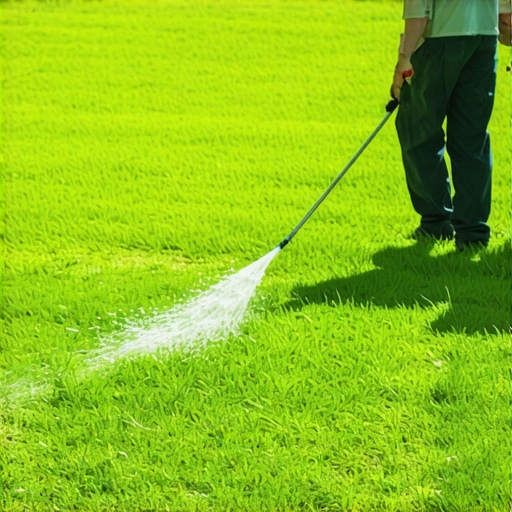
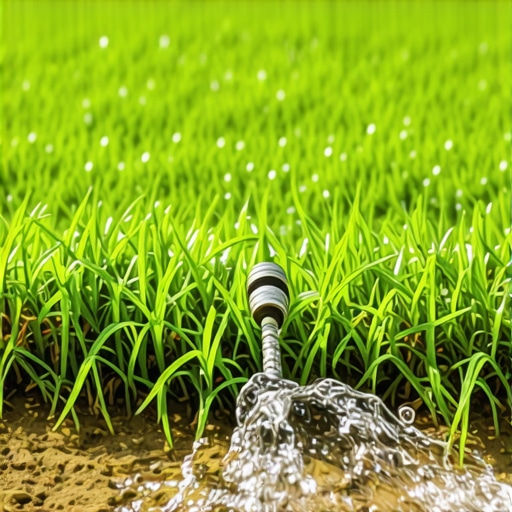
Successful fertilization necessitates immediate irrigation with at least 0.5 inches of water to move the nitrogen granules off the leaf blades and into the root zone. This prevents foliar burn and reduces nitrogen volatilization, where expensive nutrients turn into ammonia gas and escape into the atmosphere. If you leave fertilizer sitting on the leaf of a fescue or rye grass plant, it will eventually draw moisture out of that leaf. You must wash the salts down. But there is a catch: if your soil pH is above 7.5, the nitrogen reacts with the alkaline soil to create ammonia gas even faster. You are literally throwing money into the air.
“Soluble salts in the soil solution increase the osmotic pressure, making it difficult for the plant to absorb water even when soil moisture is adequate.” – Agronomy Manual: Soil Chemistry Standards
How much nitrogen per 1000 square feet is safe?
The safety threshold for most cool-season grasses is 0.75 to 1.0 pound of nitrogen per 1,000 square feet, provided the source is at least 30 percent slow-release. Applying more than this amount in a single session risks root desiccation and groundwater contamination through leaching.
The Forensic Recovery: How to Fix a Nitrogen-Burned Yard
Fixing a burned lawn requires an immediate reduction in soil salinity through deep, heavy watering and the application of liquid humates to buffer the soil chemistry. You must act within the first 24 hours of seeing the yellowing to save the meristematic tissue at the base of the plant.
- Step 1: Flush the area with 1 inch of water every morning for three consecutive days.
- Step 2: Do not mow the grass; the plant is in shock and needs every millimeter of leaf to photosynthesize.
- Step 3: Apply a liquid kelp or humic acid treatment to stimulate root recovery.
- Step 4: Core aerate in the fall to allow fresh oxygen into the salt-compacted root zone.
It is important to note that while the internet tells you to water every day, turf grass actually needs deep, infrequent watering exactly 1 inch per week to force roots to chase the water down. Constant shallow watering keeps the salts at the surface where they do the most damage to the crown. If you have burned the lawn, your only goal is to dilute the concentration of nitrogen in the top 2 inches of soil. It will look like a swamp for a few days. Do it anyway. It will rot if you don’t flush it.