Stop 2026 Tree Bark Damage: 3 Mower Guard Rules
The Fatal Scar: Why Your 2026 Landscape is Dying Right Now
To stop 2026 tree bark damage, you must install heavy-duty physical guards, create a 3-foot minimum mulch buffer, and enforce zero-contact mechanical boundaries to prevent lethal cambium stripping and fungal infections. Mechanical damage from mowers and string trimmers is the leading cause of premature urban tree mortality, often taking two to three years for the full canopy collapse to manifest. It starts with a simple nick. By the time you see the leaves thinning in the summer of 2026, the tree has already lost its ability to transport nutrients from the roots to the crown. This is not just an aesthetic issue; it is a structural failure of the tree’s vascular system.
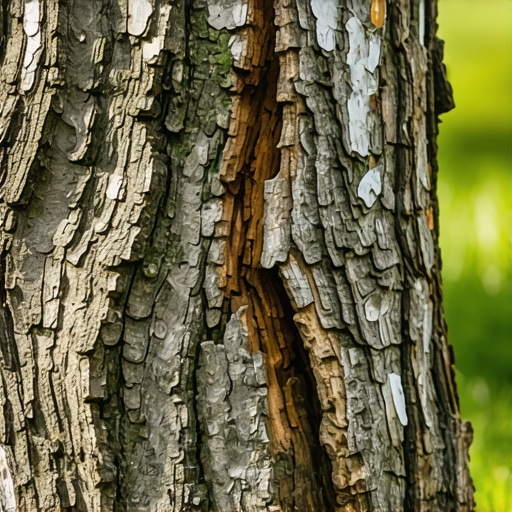
I always drill into my new crew members: if you don’t fix the soil grading first, every plant you put in the ground is just expensive compost. But the lesson goes deeper. I’ve seen $10,000 specimen oaks reduced to firewood because a ‘mow-and-blow’ hack decided to save thirty seconds by pivoting their zero-turn mower against the trunk. I tell my guys, ‘That bark is the tree’s skin. You wouldn’t scrape your own skin off with a piece of spinning plastic, so don’t do it to the tree.’ When that string trimmer line hits the base, it doesn’t just cut the bark; it obliterates the phloem. That is the highway for sugars. Cut the highway, and the roots starve. It is a slow, painful death that most homeowners don’t notice until it is far too late.
The Anatomy of Mechanical Injury and Vascular Failure
To understand why mower guards are non-negotiable, you have to look at the microscopic reality of arboriculture. Directly beneath the rough outer bark lies the vascular cambium, a microscopic layer of cells responsible for creating new xylem and phloem. This layer is surprisingly fragile. A mower deck hitting a trunk at three miles per hour exerts several hundred pounds of pressure per square inch. This pressure crushes the cells against the hard interior wood, causing a localized infarct. Unlike human skin, trees do not ‘heal’ by replacing damaged tissue. Instead, they utilize a process called CODIT: Compartmentalization of Decay in Trees. The tree attempts to wall off the injury. If the injury covers more than 25 percent of the circumference, the tree’s internal plumbing becomes so constricted that it cannot survive a high-heat summer. This is where the 2026 timeline comes in; the tree will spend its stored energy for a season or two before the structural deficit finally wins.
“Mechanical injury to the basal area of a tree provides a primary entry point for Ganoderma lucidum and other wood-decaying fungi that compromise structural integrity.” – International Society of Arboriculture (ISA) Best Management Practices
Rule 1: The Hardscape Barrier and Guard Installation
The most effective way to prevent tree bark damage is to remove the possibility of contact through fixed physical barriers made of high-density polyethylene or galvanized steel. These guards should be at least 8 to 12 inches high to protect against both the mower deck and the high-velocity nylon line of a string trimmer. You must ensure the guard is not wrapped too tightly. I’ve seen ‘protective’ guards actually kill trees because the installer didn’t account for secondary growth. As the trunk expands, a tight guard becomes a garrote. Use an expandable guard with ventilation holes to prevent moisture buildup, which can lead to fungal cankers and rot at the root flare.
| Guard Material | Durability Rating | Breathability | Impact Resistance |
|---|---|---|---|
| HDPE Plastic | High | Moderate | Excellent |
| Galvanized Steel | Extreme | Low | Superior |
| Corrugated Pipe (DIY) | Low | High | Moderate |
Rule 2: The Three-Foot Biological Buffer Zone
Establishing a wide mulch ring is the single most important step in garden design for tree health, effectively moving the mower’s path away from the sensitive root flare. A three-foot radius of organic mulch, such as triple-shredded hardwood, serves two purposes. First, it eliminates the need for grass to grow right up to the trunk, which removes the temptation for an operator to get close with a mower. Second, it retains moisture and regulates soil temperature. However, do not commit the ‘mulch volcano’ sin. Mulch should never touch the bark. It must be kept 2-3 inches away from the root flare. If you pile mulch against the trunk, you create a dark, moist environment that encourages adventitious roots and softens the bark, making it even more susceptible to mechanical damage and rot.
How much modified gravel do I need for a patio base?
While we are discussing the perimeter of your trees, often homeowners integrate hardscaping nearby. For a standard patio base, you need at least 4 to 6 inches of compacted 21A or 57 stone, but near trees, this must be adjusted to prevent root compaction. If your patio encroachment is within the drip line, you are risking the tree’s health. You must maintain the critical root zone (CRZ). Any hardscape installation near a tree requires a specialized sub-base to allow for gas exchange in the soil. Without oxygen, the roots die, and the bark will begin to slough off as the tree enters a state of decline.
Rule 3: Enforcing Operator Protocol and Offset Distances
The final rule is strictly mechanical management: never allow a mower deck to come within 12 inches of a tree trunk, regardless of whether a guard is present. In my firm, we have a ‘zero-contact’ policy. If a crew member touches a trunk with a mower, they are back on the shovel for a week. Professional landscaping requires precision. Use a hand-snip or a carefully controlled trimmer for the final inch of grass, or better yet, spray a narrow strip of glyphosate or a natural fatty-acid herbicide around the guard to create a ‘dead zone’ where no trimming is required. This technical precision prevents the ‘bruising’ effect that occurs even when bark isn’t visibly torn.
“Soil compaction from heavy mowing equipment within the drip line reduces macropore space, leading to root asphyxiation and secondary bark dieback.” – Penn State Agricultural Extension Manual
Will a nicked tree trunk heal itself?
A tree will never truly heal a wound; it can only compartmentalize it. When a mower nicks a trunk, the tree produces ‘callus tissue’ around the edges of the wound. This thickened, rolling wood looks like a scar. If the tree is healthy and the wound is small, it might eventually grow over the injury. However, the internal wood behind that scar is forever compromised. It is prone to heartwood rot. This is why prevention is the only real cure. Once the structural integrity of the bark is broken, the tree is on a countdown.
- Inspect all trees for existing ‘mower blight’ or basal scars.
- Install expandable, vented guards on all trees under 10 inches in diameter.
- Remove grass within a 3-foot radius and replace with aged hardwood mulch.
- Ensure the root flare (the flare at the base) is visible and not buried.
- Train anyone operating machinery to maintain a 12-inch safety buffer.
Landscape maintenance is often a game of inches and PSI. If you ignore the base of your trees, you are essentially ignoring the foundation of your entire property’s value. A mature oak adds thousands of dollars to your home’s equity; a mower nick takes it away. Don’t let a $20 mowing job result in a $2,000 removal fee in 2026. Fix the guards now. Set the buffers. Protect the cambium.
![Stop Overwatering Your 2026 Tomato Crop [Drainage Fix]](https://lawnmajesty.com/wp-content/uploads/2026/07/Stop-Overwatering-Your-2026-Tomato-Crop-Drainage-Fix.jpeg)