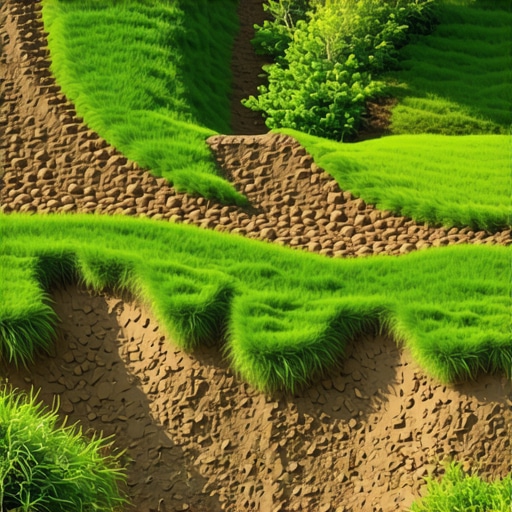
Stop Mulch from Washing Away on Slopes
Why Your Slope Mulch Fails During Heavy Rain
To stop mulch from washing away on slopes, you must increase surface friction and manage hydrostatic runoff by choosing interlocking mulch varieties like double-shredded hardwood and implementing structural mechanical barriers such as perimeter trenching or terracing. Gravity and water velocity are your primary enemies.
I always drill into my new crew members: if you don’t fix the soil grading first, every plant you put in the ground is just expensive compost. I’ve seen guys spend five figures on specimen trees and premium mulch, only to watch the first summer thunderstorm wash the entire investment into the neighbor’s pool. It’s a rookie mistake. Landscaping on a grade isn’t about aesthetics; it’s about civil engineering. If the water has a clear, unimpeded path down a 30-degree incline, physics will win every single time. You have to break the water’s momentum before it picks up enough speed to lift the mulch fibers. If you don’t respect the math of the slope, your yard will migrate. It’s that simple.
The Physics of Mulch Displacement
When rain hits a slope, it doesn’t just soak in. It creates sheet flow. This thin layer of moving water exerts shear stress on the mulch. Most homeowners buy those large pine nuggets because they look clean, but in a heavy downpour, those nuggets are basically tiny wooden boats. They float. Once they float, they move. You need materials that knit together. This is where we look at the microscopic level of the wood fibers.
“Surface runoff on sloped landscapes is significantly mitigated by the application of organic covers that increase hydraulic roughness and promote infiltration.” – Penn State Extension
Selecting the Right Materials for High-Incline Areas
Choosing the correct landscaping materials for a hill requires prioritizing texture and weight over color; specifically, double-shredded hardwood mulch or pine straw provides the necessary structural interlocking to resist displacement during high-velocity rainfall events. Avoid smooth or large-particle products.
| Mulch Type | Slope Stability Rating | Primary Mechanism |
|---|---|---|
| Pine Nuggets | Very Low | Buoyant; easily floats and rolls. |
| Wood Chips | Low | Uniform shape allows water to slide underneath. |
| Double-Shredded Hardwood | High | Fibrous strands knit together like a mat. |
| Pine Straw (Needles) | Highest | Extremely long fibers interlock and stay permeable. |
| Gorilla Hair (Redwood) | Very High | Fibrous texture creates a dense, heavy blanket. |
How much mulch do I need for a steep hill?
On a slope, the standard 3-inch rule changes. You should aim for a compressed 2 to 3 inches. Any deeper, and the mulch becomes its own unstable layer, prone to sliding off itself. You want enough to cover the soil, but not so much that you create a heavy, saturated mat that shears off the subsoil. Don’t overdo it. It will slide.
Mechanical Solutions: Trenching and Terracing
To prevent mulch migration, you must implement mechanical hardscaping interventions such as benched terracing or contour trenching, which effectively shorten the slope length and reduce the kinetic energy of surface water as it moves downhill. This is the foundation of long-term stability.
The first thing we do is cut a ‘toe-in’ or a ‘V-trench’ at the top and bottom of the bed. A 4-inch deep trench at the top of the slope catches the initial sheet flow before it hits the mulch. A similar trench at the bottom acts as a catch basin. If the slope is steeper than a 3:1 ratio, you need more than just mulch. You need hardscaping. This might mean installing 4×4 pressure-treated timbers or dry-stack stone walls to create level ‘steps.’ This breaks the fall.
“A retaining wall doesn’t fail because of the stone; it fails because of the water trapped behind it.” – Hardscape Engineering Axiom
What is the best way to anchor mulch on a hill?
For extreme cases, use a biodegradable jute or coir netting. Lay the netting over the soil first, anchor it with 6-inch landscape staples, and then apply the mulch over it. The netting provides a high-friction skeleton that holds the mulch in place while the plant roots establish themselves. Use staples every 12 inches. Don’t skip the staples.
The Professional Installation Protocol
Successful slope landscaping requires a specific installation sequence: soil preparation, mechanical anchoring, material application, and hydration-based compaction to ensure the mulch layer achieves maximum density and stays put. Skip one step and the system fails.
- Grade the Soil: Use a rake to remove smooth spots. A slightly roughened soil surface provides better ‘teeth’ for the mulch to grab.
- Moisten the Subsoil: Never put dry mulch on bone-dry soil. It creates a hydrophobic layer. Lightly mist the ground first.
- Apply in Layers: Put down one inch, walk it in or tamp it lightly, then add the second inch. Compaction is key.
- The Locking Soak: After installation, saturate the mulch with a heavy watering. This ‘sets’ the fibers and increases the weight of the material immediately.
- Planting Pockets: Create ‘saucers’ around individual plants to direct water to the root ball rather than letting it bypass the plant.
Can I use rocks instead of mulch on a slope?
You can, but it’s a double-edged sword. While 1-to-3-inch river rock won’t wash away as easily as wood, it also doesn’t improve soil health. Over time, fines (dirt and dust) settle between the rocks, weeds grow, and the rocks start sliding on the mud layer beneath them. If you go with stone, you must use a heavy-duty filter fabric and potentially a plastic geogrid to hold the stone in place. It’s expensive. Wood is often better for the plants.
Long-Term Maintenance and Erosion Control
Maintaining a mulched slope involves annual replenishment to account for decomposition and compaction, alongside the strategic use of ground cover plants which eventually take over the job of soil stabilization through their root systems. Mulch is a temporary fix; roots are permanent.
In the first year, check the slope after every major storm. You’ll see exactly where the water is ‘channeling.’ If you see a small gully forming, don’t just throw more mulch at it. That’s a drainage problem. You might need to redirect an up-slope downspout or add a small French drain. Remember: mulch is the skin, but the soil and grading are the bones. Keep the bones healthy, and the skin stays put. Don’t ignore the signs. Fix it early.
{“@context”:”https://schema.org”,”@type”:”HowTo”,”name”:”How to Stop Mulch from Washing Away on Slopes”,”step”:[{“@type”:”HowToStep”,”text”:”Cut a V-shaped trench at the top and bottom of the slope to intercept runoff.”},{“@type”:”HowToStep”,”text”:”Select double-shredded hardwood mulch or pine straw for their interlocking properties.”},{“@type”:”HowToStep”,”text”:”Install jute netting or erosion control blankets if the slope exceeds a 3:1 ratio.”},{“@type”:”HowToStep”,”text”:”Apply mulch in 1-inch increments, tamping each layer to increase density.”},{“@type”:”HowToStep”,”text”:”Water the mulch thoroughly immediately after installation to lock the fibers in place.”}],”totalTime”:”PT4H”}
![Build a $50 2026 Rain Barrel System [Save Water]](https://lawnmajesty.com/wp-content/uploads/2026/05/Build-a-50-2026-Rain-Barrel-System-Save-Water.jpeg)
![Stop Killing Your 2026 Azaleas: 3 Clay Soil Drainage Hacks [Zone 7]](https://lawnmajesty.com/wp-content/uploads/2026/05/Stop-Killing-Your-2026-Azaleas-3-Clay-Soil-Drainage-Hacks-Zone-7.jpeg)