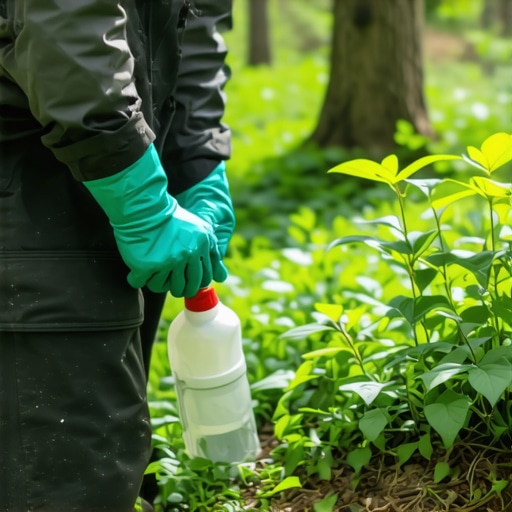
The Secret to Keeping Deer Out of Your Flower Beds
Why Deer Management is a Structural Design Priority
To keep deer out of your flower beds, you must implement a multi-layered defense strategy that combines structural hardscaping, biological scent aversion, and cervid-resistant plant selection to disrupt the animal’s natural foraging patterns and caloric intake goals. Successful deterrence requires more than just a spray bottle; it requires a deep understanding of the local ecology and the engineering of your perimeter.
I always drill into my new crew members: if you don’t fix the soil grading first, every plant you put in the ground is just expensive compost. The same logic applies to wildlife. If you don’t account for the local deer pressure during the garden design phase, you are effectively setting up a high-end buffet for the local population. I’ve seen homeowners spend $15,000 on imported perennials only to have them stripped to the stalks in 48 hours because they ignored the fundamental rules of landscape engineering. We aren’t just planting flowers; we are managing a biological system that is under constant siege.
The Biology of the Browse: Understanding Your Enemy
Deer are opportunistic herbivores with a four-chambered stomach designed to process massive amounts of cellulose. They prioritize the apical meristems (the growing tips) of plants because that is where the nitrogen and carbohydrates are most concentrated. In a professional landscaping context, we look at the ‘browse line’—the height up to which deer can comfortably reach, usually around six feet. If your garden design places high-value, nitrogen-rich plants within this zone without protection, failure is a mathematical certainty.
“White-tailed deer are concentrate selectors, meaning they choose the most nutritious plants or plant parts available. Their diet changes seasonally based on the nutritional requirements of the animal and the phenology of the plants.” – Penn State College of Agricultural Sciences
Soil quality directly impacts deer attraction. High-nitrogen fertilizers produce the tender, succulent growth that deer crave. If you are over-fertilizing your lawn care areas near the flower beds, you are essentially ringing a dinner bell. We use slow-release, organic-based nutrients to keep plants healthy without creating the hyper-vibrant, nitrogen-heavy ‘candy’ that draws them in from miles away.
How high should a deer fence be for effective protection?
A standard deer fence must be at least 8 feet tall to prevent a motivated white-tail from jumping over it, as their vertical leap is formidable when a high-value food source is present. However, if the terrain is sloped or the fence is located at the top of a grade, you may need even more height to account for the animal’s approach angle. In hardscaping, we also use ‘double-fence’ systems where two 5-foot fences are spaced 4 feet apart. Deer have poor depth perception; they can see the height and the width but cannot calculate the jump distance between the two barriers, so they stay out.
Hardscaping for Wildlife Defense
When we talk about hardscaping in the context of deer control, we are looking at physical obstacles that disrupt the deer’s sense of security. Deer hate walking on unstable surfaces. Installing a 4-foot wide ‘rock apron’ around your beds using 3-to-5-inch river stones or jagged rip-rap can prevent them from approaching. Their hooves are prone to slipping, and they will not risk a broken leg for a few hostas. It is physics, not magic.
“Effective deer exclusion requires a barrier that is either too high to jump, too wide to clear, or too solid to see through.” – ICPI Hardscape Engineering Guidelines
Strategic use of retaining walls also plays a role. A wall with a 4-foot drop-off creates a psychological barrier. While a deer could technically jump it, they prefer clear lines of sight and easy exit routes. By using hardscaping to create ‘closed’ feeling spaces, you make the environment less hospitable to a flighty prey animal.
The Deer-Resistant Plant Matrix
There is no such thing as a ‘deer-proof’ plant, only ‘deer-resistant’ ones. If a deer is starving, it will eat cedar siding. However, we choose plants based on three biological deterrents: toxicity, texture, and scent. Plants like Digitalis (Foxglove) contain cardiac glycosides that make them toxic. Plants with fuzzy or prickly leaves, like Stachys byzantina (Lamb’s Ear), irritate the deer’s mouth. Strong-scented plants like Lavandula (Lavender) or Salvia overwhelm their sensitive olfactory systems.
| Plant Category | Deer Resistance Level | Biological Deterrent | Best Use Case |
|---|---|---|---|
| Alliums | High | Sulfuric Scent | Spring bulb integration |
| Amsonia | Very High | Latex Sap (Bitter) | Mass planting/Borders |
| Nepeta (Catmint) | High | Essential Oil Scent | Edge of flower beds |
| Boxwood | High | Alkaloid Taste | Hardscape framing |
Does Irish Spring soap actually keep deer away?
While DIY hacks like Irish Spring soap or human hair may provide temporary relief, they are not a professional-grade solution because the scent dissipates rapidly and deer quickly habituate to the smell. In a professional setting, we use systemic repellents that change the taste of the plant tissue itself or high-grade putrescent egg solids that trigger a ‘fear response’ by mimicking the scent of a decaying predator. Do not rely on grocery store soap to protect a $20,000 landscape installation.
Chemical Warfare: Scent and Taste Aversion
If you aren’t using a rotational repellent program, you are wasting your time. Deer are smart. If you use the same sulfur-based spray every week, they get used to it. We rotate between three different active ingredients: putrescent egg solids, capsaicin (hot pepper), and garlic oils. This constant rotation prevents habituation. We apply these using a high-pressure sprayer to ensure the material reaches the underside of the leaves. It must be done every 21 days or after any significant rain event. No exceptions.
The Master Landscaper’s Defense Checklist
- Verify Fence Tension: Ensure bottom wires are pinned to the ground using 12-inch landscape staples. Deer will crawl under a fence before they jump it.
- Monitor the Browse Line: If you see nibbling on lower branches, increase repellent frequency immediately.
- Eliminate Stagnant Water: Deer need to drink. If your garden design includes a water feature, ensure it has a steep edge or is fenced off.
- Prune for Visibility: Remove low-hanging cover. Deer feel safest when they can hide. Open up the sightlines.
- Check Soil pH: Healthy plants recover from browse damage faster. Maintain a pH of 6.0 to 7.0 for most ornamentals.
Landscaping is a game of inches and engineering. You cannot simply wish the deer away. You have to make your property the most difficult, least tasty, and most annoying place in the neighborhood for them to be. It requires discipline. It requires physics. Most of all, it requires you to stop thinking like a gardener and start thinking like a tactical engineer.

![Why Your 2026 Compost Pile isn't Breaking Down [Fix]](https://lawnmajesty.com/wp-content/uploads/2026/06/Why-Your-2026-Compost-Pile-isnt-Breaking-Down-Fix.jpeg)