Fix 2026 Muddy Side Yards with This Gravel Hack
The Forensic Autopsy of a Sinking Side Yard
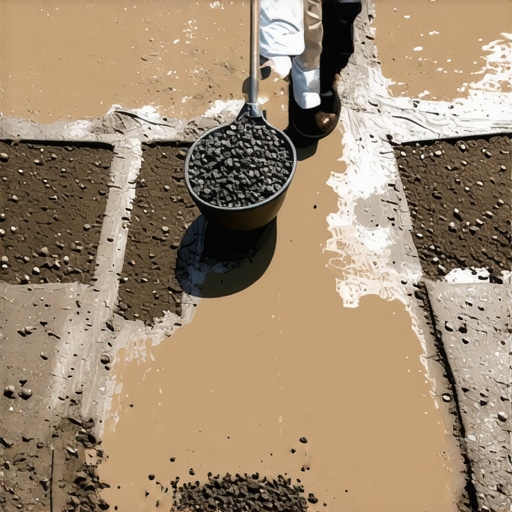
I recently got called out to tear up a $30,000 patio that was sinking because the previous contractor failed to respect the fundamental laws of hydrology. The side yard adjacent to it was a literal bog. The homeowner was wearing muck boots just to take out the trash. The ‘pro’ they hired had simply dumped two inches of decorative river rock over a layer of cheap plastic film. Within six months, the plastic had acted as a pool liner, trapping water against the foundation and liquefying the subgrade. When I stepped on the pavers, they didn’t just wobble; they squelched. This is the reality of ‘mow-and-blow’ hacks attempting hardscape engineering. Water is a patient predator. If you don’t give it a controlled path to exit your property, it will create its own, usually through your basement walls or by undermining your soil’s load-bearing capacity.
Why Side Yards Become Muddy Swamps in 2026
Muddy side yards are the result of poor soil grading, high hydrostatic pressure, and inadequate sub-surface drainage protocols. To fix this, you must excavate the soil to a specific depth, install a non-woven geotextile fabric, and utilize an open-graded aggregate system that allows for rapid hydraulic conductivity. This isn’t a cosmetic fix; it is a civil engineering project on a micro-scale. Most side yards are narrow, which concentrates rainfall from the roof into a ‘canyon’ effect. If your soil is heavy clay, the percolation rate is near zero. You are essentially living in a bathtub.
“A retaining wall doesn’t fail because of the stone; it fails because of the water trapped behind it. The same logic applies to your side yard’s soil stability.” – Hardscape Engineering Axiom
How much modified gravel do I need for a side yard?
Calculating aggregate volume is a matter of cubic yards, not bags from a big-box store. For a standard 3-foot wide side yard, you need to excavate at least 6 to 8 inches deep. Take your length times width times depth (in feet) and divide by 27. Add 10% for compaction. If you don’t have at least 4 inches of clean stone, you aren’t building a drainage system; you’re just making a mess. Professionals use #57 stone. It has the void space necessary to hold and move water.
What is the best gravel for drainage in 2026?
The gold standard for 2026 is #57 Clean Crushed Stone. Unlike ‘crusher run’ or ‘modified’ stone, #57 contains no ‘fines’ (dust). Fines are the enemy. They migrate to the bottom, mix with water, and create an impermeable sludge that stops drainage. In high-traffic side yards, we use an Angular Granite. The jagged edges interlock. This creates a stable walking surface that still allows water to drop straight through to the sub-base.
The Engineering Logic of Soil and Aggregate
Soil bulk density determines how much water your yard can hold before it turns into a slurry. In most residential developments, the soil is heavily compacted from construction equipment. This creates a ‘hardpan’ layer. When you look at your muddy side yard, you are seeing the ‘perched water table.’ The water can’t go down, so it stays up. To fix this, we use the Gravel Hack: a combination of a French drain and an open-graded infiltration trench. This bypasses the compacted soil and moves water via gravity. You need a minimum slope of 2%—that is a quarter-inch drop for every foot of horizontal run. Anything less, and the water just sits there and rots. Stagnant water attracts mosquitoes and pathogens. It will rot your sills. It will ruin your lawn.
| Material Type | Drainage Rating | Stability Rating | Best Use Case |
|---|---|---|---|
| #57 Clean Stone | Excellent | High | Main drainage layer and base |
| Pea Gravel | Good | Low | Decorative top layer only (moves too much) |
| Crusher Run (2A) | Poor | Very High | Structural base for pavers, NOT for drainage |
| River Rock | Good | Moderate | Dry creek beds and aesthetic finishes |
The Step-by-Step Drainage Remediation Process
The first step is excavation. You are not just digging a hole; you are creating a vessel. You must reach the sub-grade. Once excavated, you must check the soil pH and consistency. If it’s heavy clay, you need to over-excavate. Don’t skip the fabric. We use a 4-ounce non-woven geotextile. This is not the ‘weed barrier’ you buy at a hardware store. This is an industrial filter. It keeps the soil particles out of your stone while letting water pass through. If soil gets into your stone, the system fails. It’s that simple.
- Excavate: Minimum 8 inches deep with a 2% slope away from the foundation.
- Line: Use AASHTO M 288 compliant non-woven geotextile fabric.
- Pipe: Install a 4-inch perforated N-12 HDPE pipe, holes facing DOWN.
- Fill: Backfill with #57 clean angular stone.
- Compact: Use a plate compactor in 3-inch ‘lifts.’ The tamper should literally bounce off the base.
- Finish: Top with your choice of decorative stone or permeable pavers.
“Soil permeability is not a suggestion; it is a measurable physical property that dictates the health of the entire landscape ecosystem.” – Penn State Agricultural Extension
The Maintenance Schedule for 2026 and Beyond
Systems fail when they are ignored. Even the best gravel hack requires maintenance. You must clear the outfall of your drainage pipe every spring. If the exit is blocked, the whole system backs up. Use a high-pressure hose to flush the lines if you notice slow drainage. Check for ‘fines’ migration. If you see dirt bubbling up through your gravel, your fabric has been breached. You’ll have to dig it up. Don’t wait. A small clog becomes a foundation-cracking disaster in one heavy rain event. Landscaping is not a ‘set it and forget it’ industry. It is a constant battle against erosion and biology. You are the commander. Your gravel is your frontline defense. Keep it clean. Keep it clear. Water always wins if you let it.
![Stop 2026 Boxwood Blight with These 3 Pruning Rules [Zone 7]](https://lawnmajesty.com/wp-content/uploads/2026/05/Stop-2026-Boxwood-Blight-with-These-3-Pruning-Rules-Zone-7.jpeg)