The Real Reason Your Pond Water Stays Murky Despite Filters
The Real Reason Your Pond Water Stays Murky Despite Filters
You have spent thousands on a high-end filtration system, yet your pond looks like pea soup. It is a common frustration for homeowners who view landscaping as a purely aesthetic endeavor rather than a complex biological system. The reality is that murky water is rarely a failure of the filter itself; it is a failure of the biological and chemical balance within the water column. If you are seeing persistent cloudiness, your pond is likely suffering from an overload of dissolved organic compounds or a disrupted nitrogen cycle that no mechanical sponge can fix. Stop looking at the pump and start looking at the chemistry.
The Forensic Autopsy of a Failed Aquatic System
Pond water remains murky when the biological load exceeds the capacity of the beneficial bacteria to process waste, leading to suspended solids and ammonia spikes. This is not a mechanical issue but a failure of biological filtration and nitrogen cycle management in the local ecosystem. I recently got called out to tear up a $30,000 patio and pond installation that was sinking and stagnant because the previous contractor ignored the basic laws of physics. They had installed a massive mechanical skimmer but zero biological surface area. The water was circulating, but it was dead. Within three months, the homeowners had a murky, anaerobic mess that smelled like rotten eggs. We had to excavate the entire base, install a properly graded hardscaping foundation to prevent runoff, and rebuild the biological filter from the ground up. If you don’t fix the underlying structural and chemical flaws, you are just moving dirty water around.
“A pond is a closed system where the nitrogen cycle must be carefully managed to prevent the buildup of toxic ammonia and nitrite, which fuel algae blooms and water turbidity.” – Penn State Extension Water Quality Manual
The Physics of Colloidal Suspension
Murky water is often caused by colloidal particles—microscopic bits of clay or organic matter that are so small they stay suspended in the water column due to electrostatic charges. These particles are too fine for a standard pond filter to catch. In many garden design projects, I see people use the wrong type of stone or soil near the water’s edge. Rainwater washes fine silt into the pond, and because these particles are negatively charged, they repel each other and never settle. To clear this, you need a flocculant to clump them together or a massive increase in bio-film surface area to trap them naturally. It is about physics, not just suction power.
Why is my pond water green but my filter is clean?
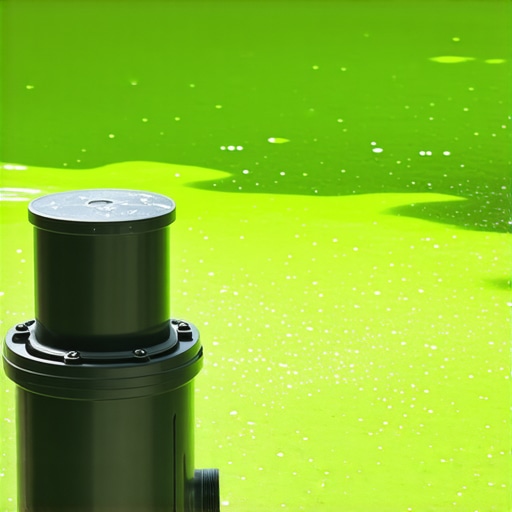
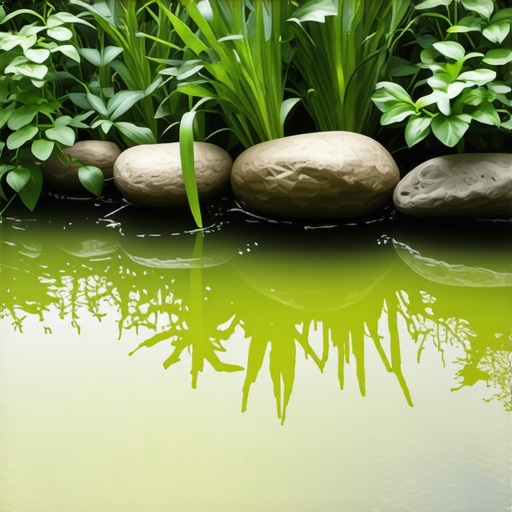
Green water is caused by single-celled planktonic algae that are small enough to pass through almost any mechanical filter media. If your filter is clean but the water is green, it means you have an excess of nitrates and phosphates, likely from lawn care runoff or overfeeding fish, providing an endless buffet for the algae. You need a UV-C clarifier to mutate the DNA of the algae so they clump together and can finally be trapped by the filter. Without addressing the nutrient load, the algae will outpace your pump every time.
| Filter Type | Primary Function | Target Pollutant | Success Metric |
|---|---|---|---|
| Mechanical | Physical Removal | Leaves, Twigs, Large Solids | Clean Filter Mat |
| Biological | Nitrogen Conversion | Ammonia, Nitrites | 0ppm Ammonia |
| UV Clarifier | Sterilization | Planktonic Algae, Bacteria | Water Clarity |
| Chemical | Adsorption | Tannins, Odors, Phosphates | Reduced Coloration |
The Impact of Surrounding Landscaping on Water Clarity
Your pond does not exist in a vacuum; it is the lowest point of your landscaping. If your lawn care regimen involves heavy synthetic fertilizers, every rainstorm washes nitrogen and phosphorus directly into your pond. This creates a nutrient spike that crashes the oxygen levels and turns the water into a muddy soup. Proper hardscaping and grading are essential to divert this runoff away from the water feature. I always tell my crew: a pond is only as clean as the hill above it. If you have a mulch volcano or a poorly graded lawn, your pond will never stay clear.
How often should I clean my pond filter?
You should clean your mechanical filter pads when you notice a 10% reduction in flow, but you should rarely touch your biological media. Over-cleaning the bio-balls or ceramic rings kills the beneficial bacteria (Nitrosomonas and Nitrobacter) that keep your water safe and clear. Use de-chlorinated water if you must rinse them. If you scrub your bio-media with tap water, you are effectively nuking your pond’s immune system. Don’t be that homeowner.
“Hydrostatic pressure from poorly drained surrounding soil can force sediment-laden groundwater through pond liners, leading to chronic turbidity.” – Hardscape Engineering Axiom
- Test your water: Ammonia and Nitrites must be zero.
- Check the pump GPH: You should turn over the entire pond volume every hour.
- Monitor fish load: Too many fish equals too much waste for the bacteria to handle.
- Assess the plants: You need 50% surface coverage with lilies or floating plants to starve algae of sunlight.
- Check for runoff: Ensure no lawn care chemicals are leaching into the water.
Stop chasing miracles in a bottle. Most “clear water” chemicals are just temporary fixes. True clarity comes from understanding the hydrostatic pressure around your pond, the NPK ratios of your soil, and the aeration requirements of your water. Deep, infrequent maintenance is the key. If your pond is murky, look at the soil, look at the runoff, and check your biological surface area. That is where the truth lies. It is hard work, but it is the only way to get results that last past next week.
![Stop 2026 Pond Leaks: 3 Sealing Tape Rules [Fix]](https://lawnmajesty.com/wp-content/uploads/2026/06/Stop-2026-Pond-Leaks-3-Sealing-Tape-Rules-Fix.jpeg)