How to Prevent Mosquitoes in Your Backyard Water Feature
The Engineering of Stagnation: Why Most Water Features Fail
To prevent mosquitoes in your backyard water feature, you must eliminate stagnant surface layers and maintain a constant Gallons Per Hour (GPH) turnover rate that exceeds the volume of the feature every 60 minutes. Mosquitoes, specifically the Aedes and Culex genera, require 0.25 inches of still water to successfully deposit eggs and allow larvae to breathe through their siphons. If the water moves, they drown. It is basic fluid dynamics. Most homeowners fail because they view a pond as a static decoration rather than a complex biological reactor. I recently got called out to tear up a $30,000 patio that was sinking because the previous contractor failed to account for hydrostatic pressure behind the retaining wall and, worse, installed a ‘decorative’ pond that was actually a 500-gallon mosquito nursery. The water was black with anaerobic rot. The liner had no shelf for beneficial bacteria, and the pump was a cheap plastic toy from a big-box store. We had to excavate the entire base, install a 6-inch modified gravel sub-base, and rebuild the aquatic system from the ground up with proper mechanical and biological filtration. It was a mess. Don’t be that guy. Fix the engineering first.
“A retaining wall doesn’t fail because of the stone; it fails because of the water trapped behind it.” – Hardscape Engineering Axiom
Designing for High-Flow Disruption
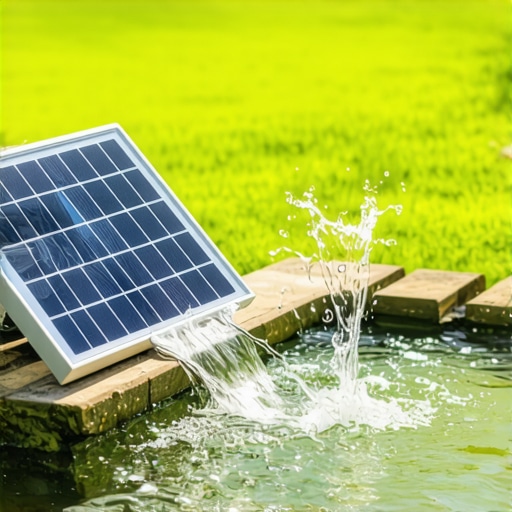
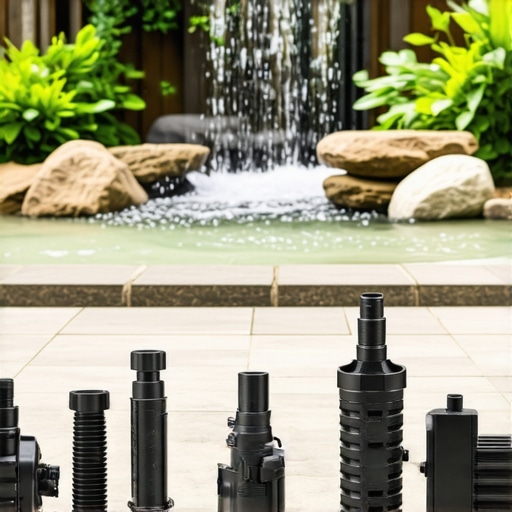
The primary defense against mosquito larvae is surface agitation, which prevents the insects from piercing the water’s surface tension to breathe. You need a pump that can move water at a rate that provides a total volume turnover at least once per hour. For a 1,000-gallon pond, that means a 1,000 GPH pump at the minimum, adjusted for head pressure height.
How many GPH do I need for my pond?
To calculate your required GPH, determine the volume of your feature (Length x Width x Average Depth x 7.48) and add the ‘Head Pressure,’ which is the vertical distance the pump must push water up to a waterfall or fountain. Use 2-inch PVC piping instead of 1.5-inch to reduce friction loss. In garden design, we often see designers prioritize the ‘look’ over the mechanical requirements. This is a mistake. High-quality hardscaping requires integrated drainage. Use a skimmer box to pull surface debris—and mosquito eggs—into a mechanical basket before they can sink and rot. This reduces the organic load that feeds larvae. Without a skimmer, you are just running a swamp. It will rot.
| Feature Component | Requirement for Mosquito Control | Reasoning |
|---|---|---|
| Pump Capacity | 1x Volume/Hour | Eliminates stagnant boundary layers. |
| Filtration Type | Biological + Mechanical | Removes organic nutrients (nitrogen). |
| Pipe Diameter | Minimum 2-inch Flex PVC | Reduces friction and maintains velocity. |
| Aeration | Bottom-up Diffuser | Increases dissolved oxygen for bacteria. |
The Biological Warfare: BTI and Predatory Systems
Integrating biological controls like Bacillus thuringiensis israelensis (BTI) and predatory fish species creates a multi-tiered defense that targets mosquito larvae without toxic chemicals. BTI is a naturally occurring soil bacterium that specifically targets the digestive systems of larvae in the Nematocera suborder. It is not a ‘chemical’ in the way people fear. It is targeted biological warfare. Drop BTI dunks into your skimmer every 30 days. Furthermore, your garden design should include ‘pond life’ that earns its keep. Gambusia affinis, commonly known as the Mosquitofish, can consume hundreds of larvae per day. However, check local USDA regulations as they are invasive in some regions. In lawn care, we often talk about soil health; in pond care, we talk about the nitrogen cycle. If you have excess nitrate, you get algae. If you have algae, larvae have a place to hide.
“Effective mosquito control in residential water features relies on the integration of physical, biological, and chemical barriers.” – Penn State Extension
Hydrostatic Pressure and Drainage Integration
Proper hardscaping around a water feature must account for surface runoff to prevent lawn fertilizers and organic debris from leaching into the aquatic system. If your lawn care routine involves heavy nitrogen fertilizers, and your pond is at the bottom of a slope without a French drain or a raised berm, you are essentially feeding the mosquito larvae. Every time it rains, phosphorus and nitrogen wash into the pond, causing a massive bloom of filamentous algae. This algae creates a physical ‘raft’ where mosquitoes can lay eggs away from the main current. You must grade the soil away from the pond. Use a 2% slope minimum. I see contractors skip this every day. They drop a liner in a hole and walk away. Three months later, the yard is a mosquito pit. Use a 4-inch perforated pipe wrapped in geotextile fabric around the perimeter to catch runoff before it hits the water. Don’t skip this.
How do I stop mosquitoes in a small fountain?
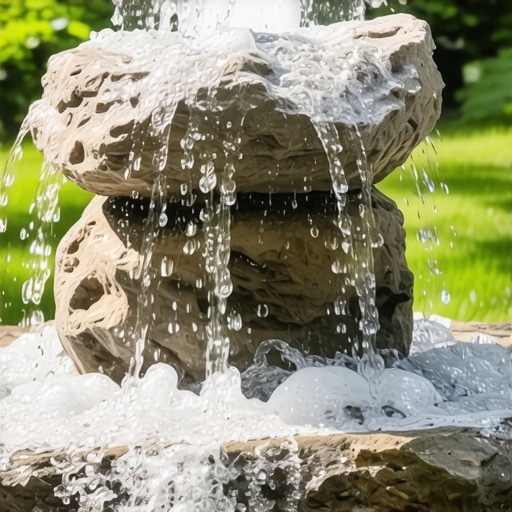
Small fountains require frequent water replacement and high-velocity nozzles to prevent the formation of still-water pockets in the catch basin. Even a birdbath needs to be scrubbed every 48 hours to disrupt the 7-to-10 day mosquito life cycle. For larger stone fountains, ensure the reservoir is deep enough to house a small submersible pump that keeps the surface in constant motion. Surface tension is the enemy. Break it.
- Check pump intake screens for debris weekly.
- Maintain a pH between 6.5 and 8.0 for optimal BTI performance.
- Ensure the liner is not sagging, creating ‘pockets’ of still water.
- Keep aquatic plants like Lilies trimmed to prevent stagnant surface coverage.
- Use a pond vacuum once a year to remove muck.
- Avoid ‘mulch volcanoes’ near the pond edge that wash in organic rot.
- Test your GPH flow at the waterfall head.
- Verify that your UV clarifier is functioning to keep water clear.
- Install an auto-fill valve to prevent low-water stagnation.
- Monitor the temperature; warmer water breeds mosquitoes faster.
In summary, if you want a mosquito-free yard, stop treating your water feature like a piece of furniture and start treating it like a piece of machinery. Move the water. Filter the organic load. Use biological inhibitors. Anything less is just an expensive way to grow bugs.