The $10 Secret to Eliminating Grubs from Your Lawn
The Forensic Autopsy of a Dying Lawn
Lawn grubs are the silent killers of the American backyard, destroying root systems long before the first brown patch appears on the surface. If your turf feels spongy or you can peel it back like a loose piece of carpet, you are not looking at a drought problem; you are looking at a subterranean buffet. I have spent two decades diagnosing failures in lawn care and landscaping, and the reality is that most homeowners ignore the warning signs until the damage costs thousands in garden design restoration. You walk across the grass and it gives way. It feels hollow. That is the feeling of zero structural integrity in the root zone.
The Chemical Nightmare: A Cautionary Tale
A homeowner called me in a panic after they completely torched their front lawn by applying three different curative bags from a big-box store in 48 hours. They didn’t have a massive grub infestation anymore; they had a self-inflicted salt-toxicity crisis. By dumping pounds of high-nitrogen fertilizer mixed with cheap synthetic pesticides, they spiked the soil salinity to levels that would kill even the heartiest weeds. This is the hallmark of a ‘mow-and-blow’ mentality. They saw a symptom and threw money at it without understanding the agronomy behind the solution. We had to excavate four inches of topsoil just to make the ground viable for hardscaping and replanting. Don’t be that guy. The solution is biological, not just chemical.
“White grubs are the larval stage of several species of scarab beetles, and their management depends entirely on understanding the specific lifecycle of the beetle in your local climate.” – Penn State Department of Entomology
[IMAGE_PLACEHOLDER]
The $10 Secret: Milky Spore and Biological Warfare
The $10 secret to eliminating grubs permanently is the targeted application of Milky Spore (Bacillus popilliae) or beneficial nematodes during the first-instar stage of development. For the cost of a small container of spore powder, you are introducing a microscopic bacterium that specifically targets the midgut of the Japanese beetle larva. Unlike synthetic poisons that wash away with the first rain, Milky Spore stays in the soil for 10 to 15 years, spreading naturally as grubs die and release more spores. It is a one-time investment in soil microbiology that ends the cycle of destruction. You apply it in a grid pattern. You water it in. You let nature do the killing.
The Engineering of Soil Moisture and Grub Survival
Grubs require a specific hydrostatic environment to survive the egg-laying phase. In late July and August, adult beetles seek out moist, irrigated turf to deposit their eggs. If you are watering your lawn every single day for ten minutes, you are essentially building a nursery for pests. I tell my crews: if you don’t fix the soil grading and drainage, you are just inviting the enemy. Deep, infrequent watering forces grass roots to dive twelve inches deep, making the turf resilient. Shallow watering keeps the roots in the ‘grub zone,’ which is the top two inches of soil where the larvae feed. You are literally feeding the grubs your expensive hardscaping foundation.
| Condition | Visual Indicator | Root Integrity | Optimal Timing |
|---|---|---|---|
| Grub Damage | Irregular brown patches | Turf lifts like a carpet | August – September |
| Heat Stress | Dull gray-green color | Roots remain firmly anchored | July – August |
| Chinch Bugs | Yellowing margins | Stems are chewed at base | June – August |
| Fungal Wilt | Circular rings or spots | Roots are slimy or black | High humidity periods |
How do I tell if I have grubs in my lawn?
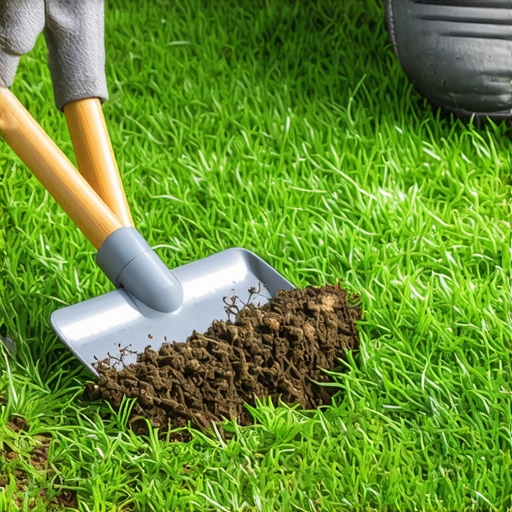
The diagnostic test for grub detection is simple: use a spade to cut a one-foot square of turf on the edge of a brown patch and peel it back. If you count more than 6 to 10 C-shaped, white larvae in that single square foot, you have an infestation that requires immediate intervention. If you see fewer, your lawn care routine can likely handle the stress through natural predation from birds and beneficial insects. Look for the brown head and the six legs near the front of the body. These are the engines of destruction.
What is the cheapest way to get rid of grubs forever?
The cheapest long-term method is cultural control combined with a one-time biological innoculation. Stop over-fertilizing with high-nitrogen salts in the summer, which makes the grass blades tender and attractive to beetles. Raise your mower deck to 4 inches. Tall grass shades the soil, keeping it cooler and less hospitable for beetle eggs. When you combine this with a $10 spot-treatment of Milky Spore in high-traffic areas, you create a garden design that is naturally resistant to pests without recurring chemical costs.
“Effective grub management requires the application of controls when larvae are small and feeding near the surface, typically in the late summer months.” – Texas A&M AgriLife Extension
- Step 1: Confirm the count (6+ grubs per square foot).
- Step 2: Check soil temperature (must be above 65 degrees Fahrenheit).
- Step 3: Apply Milky Spore powder in 4-foot intervals.
- Step 4: Water the area for 15 minutes to move spores into the root zone.
- Step 5: Avoid mowing for 48 hours to let the soil settle.
The Impact of Soil pH on Larvae Motility
Most contractors don’t talk about soil pH when discussing grubs, but it is critical. High acidity in the soil can inhibit the effectiveness of biological controls like nematodes. If your soil is below 6.0 pH, the $10 secret won’t work because the bacteria cannot thrive. You must balance your soil with pelletized lime to reach a neutral 6.5 to 7.0 range. This is why a $20 soil test is the most important tool in landscaping. You cannot fix what you haven’t measured. Grubs thrive in neglected, acidic soil where the grass is already struggling. By fixing the chemistry, you make the environment toxic to the larvae and a paradise for the roots. It is simple civil engineering applied to your front yard.

![Why Your 2026 Sprinklers Waste Water [Pressure Fix]](https://lawnmajesty.com/wp-content/uploads/2026/07/Why-Your-2026-Sprinklers-Waste-Water-Pressure-Fix.jpeg)
![Stop 2026 Nitrogen Burn on Yellow Fescue [3-Step Fix]](https://lawnmajesty.com/wp-content/uploads/2026/05/Stop-2026-Nitrogen-Burn-on-Yellow-Fescue-3-Step-Fix.jpeg)