How to Use Outdoor Rugs to Define Your Living Spaces
Establishing Boundaries with Geometric Precision
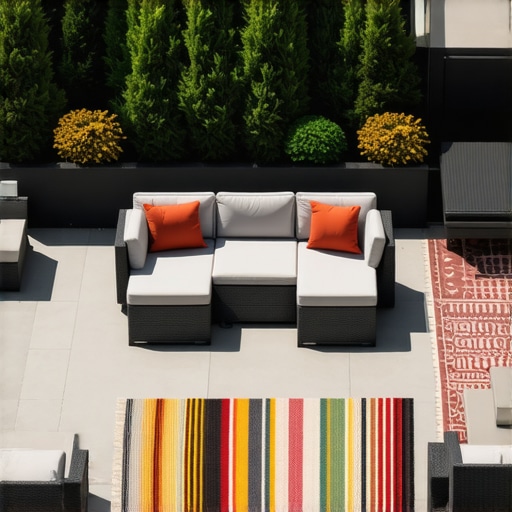
Outdoor rugs function as the primary structural anchor for defining living spaces by establishing clear spatial boundaries that separate hardscape features like dining patios from lounging areas without the need for vertical walls. I always drill into my new crew members: if you don’t fix the soil grading first, every plant you put in the ground is just expensive compost, and the same logic applies to your design layers. If your base layer is flawed, that expensive rug is just a wet blanket hiding a structural failure. I have seen countless homeowners drop four figures on a designer rug only to have it rot out in six months because they ignored the 1:48 slope requirement for their sub-base drainage. Landscaping is a game of physics and biology, not just picking out pretty patterns. When we design a high-end exterior, we treat the rug as the finish grade of a civil engineering project. It dictates foot traffic patterns and prevents the vastness of a large stone patio from feeling like an uninviting parking lot. If the rug is too small, the furniture looks adrift. If it is too large, it swallows the stone’s texture. You need exactly 12 to 18 inches of exposed stone border to maintain the visual integrity of the masonry. Don’t skip the layout phase. It matters.
“Standard drainage requirements for outdoor living surfaces must maintain a minimum 2 percent slope to prevent standing water beneath surface treatments.” ICPI Technical Specification 2
The Science of Material Selection for Moisture Management
Choosing a rug material requires an understanding of hydrophobicity and UV degradation to ensure the textile does not trap moisture against the paver surface or fade under intense solar radiation. Most people buy for color, but I buy for the denier of the polypropylene fiber and the weave density. A loose weave allows for faster evaporation. A tight, plush weave looks good in a showroom but acts like a sponge in a high-humidity environment. You are looking for 100 percent solution-dyed polypropylene. It is essentially plastic. It does not absorb water, and it resists the mold spores that naturally thrive in the organic debris that blows onto your patio. Stay away from natural fibers like jute or sisal for any area that isn’t 100 percent covered. They are cellulose-based. They are literally food for fungi. Once the rot starts, it will leach tannins into your natural stone, and those stains are a nightmare to get out of porous limestone or travertine. It is a chemical reality. Pay attention to the backing as well. Rubber-backed rugs are a death sentence for sealed pavers because they trap gases and cause plasticizer migration, which turns your expensive stone cloudy and yellow. You want a breathable, woven backing that allows the stone to breathe. Use a dedicated outdoor rug pad made of open-cell mesh. It provides a 1/8 inch lift that facilitates airflow. Airflow is your only defense against mildew.
How much modified gravel do I need for a patio base?
To calculate the base, you need a minimum of 4 inches of compacted 21A or CR-6 modified gravel for pedestrian areas, ensuring you factor in a 20 percent compaction rate when ordering material by the cubic yard.
| Material Type | Durability Rating | Moisture Resistance | Maintenance Level |
|---|---|---|---|
| Solution-Dyed Polypropylene | High | Excellent | Low (Hose off) |
| Recycled PET (Polyester) | Medium | Good | Moderate |
| Jute / Sisal (Natural) | Low | Poor | High (Dry Only) |
| Acrylic (Sunbrella) | High | Good | Moderate |
The Forensic Layout: Integrating Rugs with Garden Design
Designing the transition zone between the hardscape and the lawn requires a landscape design strategy that accounts for the nitrogen cycle and moisture runoff from the rug’s surface. When you place a non-porous rug on a patio, you are essentially creating a mini-watershed. During a heavy rain, that rug sheds water toward the edges. If your rug sits right at the edge of the lawn, you are effectively double-watering the turf at that margin. This leads to root rot, anaerobic soil conditions, and fungal outbreaks like Brown Patch. I tell my clients to maintain a 24-inch buffer of decorative gravel or river rock between the rug-heavy patio and the turf grass. This acts as a French drain system on a micro-scale. It breaks the surface tension of the runoff and forces it down into the subsoil rather than across the surface of the grass. You also have to consider the heat island effect. Dark rugs absorb thermal energy and radiate it back into the surrounding planting beds. If you have delicate hostas or Japanese Maples nearby, you are effectively baking them from the ground up. Choose lighter colors to reflect the IR spectrum and keep the root zone of your peripheral plants at a stable temperature. Science beats aesthetics every time.
“A retaining wall doesn’t fail because of the stone; it fails because of the water trapped behind it.” Hardscape Engineering Axiom
Can you put an outdoor rug on a wood deck?
You can place a rug on a wood deck provided you use a non-rubberized rug pad and ensure the deck boards have 3/16 inch gaps for vertical ventilation to prevent joist rot.
- Check the pH of your cleaning solution; anything above 9.0 can damage paver sealants.
- Rotate the rug 180 degrees every 90 days to even out UV exposure and wear patterns.
- Never power wash a rug at more than 1500 PSI; you will shred the fibers.
- Remove the rug during the winter in freeze-thaw climates to prevent ice expansion in the fibers.
- Ensure the rug is completely dry before laying it back down after a storm.
The Structural Checklist for Rug Placement
Before you roll out the rug, you must perform a structural audit of the hardscaping to ensure the polymeric sand in the joints is fully cured and the surface is free of efflorescence. If you trap salt deposits under a rug, they will crystallize and pit the surface of the stone. This is basic chemistry. The moisture under the rug will dissolve the salts, and the heat will pull them to the surface. It is a cycle of destruction. Scrub the stone with a weak phosphoric acid solution if you see white powder before the rug goes down. Rinse it. Let it dry for 48 hours. Then and only then do you lay the textile. This isn’t just about making the space look like a magazine shoot. It is about protecting the $20,000 investment you made in the masonry. Treat your outdoor living space like the engine of a car. It needs high-quality parts, regular maintenance, and an understanding of how the components interact. A rug is a component, not an accessory. Don’t be the homeowner who ignores the engineering. Your yard will thank you.
![Why Your 2026 Deck is Turning Black [3 Fixes]](https://lawnmajesty.com/wp-content/uploads/2026/06/Why-Your-2026-Deck-is-Turning-Black-3-Fixes.jpeg)