Why You Should Never Mow Your Lawn Too Short
The Visual Autopsy of a Scalped Lawn
Walk across a lawn that has been cut too short and you will feel the crunch of brittle, dying vegetation rather than the spring of healthy turf. I see it every July. A homeowner calls me in a panic after they completely torched their front lawn by applying a heavy dose of synthetic 46-0-0 Urea fertilizer right after they ‘shaved’ the grass to one inch because they were going on vacation. The result was a catastrophic chemical burn that bypassed the leaf tissue and went straight into the crown. Within forty-eight hours, the lawn was a sea of straw-colored death. This is not just an aesthetic issue. It is a biological failure. When you scalp a lawn, you are essentially performing a forced lobotomy on the plant’s energy-producing organs. The soil was exposed to direct UV radiation, the microbial life in the top half-inch of the rhizosphere was baked out, and the plants had no carbohydrate reserves to recover. It was a total system collapse. Don’t do it.
The Biological Cost of Scalping Your Turf
Cutting grass too short, or scalping, reduces the surface area available for photosynthesis, which forces the plant to deplete its stored carbohydrate reserves in the root system to regrow leaf tissue. This process weakens the plant, making it highly susceptible to heat stress, drought, and opportunistic weed infestations.
To understand why height matters, we have to look at the vascular system of the grass blade. Every blade of grass is a miniature solar panel. Within these panels are chloroplasts that facilitate photosynthesis, converting sunlight into the sugars that fuel root growth and cellular repair. When you remove more than one-third of the leaf blade at once, you trigger a hormonal stress response. The plant enters a state of emergency. It stops all root development to push every available ounce of energy into regrowing the leaf. If this happens repeatedly, the root system begins to atrophy. You end up with a shallow-rooted lawn that cannot survive a single week without rain. It is a slow death.
“A lawn mowed consistently at a low height will eventually experience root thinning and a decreased ability to withstand environmental stressors compared to turf maintained at three to four inches.” – Penn State Center for Turfgrass Science
How low can you cut Kentucky Bluegrass without killing it?
For most cool-season grasses like Kentucky Bluegrass or Tall Fescue, the absolute minimum height for survival is 2.5 inches, but the professional standard for a resilient lawn is 3.5 to 4 inches. Cutting below this threshold exposes the crown, the growing point of the grass plant located at the soil surface. If the crown is damaged by the mower blade or sunscald, the individual plant dies. There is no recovery from crown death. It is the anatomical heart of the grass.
The Root-to-Shoot Ratio: The Hidden Mirror
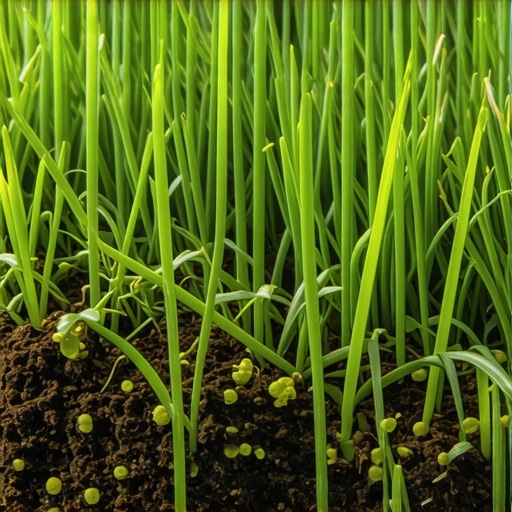
There is a direct correlation between the height of the grass above the ground and the depth of the roots below it, known as the root-to-shoot ratio. Taller grass blades support a deeper, more complex root architecture that can access water and nutrients deep in the subsoil.
In my twenty years of managing high-end estates, I have seen that the healthiest lawns are always the ones that look a bit ‘shaggy’ to the untrained eye. Underneath that four-inch canopy is a root system that often extends six to eight inches into the soil profile. This is critical for nutrient uptake. When you cut the grass short, the roots respond by shrinking. A one-inch lawn might only have a two-inch root system. During a mid-summer heatwave, the top two inches of soil are the first to dry out. Your lawn will brown out while your neighbor’s taller lawn stays green. It is basic physics. Deep roots chase the water table down. Shallow roots wait to be rescued by the sprinkler.
“The height of the cut is the single most important factor in determining the depth of the root system in perennial turfgrasses.” – Texas A&M Agronomy Manual
What happens to soil microbiology when grass is too short?
The soil is a living organism. It requires shade to maintain the moisture levels necessary for beneficial bacteria and mycorrhizal fungi to thrive. When you scalp the lawn, you remove the cooling canopy. Soil temperatures can spike to over 100 degrees Fahrenheit on a sunny day. This heat sterilizes the upper layer of the soil, killing the very microbes that break down organic matter into usable nitrogen. You are left with sterile dirt that requires more and more synthetic inputs to produce growth. It is a vicious cycle of dependency. [image placeholder]
Weed Invasion and the Competitive Edge
Tall grass prevents weed germination by shading the soil surface, which keeps weed seeds in the dark and prevents them from receiving the thermal triggers required to sprout. A short lawn is an invitation for crabgrass, dandelions, and clover to take over.
Weeds are opportunistic. They look for gaps in the canopy and patches of bare, sun-drenched soil. Crabgrass, specifically, requires high soil temperatures and direct sunlight to germinate. By maintaining your lawn at 3.5 or 4 inches, you are practicing the most effective form of weed control available. It is better than any pre-emergent chemical you can buy at a big-box store. The tall grass literally chokes out the competition. Below is a comparison of optimal mowing heights based on grass species for maximum health.
| Grass Species | Minimum Height (Inches) | Optimal Height (Inches) | Root Depth Potential |
|---|---|---|---|
| Tall Fescue | 3.0 | 4.0 | Deep |
| Kentucky Bluegrass | 2.5 | 3.5 | Moderate |
| Perennial Ryegrass | 2.5 | 3.0 | Moderate |
| Bermuda Grass | 1.0 | 2.0 | Deep (High Maintenance) |
| Zoysia Grass | 1.5 | 2.5 | Deep |
Is it better to mow more often at a higher height?
Yes. The frequency of mowing should be determined by the growth rate, not a calendar. You should never remove more than thirty percent of the leaf tissue in a single session. If your goal is a four-inch lawn, you should mow when it reaches 5.5 inches. This minimizes the physiological shock to the plant. If you let the grass grow to eight inches and then hack it down to three, you are effectively stripping the plant of its ability to regulate moisture. The resulting stress will turn the tips brown and invite fungal pathogens like Brown Patch or Dollar Spot to move in through the ragged, torn edges of the blades. Use a sharp blade. A dull blade tears the grass; a sharp blade cuts it. Tearing leads to moisture loss and disease entry points.
The Pro’s Mowing Protocol: A Checklist
- Check Blade Sharpness: Sharpen your mower blades every 25 hours of use. A clean cut heals in 24 hours; a tear takes a week.
- Adjust for Weather: Raise the deck an extra half-inch during periods of extreme heat or drought.
- Vary the Pattern: Never mow in the same direction twice. This prevents soil compaction and ‘leaning’ grass.
- Leave the Clippings: Use a mulching blade. Clippings are free slow-release nitrogen for your soil.
- Never Mow Wet Grass: This leads to uneven cuts and clumps that can smother the turf underneath.
Landscaping is about working with biology, not fighting it. When you understand that the lawn is a living, breathing system, you stop trying to force it into a manicured, carpet-like state that it wasn’t designed for. Give the grass the height it needs to feed itself. Your roots will be deeper, your soil will be cooler, and your water bill will be lower. It is that simple. Don’t be the homeowner who scalps their lawn into submission. Be the one who manages a thriving ecosystem. Your dirt will thank you.