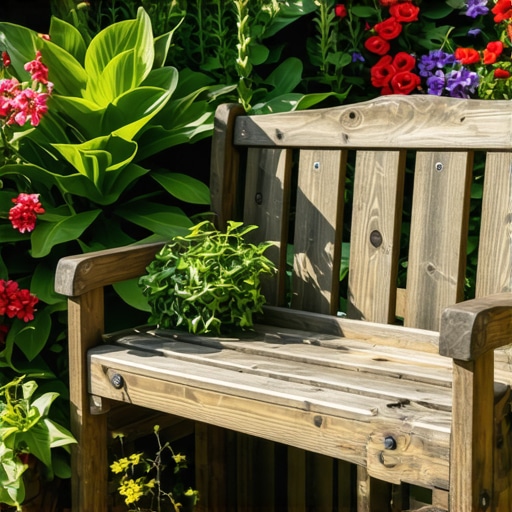
How to Build a Reclaimed Wood Bench for Your Garden
The Structural Reality of Outdoor Reclaimed Wood
Building a **reclaimed wood garden bench** requires more than a saw and a handful of screws; it is a battle against the unrelenting forces of **biological decay**, **UV degradation**, and **soil moisture**. To ensure a bench lasts more than two seasons, you must treat wood as a biological material that wants to return to the earth, using specific **hardscaping** principles to isolate it from the ground and high-grade **fasteners** to maintain structural integrity. This guide focuses on the engineering of a bench that withstands the elements.
The Apprentice Lesson: Why Most Benches Fail
I always drill into my new crew members: if you don’t fix the soil grading and moisture contact first, every piece of wood you put in the ground is just expensive compost. I remember an apprentice who built a beautiful cedar bench and set it directly on a damp, shady patch of fescue. Within eighteen months, the legs had wicked up enough moisture to host a thriving colony of *Basidiomycota* fungi. The bench collapsed while a client was sitting on it. We don’t build furniture; we build structures that resist the local biology. If you ignore the transition point where the wood meets the earth, you are failing the client and the material.
Selecting Reclaimed Timber: Identifying Structural Grade Material
When selecting **reclaimed wood** for a garden bench, prioritize **heartwood** from rot-resistant species like **White Oak**, **Old-Growth Cedar**, or **Black Locust**, ensuring the timber is free of active **infestations** or structural **checking** that could compromise the bench’s load-bearing capacity. Avoid reclaimed pine or fir unless it will be completely shielded from rain.
“Wood-decay fungi require moisture, oxygen, and favorable temperatures to thrive; keeping wood below a 20% moisture content is the primary defense against structural failure.” – USDA Forest Service Wood Handbook
Check the moisture content. Use a pin-meter. If the reclaimed beam has been sitting in a damp barn, it needs to acclimate. Don’t build with wet wood. It will shrink. Your joints will fail. It’s physics. Look for tight grain patterns. Tight grain means higher density. Higher density means slower rot. Reclaimed barn beams often have 100+ years of growth rings. That is your armor.
| Wood Species | Rot Resistance | Hardness (Janka) | Best Use Case |
|---|---|---|---|
| Old-Growth White Oak | High | 1,360 lbf | Structural legs and supports |
| Western Red Cedar | Medium-High | 350 lbf | Bench slats and backrests |
| Reclaimed Teak | Exceptional | 1,070 lbf | Full exposure environments |
| Reclaimed Heart Pine | Moderate | 1,225 lbf | Protected patios or porches |
The Engineering of the Base: Hardscaping Integration
To prevent the legs from sinking or rotting, you must integrate **hardscaping** techniques such as creating a **compacted gravel footing** or using **paver stones** to break the capillary action of soil moisture. Never let raw end-grain touch dirt. It acts like a straw. It sucks up water. The wood will swell. Then it will rot. [image_placeholder_1]
How do you protect a reclaimed wood bench from ground moisture?
The most effective method to protect a garden bench from **ground moisture** is to install **stainless steel stand-off brackets** or to rest the bench legs on **non-porous stone pads** set atop a four-inch layer of **compacted 21A modified gravel**, which facilitates rapid drainage away from the timber. This creates a thermal and moisture break. It stops the wicking process. It is the same logic we use for fence posts or deck footings. If you use stone, ensure it is level. A wobbly bench is a broken bench. The stress on the joinery will eventually shear the screws. Use a tamper. Get the ground solid.
Assembly and Fastener Selection
Avoid cheap zinc-plated screws found at big-box stores. They will corrode in three years. The tannins in woods like Oak will eat through them. This is called galvanic corrosion. It leaves black streaks. It ruins the wood. Use **304 or 316-grade stainless steel**. It costs more. It’s worth it. Pre-drill every hole. Reclaimed wood is brittle. It will split if you force a fastener. Use a countersink bit. Hide the heads. Or use wooden plugs to keep water out of the screw holes. Water sits in those holes. It rots the core. Don’t allow it.
“Structural connections in outdoor environments must account for the expansion and contraction of timber, ensuring that fasteners do not shear under hydromorphic stress.” – Hardscape Engineering Axiom
What are the best fasteners for outdoor garden furniture?
The gold standard for **outdoor garden furniture** is **316-grade stainless steel screws** or **structural lag bolts**, which offer superior resistance to both **oxidization** and the corrosive **tannic acids** found in rot-resistant hardwoods like oak and redwood. If you are building a heavy-duty reclaimed bench, use carriage bolts for the main frame. They handle the shear force better. A 1/2 inch bolt is harder to break than ten screws. Balance the load.
The Installation Checklist
- Test soil drainage at the site; avoid low spots where water pools.
- Excavate a 6-inch deep area for the base if not using a patio.
- Apply a copper-naphthenate preservative to all end-grain cuts.
- Use a level to ensure the seat has a 1/8-inch pitch to shed water.
- Apply a high-quality UV-rated oil finish, not a film-forming sealer.
Film-forming sealers are a mistake. They crack. Water gets under the film. It gets trapped. Then the wood rots from the inside out. Use a penetrating oil. It breathes. It’s easier to maintain. You just re-apply every year. No sanding required. Just a clean and coat. Simple. Effective.
Long-Term Stewardship
A bench is part of the **garden design**, but it’s also a piece of **landscaping** infrastructure. Check the bolts once a year. Wood moves. It breathes. The seasons will loosen the connections. Tighten them. If you see moss growing on the wood, scrub it off. Moss holds moisture. Moisture is the enemy. Treat the bench like you treat your mower or your truck. Maintenance is cheaper than replacement. A well-built reclaimed bench should outlast the person who built it. That is the goal. Do it right the first time. Don’t be a hack.”, “image”: {“imagePrompt”: “A high-quality, professional photograph of a heavy-duty reclaimed white oak garden bench with visible wood grain and stainless steel bolts, resting on a level grey flagstone base surrounded by clean landscape mulch and native ferns.”, “imageTitle”: “Engineer-Grade Reclaimed Wood Bench Installation”, “imageAlt”: “A durable reclaimed wood bench sitting on a proper stone foundation in a garden.”}, “categoryId”: 0, “postTime”: “”}
![Build a $40 Raised Garden Bed [Cedar 2026]](https://lawnmajesty.com/wp-content/uploads/2026/06/Build-a-40-Raised-Garden-Bed-Cedar-2026.jpeg)
![Build a $100 Modern Planter Box for 2026 [DIY]](https://lawnmajesty.com/wp-content/uploads/2026/06/Build-a-100-Modern-Planter-Box-for-2026-DIY.jpeg)
![Build a $100 Modern Rock Garden for 2026 [DIY]](https://lawnmajesty.com/wp-content/uploads/2026/06/Build-a-100-Modern-Rock-Garden-for-2026-DIY.jpeg)