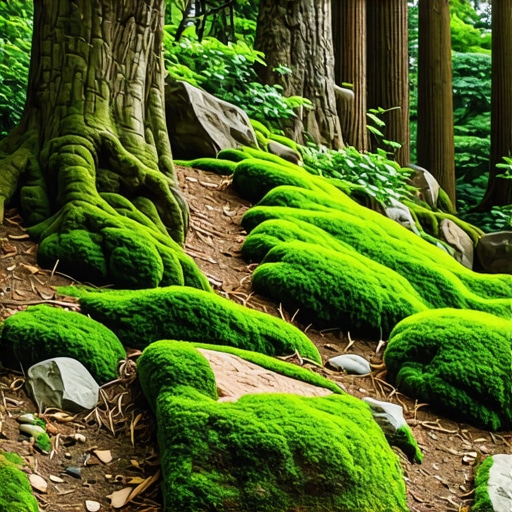
The Secret to Growing a Lush Moss Garden in Full Shade
I always drill into my new crew members: if you don’t fix the soil grading first, every plant you put in the ground is just expensive compost. When we talk about moss, people think it is a sign of neglect. They see it in the cracks of a driveway and think it is easy. It is not. I have seen guys spend five figures on imported moss mats only to have them turn into brown, crispy tinder within three weeks because they treated them like sod. Moss is a biological layer, not a carpet. You cannot just throw it on top of a lawn and expect it to thrive. I once had a client in the Pacific Northwest who wanted a Japanese-inspired courtyard. They had tried three different landscapers before me. All of them failed because they didn’t understand the hydrostatic pressure of the surrounding retaining walls or the specific pH requirements of the local bryophytes. We had to excavate six inches of depleted topsoil, fix the drainage, and acidify the substrate before we even thought about the moss. That is the difference between a contractor and a horticulturist.
Site Preparation: Why Most Shade Gardens Fail
Site preparation for a moss garden involves clearing all competition, specifically vascular weeds and debris, and ensuring the soil is compacted and acidic. You must remove the leaf litter layer to expose the mineral soil or rock surface to allow rhizoids to anchor effectively. Most homeowners make the mistake of leaving the soil loose. Moss needs a firm, stable surface. If the soil is fluffy, the moss will not make contact. We use a hand tamper or a small plate compactor to ensure the ground is as hard as a brick before we begin. Any organic matter like fallen leaves must be removed weekly. If a leaf sits on moss for more than a few days, it blocks the light and traps moisture, leading to fungal rot. It is a constant battle against the forest floor.
“Mosses are not vascular plants; they absorb water and nutrients through their leaves rather than through a root system, making site stability and moisture consistency critical for survival.” – Penn State Extension
Selecting Your Bryophyte: Species and Biological Requirements
Selecting the correct bryophyte requires matching the specific light levels and moisture availability of your site to the physiological limits of the moss. Acrocarpous mosses grow in cushions and handle some sun, while pleurocarpous mosses form carpets and thrive in deep, consistent moisture. You need to understand the anatomy of what you are planting. Moss does not have roots; it has rhizoids. These are just anchors. They do not drink. The plant drinks through its tiny leaves. This means if your water has high mineral content or chlorine, you are essentially poisoning the plant every time you mist it. We always recommend a rainwater collection system for moss gardens. It is the only way to ensure the pH stays in that sweet spot of 5.0 to 5.5.
How do I prep the ground for moss?
To prepare the ground, you must first strip all existing vegetation including grass and weeds. Use a non-residual organic herbicide if necessary, but mechanical removal is better. Once clear, test your soil pH. If it is above 6.0, you must apply elemental sulfur or aluminum sulfate to bring the acidity up. Moss will not compete with grass in alkaline soil. After adjusting the chemistry, compact the soil until it no longer leaves footprints when you walk on it. This creates the capillary action needed to keep the surface moist from the ground up.
[IMAGE_PLACEHOLDER]
Will moss grow on concrete or pavers?
Moss will grow on concrete or pavers if the surface is porous enough to hold moisture and the pH is neutralized. Concrete is naturally alkaline, which usually kills moss. You can use an acid wash to etch the surface and then apply a slurry of moss spores mixed with a pH-balanced medium. The key is maintaining a thin film of water. In hardscaping, we often use moss in the joints between flagstones instead of polymeric sand, provided the area stays out of the direct afternoon sun.
| Moss Variety | Growth Habit | Optimal pH | Moisture Requirement |
|---|---|---|---|
| Hypnum (Sheet Moss) | Pleurocarpous (Mat-forming) | 5.0 to 6.0 | High and Constant |
| Dicranum (Mood Moss) | Acrocarpous (Clumping) | 4.5 to 5.5 | Moderate |
| Thuidium (Fern Moss) | Pleurocarpous (Mat-forming) | 5.0 to 6.0 | Very High |
| Bryum (Thread Moss) | Acrocarpous (Cushion) | 5.5 to 7.0 | Low to Moderate |
Soil Chemistry: The pH Battle for Moss Dominance
The secret to a successful moss garden is maintaining a soil pH between 5.0 and 5.5 to suppress the growth of vascular weeds and grasses. Most lawn care routines focus on raising pH with lime, but moss thrives in the acidic conditions that kill traditional turf. If your soil is too sweet, grass will always win. I have seen people try to grow moss in 7.0 pH soil and wonder why they are constantly pulling dandelions. You are fighting biology. We use sulfur applications twice a year to ensure the soil stays sour. It is the same principle we use for blueberries or azaleas, just taken to a more extreme level. Check your soil every spring. Don’t guess. Use a digital meter.
“A stable substrate and a pH between 5.0 and 5.5 are the primary requirements for bryophyte colonization in temperate climates.” – Agronomy Manual
The Installation Process: Slurry vs. Mats
There are two ways to do this. You can buy mats, which is the expensive way, or you can do a slurry. Mats give you instant gratification, but they are prone to peeling. If the edges aren’t tucked into the soil, the wind will catch them and dry them out. I prefer the slurry method for large areas. We take harvested moss, mix it with distilled water and a bit of water-retention gel, and paint it onto the rocks and soil. It looks like mud for a month, but once the protonema stage starts, you get a carpet that is perfectly adapted to the contours of your yard. It is a slow process. It takes patience. Most people don’t have it.
- Clear the site: Remove all debris and existing plants.
- Grade for drainage: Ensure water does not pool, which causes cyanobacteria (slime mold).
- Compact the soil: Use a tamper to create a firm surface.
- Acidify: Apply sulfur if the pH is above 5.5.
- Inoculate: Apply mats or slurry during the cool, wet season.
- Hydrate: Mist lightly three times a day for the first six weeks.
Maintenance: The Anti-Lawn Strategy
Forget everything you know about lawn care. No fertilizer. No mowing. No aeration. Your main job is leaf removal and hydration. We use leaf blowers on the lowest setting to keep the moss clean. If you use a rake, you will tear the rhizoids. You also need to keep an eye out for birds. They love to pull up moss to find grubs or use it for nesting material. We often use a fine plastic bird netting over new installations until the moss has firmly anchored itself to the substrate. It is not a set-it-and-forget-it garden. It is a micro-ecosystem that requires observation. Check the moisture levels. If the moss feels crispy, it is dormant. It won’t die immediately, but it won’t grow either. Keep it hydrated with rainwater or distilled water only.