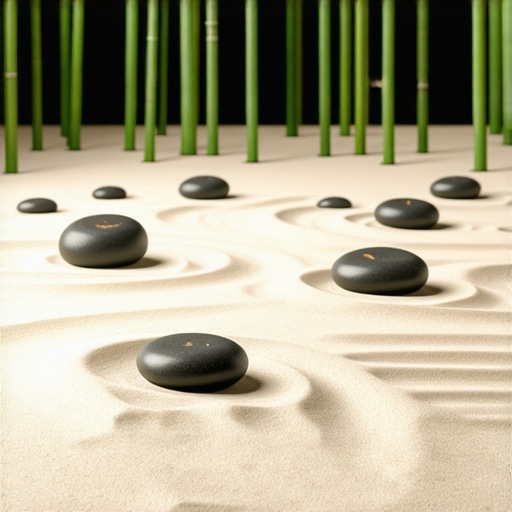
Creating a Zen Corner with Sand, Stone, and Bamboo
Foundation Engineering and Site Prep
A Zen corner requires a stable sub-grade and high-quality weed barrier to prevent organic material from contaminating the decomposed granite or fine-washed sand. Proper grading is essential to ensure water moves away from the structural stone elements and bamboo root balls, preventing anaerobic soil conditions. I always drill into my new crew members: if you don’t fix the soil grading first, every plant you put in the ground is just expensive compost. I have seen too many rookies slap down a layer of sand over topsoil without excavation. Three months later, the weeds are pushing through, the sand is a muddy slurry, and the homeowner is out five grand. You have to strip the turf, dig down at least four to six inches, and compact the sub-base until it has the structural integrity of a highway shoulder. If that ground isn’t firm, your stones will shift, and your bamboo will lean. It is physics, not magic. Don’t skip the plate compactor. The sound of that machine bouncing off the dirt tells you when the base is ready. If it’s still sinking, you’re not done. I have seen guys try to hand-tamp a 10×10 area and then wonder why their $2,000 basalt boulders are tilting six months later. You need 95% Proctor density on that sub-grade or don’t bother starting.
“A retaining wall doesn’t fail because of the stone; it fails because of the water trapped behind it.” – Hardscape Engineering Axiom
Selecting Stones with Geological Purpose
Choosing stones for a Zen garden involves selecting igneous or metamorphic rocks that offer structural longevity and visual weight. These boulders must be buried at least one-third of their height to mimic natural outcroppings and resist hydrostatic pressure or shifting within the landscape design. Stop looking for the prettiest rock at the center. Look for the one with the best ‘face’ and the flat bottom. You want stones that look like they have been there since the last ice age. This means checking for weathering and lichen. If you just drop a round river rock on top of the sand, it looks like a lost marble. You need to excavate a ‘pocket’ for each major stone, fill it with 21A or modified gravel, and then set the stone. This anchors it. It also prevents the stone from sinking unevenly into the softer sand layer. We call this ‘setting the bone.’ Once the stones are set, they shouldn’t move even if you stand on them with a full pack.
How deep should a sand base be for a Zen garden?
A professional-grade sand base should be between 2 to 4 inches deep, layered over a compacted gravel sub-base to ensure proper drainage and prevent the sand from mixing with the underlying soil. Too deep, and you cannot rake crisp patterns; too shallow, and the weed barrier will show through.
| Material Type | Particle Size | Stability Rating | Drainage Rate |
|---|---|---|---|
| Fine Washed Sand | 0.05mm – 2.0mm | Low | High |
| Decomposed Granite | 1.0mm – 5.0mm | High | Medium |
| Crushed Basalt | 2.0mm – 10.0mm | Very High | Low |
Bamboo Management and Root Containment
Bamboo must be installed with a HDPE root barrier of at least 60-mil thickness to prevent rhizome invasion into the rest of the landscape. Selecting clumping varieties such as Fargesia over running varieties like Phyllostachys reduces long-term maintenance and prevents structural damage to nearby hardscaping and patios. If you install running bamboo without a barrier, you are essentially planting a slow-motion bomb in your yard. I have seen rhizomes pierce through asphalt driveways and crack concrete pool decks. When you install the barrier, it needs to be tilted slightly outward at the top and should protrude two inches above the soil line. This forces the rhizomes to jump over the top where you can snip them. If you bury the barrier flush with the ground, the bamboo will just grow right over it and you won’t see it until it’s popping up in your neighbor’s lawn. This is not ‘vibrant’ growth; it is an infestation. Check the USDA hardiness zone before you buy. Bamboo is sensitive to wind-chill and salt spray.
Which bamboo is best for small garden corners?
For tight spaces, use Fargesia rufa or Fargesia robusta because these are clumping bamboos that do not require massive rhizome barriers and maintain a dense, vertical growth habit that fits smaller landscaping footprints. These species are hardy and provide the verticality needed without the invasive headache.
“Phyllostachys species can spread 3 to 5 feet per year if not contained by a physical barrier of at least 24 inches in depth.” – Agricultural Extension Bulletin
The Mechanics of Sand and Drainage
Effective drainage in a Zen garden utilizes French drains or sub-surface gravel pits to prevent the sand from washing away during heavy rain. The slope must be precisely calculated at a 2% minimum to protect the integrity of the stone arrangements and prevent water pooling. I don’t care if the yard looks flat; it should never be flat. You need a transit level to confirm your pitch. If water sits under your sand base, it will turn the whole area into a bog. The sand will grow algae, turn green, and smell like a swamp. That is the opposite of Zen. Use a non-woven geotextile fabric between your gravel and your sand. This allows water to pass through but keeps the particles separate. If you mix your sand and gravel, you lose the ‘rakability’ of the surface. You’ll be hitting rocks every time you try to make a circle. It’s frustrating. It’s bad engineering. Use a 3/8-inch minus decomposed granite if you want the best balance of stability and aesthetics. It stays put better than play sand, which just blows away in a stiff breeze.
- Step 1: Excavate to a depth of 6 inches.
- Step 2: Install 3 inches of 21A modified stone and compact.
- Step 3: Lay 60-mil HDPE barrier for bamboo sections.
- Step 4: Install non-woven geotextile fabric.
- Step 5: Place structural boulders and anchor with gravel.
- Step 6: Spread 2-3 inches of washed sand or decomposed granite.
- Step 7: Install bamboo with proper soil amendments (pH 6.0-6.5).
While the internet tells you to water every day, bamboo actually needs deep, infrequent saturation to force roots to establish deep in the soil profile rather than staying on the surface. During the first year, watch the leaves. If they curl like a cigar, the plant is thirsty. If they turn yellow and drop, you’re drowning it. There is no middle ground with these plants. They are biological machines. Treat them as such. Maintain your sand by raking it once a week. This isn’t just for the look; it breaks up the surface crust and prevents moss from taking hold in the shade of the bamboo. Keep the leaf litter out of the sand. Organic matter equals soil, and soil equals weeds. Keep it clean or it will rot.
![Build a $100 Modern Planter Box for 2026 [DIY]](https://lawnmajesty.com/wp-content/uploads/2026/06/Build-a-100-Modern-Planter-Box-for-2026-DIY.jpeg)
![Stop 2026 Peony Droop with This 3-Stake Support [Easy]](https://lawnmajesty.com/wp-content/uploads/2026/05/Stop-2026-Peony-Droop-with-This-3-Stake-Support-Easy.jpeg)
![Build a $50 Vertical 2026 Herb Garden [Small Space]](https://lawnmajesty.com/wp-content/uploads/2026/06/Build-a-50-Vertical-2026-Herb-Garden-Small-Space.jpeg)