Building a Natural Stone Fire Pit Circle
Why Most Natural Stone Fire Pits Fail Within Three Years
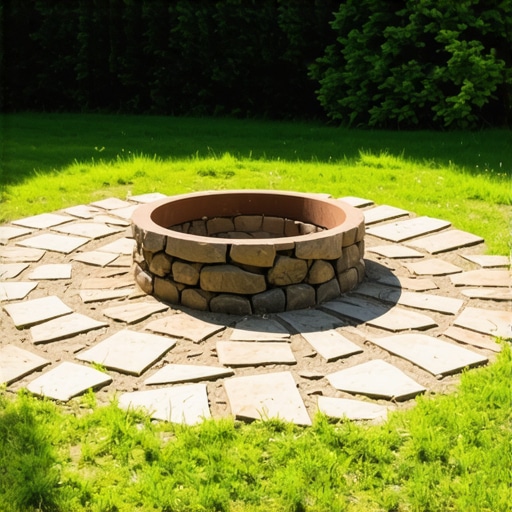
Building a natural stone fire pit circle requires a minimum 6-inch compacted gravel base and high-density thermal-resistant stone to prevent structural shifting or stone spalling. Successful installation hinges on hydrostatic pressure management and selecting materials that can handle the extreme expansion and contraction cycles of open flames.
I recently got called out to tear up a $30,000 patio that was sinking because the previous contractor thought he could just dry-set heavy fieldstone on top of native clay soil without a modified gravel base. Within two winters, the freeze-thaw cycle turned that expensive stone circle into a jagged, dangerous mess. The homeowner was furious, and rightly so. In this business, if you don’t respect the physics of the earth, the earth will win every time. Landscaping isn’t just about making things look pretty; it is about managing water, weight, and heat. When we talk about a fire pit, we are adding thermal stress to the equation. Most DIYers and low-bid contractors skip the excavation depth because digging is hard work. They skip the plate compactor because it’s a heavy rental. They skip the fire ring liner because they think stone is invincible. They are wrong.
“A retaining wall doesn’t fail because of the stone; it fails because of the water trapped behind it.” – Hardscape Engineering Axiom
The Physics of the Subgrade: Preparing the Foundation
Before you even touch a piece of stone, you have to look at what’s under your boots. If you’re building on heavy clay, you’re building on a sponge. If you’re building on sand, you’re building on a shifting floor. You must excavate down at least 10 to 12 inches. This isn’t a suggestion. This is the difference between a legacy project and a pile of rubble. You need 6 inches of 3/4-inch minus modified gravel (often called 2A modified). This material has varying sizes of stone that lock together when compacted. Use a mechanical plate compactor. Run it until the machine literally bounces off the ground. That is how you know you’ve hit the required PSI for a stable base.
How much modified gravel do I need for a patio base?
To calculate the modified gravel requirements, multiply the square footage of your fire pit circle by the desired depth (0.5 feet for 6 inches), then divide by 27 to get cubic yards. Always add a 20% buffer for compaction shrinkage to ensure the subgrade is fully stabilized.
| Material Type | Heat Resistance | Durability Rating | Best Use Case |
|---|---|---|---|
| Granite Fieldstone | High | 9/10 | Structural outer walls |
| Limestone | Medium | 6/10 | Decorative caps (prone to popping) |
| Fire Brick (Alumina) | Extreme | 10/10 | Interior lining |
| Sandstone | Low | 4/10 | Avoid (can explode when wet) |
Material Selection: Choosing Stone That Won’t Explode
Not all stone belongs near fire. Porous stones like river rock or certain sandstones trap moisture in their molecular structure. When you heat that moisture, it turns to steam. Steam expands. If it can’t escape, the stone explodes. I’ve seen shards of rock fly twenty feet because someone used the wrong material. You want dense, igneous rocks like granite or basalt. Better yet, you should always line the interior of your stone circle with fire-rated bricks and a heavy-gauge steel fire ring. The steel ring creates a dead-air space between the fire and the stone, acting as a thermal break. This prevents the stone from reaching the critical temperatures that cause spalling.
Building the Wall: Gravity and Friction
When stacking the stone, you aren’t just piling rocks. You are building a gravity wall. Each stone should have at least two points of contact with the stones below it. We call this “one over two, two over one.” Avoid vertical seams. A vertical seam is a failure point waiting to happen. If you’re using mortar, it must be a high-heat refractory mortar. Standard Type S mortar will crumble like crackers after three fires. Personally, I prefer a dry-stack aesthetic with a hidden structural core. It allows for natural expansion and contraction without cracking the joints.
How do I stop my fire pit from smoking too much?
To ensure a smokeless fire pit, you must incorporate ventilation ports at the base of the stone wall to allow oxygen intake. Proper airflow dynamics require at least two 4-inch gaps on opposite sides of the pit, which feeds the base of the fire and promotes complete combustion.
“Proper drainage is the primary determinant of hardscape longevity in climates subject to frost heave.” – ICPI Tech Spec No. 2
- Call 811 to mark underground utility lines before any excavation begins.
- Excavate the area 6 inches wider than the actual fire pit to allow for a gravel shoulder.
- Use a transit level to ensure the base is flat but sloped 1% away from any structures.
- Install a heavy-duty steel fire ring to protect the natural stone from direct flame contact.
- Fill the bottom of the pit with 2 inches of lava rock or crushed stone for drainage.
- Apply polymeric sand to the surrounding paver or stone apron to prevent weed growth.
[IMAGE_PLACEHOLDER]
Landscaping and Lawn Integration
A fire pit circle doesn’t exist in a vacuum. It affects the surrounding lawn care and garden design. The heat from a large fire can radiate six to ten feet. If you have your fire pit right up against a stand of arborvitae, they will brown out. If you have turf grass right up to the edge, the heat will desiccate the root zone. I recommend a 3-foot wide buffer of pea gravel or flagstone around the pit. This serves two purposes: it’s a fire safety zone for stray sparks, and it prevents foot traffic from compacting the soil around your turf, which leads to oxygen deprivation in the root zone. If you care about your grass, keep it away from the heat. Don’t be the guy who builds a beautiful pit only to have a ring of dead, yellow grass surrounding it by July. Drainage is also a factor. The stone circle will create runoff. Ensure the grade of the surrounding landscape moves that water away toward a French drain or a lower part of the yard. Don’t drown your lawn to save your patio.
Maintenance and The Long Game
Once the build is done, the work isn’t over. You need to check the interior for soot buildup and inspect the stones for stress cracks annually. Natural stone is a living material in a sense; it shifts and breathes. If you used a fire ring, check for rust. If you see the stones starting to lean, your base has failed, likely because of water. Clean out the ash after every few fires. Ash is alkaline. When it mixes with rainwater, it creates a caustic lye-like substance that can eat away at certain types of stone and mortar over time. Keep it clean. Keep it dry. Treat it like the piece of engineering it is. Stop listening to the 15-minute DIY videos that say you can build this in an afternoon with a shovel and some liquid nail. You can’t. Do it right, or don’t do it at all. It’s your yard, stop treating it like a sandbox.

![Build a $500 Outdoor Kitchen Frame with Steel Studs [DIY]](https://lawnmajesty.com/wp-content/uploads/2026/05/Build-a-500-Outdoor-Kitchen-Frame-with-Steel-Studs-DIY.jpeg)