
Stop 2026 Soil Erosion with These 3 Grass Types
Stop 2026 Soil Erosion with These 3 Grass Types
I always drill into my new crew members: if you don’t fix the soil grading first, every plant you put in the ground is just expensive compost. I have seen guys spend ten grand on premium sod only to watch it slide down a 15-degree slope during a heavy spring rain because they ignored the mechanical reality of the site. Landscaping is not about aesthetics; it is about managing hydraulic pressure and soil shear strength. If you want to stop 2026 soil erosion, you need to think like a civil engineer, not a gardener.
The Engineering of Erosion: Why Your Yard is Washing Away
Soil erosion in 2026 landscapes is a mechanical failure where hydraulic force outweighs the shear strength of the soil particles. Without deep-rooted vegetative stabilization, runoff carves rills and gullies that undermine hardscapes, destroy nutrient-rich topsoil, and compromise the structural integrity of your property’s foundation. It is a slow-motion disaster. Most homeowners wait until they see a sinkhole or a foundation crack. By then, you are not just buying grass; you are buying truckloads of fill dirt and structural piers. Stop it now. Gravity is patient. Water is relentless. You must be more disciplined than both.
“Soil erosion is the process of detachment and transport of soil particles by erosive agents. Vegetation is the most effective way to intercept rainfall and reduce kinetic energy.” – USDA Agricultural Research Service
1. Turf-Type Tall Fescue (Festuca arundinacea): The Deep-Rooted Workhorse
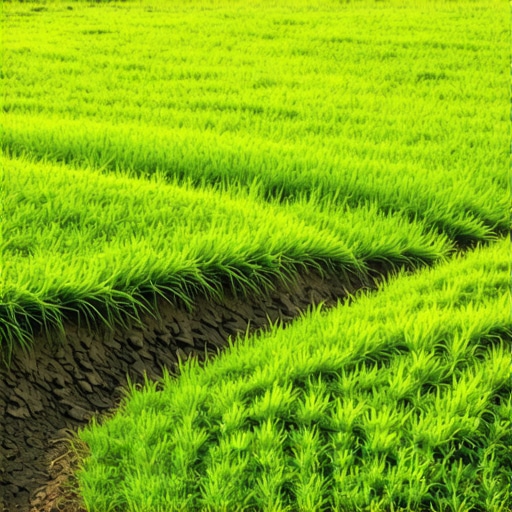
Turf-Type Tall Fescue is the primary defense against erosion due to its extensive vertical root architecture that can reach depths of three to six feet. This grass species creates a tenacious grip on the soil sub-layers, effectively acting as biological rebar that prevents mass wasting during heavy precipitation events. Unlike the shallow-rooted varieties sold at big-box stores, a high-quality Tall Fescue cultivar focuses its energy on downward growth. This is critical because erosion often starts below the surface where saturated soil loses its friction. When the roots penetrate the C-horizon of the soil, they anchor the entire topsoil layer to the more stable substrate below. Don’t buy the cheap mix. It is full of annual ryegrass that dies in a year, leaving your soil exposed. You need the 2026-grade, endophyte-enhanced fescue for maximum survival. [IMAGE_PLACEHOLDER]
How much root depth do I need to stop runoff?
To effectively resist the shearing force of sheet flow, you need a root system that penetrates at least 12 inches into the soil profile. Shallow roots merely hold the top inch of dirt, which can easily liquefy and slide during a flash flood. Deep roots provide the necessary vertical stability to keep the entire soil column intact. You must encourage this by watering deeply and infrequently. If you water for ten minutes every day, you are training your roots to stay near the surface. That is a recipe for failure. Deep roots chase the water down. Force them to work for it.
2. Kentucky Bluegrass (Poa pratensis): The Rhizomatous Anchor
Kentucky Bluegrass prevents soil loss by utilizing a complex network of underground rhizomes that form a dense, interconnected mat. This lateral growth pattern fills in bare spots and voids, ensuring that no soil particle is left exposed to the impact of raindrops, which can reach terminal velocities of 20 miles per hour. While Fescue goes deep, Bluegrass goes wide. This rhizomatous structure is self-repairing. If a small patch is damaged by foot traffic or a pet, the neighboring plants send out runners to bridge the gap. This is the definition of a “living geotextile.” It knits the soil together at the surface level, preventing the initial “detachment” phase of erosion. It requires more nitrogen than other types, but the structural benefit is undeniable.
| Grass Species | Root Architecture | Soil Preference | Shear Strength Rating |
|---|---|---|---|
| Turf-Type Tall Fescue | Deep Vertical Taproots | Loam/Heavy Clay | Superior |
| Kentucky Bluegrass | Rhizomatous Netting | Silt/Loam | High |
| Buffalograss | Fibrous Dense Netting | Arid/Clay | Very High |
3. Buffalograss (Bouteloua dactyloides): The Low-Input Survivalist
Buffalograss is an ideal erosion control solution for arid or low-maintenance areas where its dense, fine-textured foliage creates a physical barrier against wind and water. This native species has evolved to survive extreme drought while maintaining a fibrous root system that stabilizes the top six to eight inches of the soil profile. It is the ultimate pragmatic choice. It doesn’t need the pampering of a golf course green. It wants to be left alone. For slopes that are too steep to mow safely, Buffalograss is your best friend. It grows slowly, requires minimal fertilization, and survives where other grasses give up. If you are dealing with heavy clay that becomes a muddy mess in winter, this grass will lock it down. It is biology doing the heavy lifting so you don’t have to.
“A slope stability analysis must account for the tensile strength of root systems, which act like organic rebar within the soil matrix.” – International Erosion Control Association (IECA) Standards
The Critical Role of Soil Grading in Erosion Management
Successful erosion control begins with mechanical grading to ensure a 2% minimum slope away from structures and proper soil amendment. Before seeding, you must address bulk density and compaction levels to allow root penetration beyond the top two inches of the soil profile. If your soil is as hard as concrete, no grass in the world will save you. The water will just run over the top, taking the seed with it. You have to break the surface. Use a core aerator. Pull four-inch plugs. Introduce organic matter to improve the flocculation of clay particles. This creates the micropores necessary for gas exchange and root expansion. Do not skip the prep work. If you do, you are just throwing money into the wind.
How do I calculate the slope for proper drainage?
To calculate slope, divide the “rise” (vertical change) by the “run” (horizontal distance) and multiply by 100. For effective drainage without high-velocity erosion, you want a slope between 2% and 5%. Anything steeper requires specialized erosion control blankets or terracing with hardscaping. If you have a 10% slope, your grass isn’t a lawn; it’s a waterfall waiting to happen. You need to interrupt the flow with physical barriers like French drains or retaining walls to break the water’s momentum. Don’t fight physics. Manage it.
- Conduct a soil test to check pH levels; aim for 6.5.
- Grade the area to eliminate standing water pockets.
- Install erosion control blankets on slopes greater than 3:1.
- Seed at the recommended rate for your specific region.
- Apply a starter fertilizer with a high phosphorus ratio for root growth.
- Water frequently but lightly until germination occurs.
- Transition to deep watering to force root expansion.
Maintenance and Engineering Durability
Maintenance is not a chore; it is a structural inspection. Every time you mow, you should be looking for signs of rills or thinning turf. If you see a bare spot, fix it immediately. That spot is an invitation for the next rainstorm to start a gully. Keep your mower blades sharp. Dull blades tear the grass, leading to disease and thinning. A thick canopy is your first line of defense against raindrop impact. If the canopy is thin, the soil is vulnerable. Don’t scalp the lawn. Keep it tall. Three to four inches is the sweet spot for erosion control. It provides shade for the soil and more surface area for photosynthesis, which fuels that all-important root growth. It will rot if you don’t manage the thatch. Stay on top of it. Your property depends on it. This is how you protect your investment for 2026 and beyond.
![Why Your 2026 Grass Seed Isn't Growing [3 Critical Mistakes]](https://lawnmajesty.com/wp-content/uploads/2026/05/Why-Your-2026-Grass-Seed-Isnt-Growing-3-Critical-Mistakes.jpeg)

![Stop Raking Your 2026 Leaves [Nutrient Hack]](https://lawnmajesty.com/wp-content/uploads/2026/07/Stop-Raking-Your-2026-Leaves-Nutrient-Hack.jpeg)
![Stop 2026 Lawn Burn: 3 Mowing Height Rules [Tips]](https://lawnmajesty.com/wp-content/uploads/2026/05/Stop-2026-Lawn-Burn-3-Mowing-Height-Rules-Tips.jpeg)