Fix 2026 Brown Grass Spots with This $15 Enzyme Spray
The Forensic Autopsy of a Dying Lawn
You see a brown spot; I see a localized ecological failure. Most homeowners walk out to their 2026 lawn, see a straw-colored patch, and immediately reach for the garden hose or a bag of high-nitrogen fertilizer. That is a mistake that will cost you the entire yard. A homeowner called me in a panic last June after they completely torched their front lawn by applying a massive dose of synthetic 32-0-4 fertilizer during a 95-degree dry spell, thinking the grass was ‘hungry.’ It wasn’t hungry; it was suffocating. The soil was so hydrophobic that the fertilizer sat on the surface, bonded with the thatch, and created a chemical burn that effectively salted the earth. We had to excavate three inches of soil just to get to a layer that hadn’t been chemically sterilized.
Why Are There Brown Spots in My Lawn in 2026?
Brown spots in 2026 are primarily caused by hydrophobic soil conditions, heavy thatch accumulation, or localized dry spots (LDS) that prevent moisture and nutrients from penetrating the root zone, often requiring a specialized enzyme-based soil surfactant to break down organic barriers and restore hydraulic conductivity. This is not about ‘watering more.’ It is about ensuring the water actually reaches the rhizosphere.
“Localized dry spots are often the result of fungal hyphae coating soil particles with a waxy, water-repellent substance, making the soil effectively waterproof despite heavy irrigation.” – Penn State Extension Agronomy Manual
The Science of the $15 Enzyme Spray
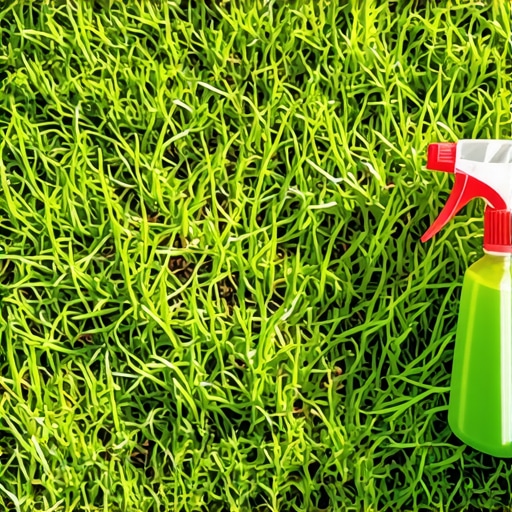
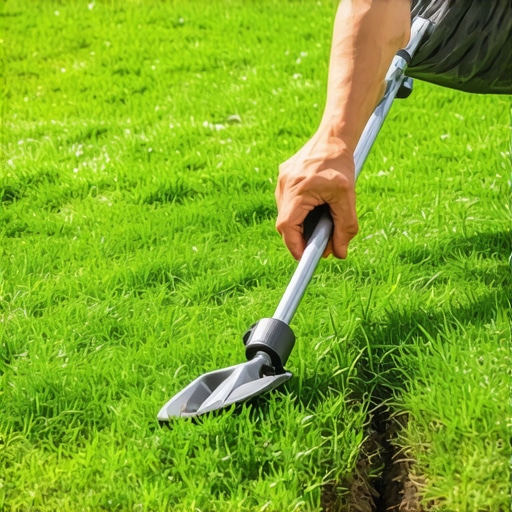
When I talk about an ‘enzyme spray,’ I am not talking about some ‘magic juice’ from a late-night infomercial. I am talking about concentrated cellulase, protease, and lipase enzymes. These are the same biological catalysts used in industrial wastewater treatment. In your lawn, they serve one purpose: breaking down the lignified organic matter known as thatch. Thatch is a layer of dead and living stems, roots, and debris that accumulates between the green vegetation and the soil surface. When this layer exceeds 0.5 inches, it becomes a biological sponge that absorbs your water and fertilizer before it ever hits the dirt. [IMAGE_PLACEHOLDER] A $15 bottle of liquid enzyme or a high-quality soil surfactant breaks the surface tension of water and dissolves the waxy coatings on soil particles. It turns ‘waterproof’ dirt back into a functional growth medium. It is the difference between pouring water on a brick and pouring it on a sponge.
How to Diagnose Your Soil’s Physical Integrity
Before you spend a dime, do the ‘Cup Test.’ Take a clear plastic cup, cut the bottom out, and press it an inch into the brown spot. Pour four ounces of water into it. If the water sits there for more than 60 seconds without draining, your soil is hydrophobic. You don’t have a grass problem; you have a pore-space problem. This is where soil microbiology meets civil engineering. Your grass roots need oxygen just as much as they need nitrogen. If the soil is compacted to a high bulk density, the roots will grow laterally instead of vertically. This makes them incredibly susceptible to drought stress. One week of heat and—bang—you have brown spots.
| Treatment Method | Mechanism of Action | Average Cost | Result Duration |
|---|---|---|---|
| Synthetic Fertilizer | Chemical nutrient dump | $45 – $80 | 2-4 Weeks (Flush growth) |
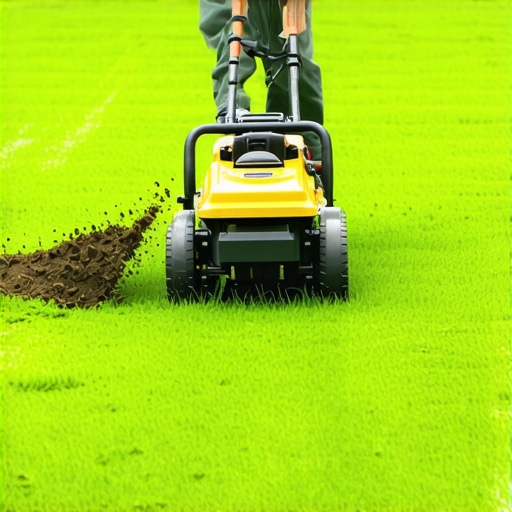
| Mechanical Aeration | Physical plug removal | $150 – $300 | 6-12 Months |
| Enzyme/Surfactant Spray | Biochemical thatch breakdown | $15 – $30 | 3-4 Months |
| Top Dressing (Compost) | Organic matter injection | $500+ | Multi-year |
How much enzyme spray do I need for a standard lawn?
Most concentrated enzyme or wetting agent bottles cover approximately 5,000 to 7,500 square feet. You must calibrate your sprayer to deliver roughly 2 to 4 ounces of concentrate per 1,000 square feet. Do not over-apply. Enzymes are catalysts; they don’t need a heavy hand to initiate the chemical reaction.
“Soil surfactants and wetting agents reduce the surface tension of water, allowing for uniform infiltration into hydrophobic soils and preventing the formation of necrotic rings.” – Texas A&M AgriLife Research
Step-by-Step Remediation Protocol
- Clear the Debris: Lightly rake the brown spot to remove loose, dead blades. Do not scalp it.
- Apply the Enzyme: Use a hose-end sprayer set to the 2oz/gal mark. Apply in the early evening to prevent evaporation.
- The 1-Inch Rule: Immediately after application, run your irrigation for 20 minutes. You need to ‘wash’ the enzymes into the thatch layer.
- Monitor pH: Enzymes work best in a soil pH range of 6.2 to 7.0. If your soil is too acidic, the biological activity will stall.
What happens if I ignore the brown spots?
It will rot. Or rather, it will become a breeding ground for Grubs (Phyllophaga) or Brown Patch (Rhizoctonia). A brown spot is a sign of a stressed plant, and nature loves to kill stressed plants. By the time 2026 rolls around, weather patterns are expected to be more volatile. Deep-rooting is your only defense. You must force those roots to chase water down into the subsoil. If you keep the surface wet and the subsoil dry, you are essentially growing hydroponic grass that will die the moment the power goes out or the sun gets too hot. Stop using ‘mow-and-blow’ hacks. Get a soil probe. Look at your roots. If they aren’t 6 inches deep, you aren’t done yet. No excuses. Fix the dirt, and the grass will fix itself.

![Stop 2026 Clay Soil Compaction [Aeration Tips]](https://lawnmajesty.com/wp-content/uploads/2026/06/Stop-2026-Clay-Soil-Compaction-Aeration-Tips.jpeg)