Stop 2026 Boxwood Blight: 3 Preventative Hacks
The Engineering of a Blight-Resistant Landscape
Stopping boxwood blight in 2026 requires a shift from cosmetic gardening to biological engineering by prioritizing soil gas exchange, genetic resistance, and rigorous sanitization protocols. If you approach this with a mow-and-blow mindset, you will lose your entire hedge row to Cylindrocladium buxicola within a single humid season.
I always drill into my new crew members: if you don’t fix the soil grading and cultural conditions first, every plant you put in the ground is just expensive compost. I remember a job in ’19 where a homeowner spent twelve grand on English Boxwoods. They looked great for a month. Then the summer humidity hit. Because the previous contractor buried the root flares and ignored the site’s poor drainage, the fungus moved through that hedge like a wildfire through dry brush. Within six weeks, it was a graveyard of sticks. That failure wasn’t bad luck; it was bad engineering. Boxwood blight spores are microscopic tanks. They are heavy, sticky, and incredibly resilient. If you aren’t thinking about the microscopic reality of your yard, you are just waiting for a disaster to happen. You have to understand that this fungus survives in the soil and on fallen leaf litter for years. You cannot just spray your way out of a blight infestation once it takes hold. Prevention is the only viable professional strategy.
The Biological Reality of Cylindrocladium buxicola
Boxwood blight is a fungal pathogen that thrives in temperatures between 64 and 77 degrees Fahrenheit, specifically when combined with high leaf wetness durations exceeding 12 hours. It targets the Buxaceae family, causing rapid defoliation and characteristic black streaks on the stems. Understanding the lifecycle of the fungal spores is critical for prevention.
“Cylindrocladium buxicola spores are heavy and sticky, meaning they do not travel far by wind but rely on water splash and contaminated tools for dispersal.” – NC State Extension Agricultural Manual
How much modified gravel do I need for a patio base?
While often asked in the context of hardscaping, the answer for planting is similar: you need 4 to 6 inches of compacted aggregate or well-draining substrate below the root zone if your site has heavy clay. For a standard 10×10 patio area, you would require approximately 2.5 tons of modified gravel to ensure the hydrostatic pressure doesn’t force water back up into your boxwood root systems, which would otherwise invite fungal rot.
The Boxwood Cultivar Matrix: Resistance vs. Vulnerability
Professional landscaping in 2026 dictates the abandonment of Buxus sempervirens ‘Suffruticosa’ (English Boxwood) in favor of genetically resistant cultivars. The following table provides a technical breakdown of the performance of common boxwood varieties currently available in the nursery trade.
| Cultivar Name | Blight Resistance Rating | Growth Rate (Annual) | Best Use Case |
|---|---|---|---|
| English Boxwood | Extremely Low | 1-2 Inches | Historical restoration only (Not recommended) |
| NewGen Independence® | High | 2-4 Inches | Foundation plantings and hedging |
| Better Boxwood™ Renaissance | Extreme | 3-5 Inches | Formal gardens and topiary |
| Winter Gem | Moderate | 4-6 Inches | Mass plantings and borders |
Do not buy plants from big-box retailers. These plants are often mass-produced in crowded nurseries where fungal loads are high and latent infections are masked by industrial-strength fungicides that wear off three weeks after you plant them. Buy from reputable nurseries that participate in Boxwood Clean certification programs. Check the root ball. If it smells like rotting eggs, the plant is already dead; it just doesn’t know it yet.
Hack 1: The Forensic Sanitization Protocol
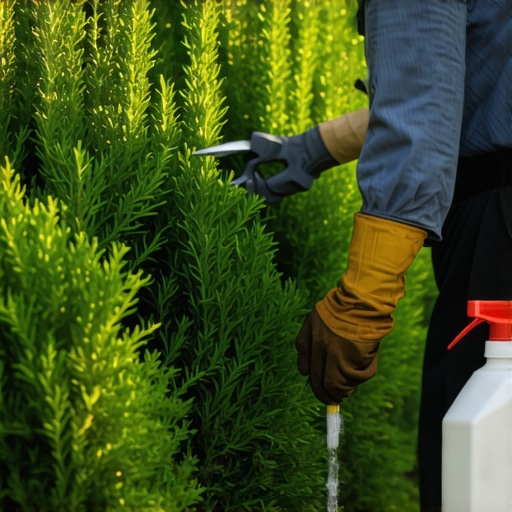
Preventing blight starts with mechanical hygiene, specifically the sterilization of all pruning equipment using 70% isopropyl alcohol or a 10% bleach solution between every single plant. This prevents the mechanical transfer of mycelial mats and spores from one shrub to the next. Clean your shears. Do it every time. If you use a professional service, demand to see them sanitize their tools. Most ‘mow-and-blow’ crews carry blight from yard to yard on their mower decks and hedge trimmers. You must establish a ‘clean zone’ for your property. Never allow off-site mulch or unverified plant material into the vicinity of your boxwood stands.
Hack 2: Micro-Climate and Airflow Engineering
Airflow is the enemy of fungus; relative humidity trapped within the dense canopy of a boxwood is the primary driver of blight outbreaks. You must prune for internal light penetration and air movement, a technique known as ‘thinning’ or ‘Swiss-cheesing’ the interior of the plant. This allows the foliage to dry out within two hours of a rain event rather than remaining damp for two days. Stop overhead irrigation. Use drip-line irrigation systems that deliver water directly to the soil surface. Splashing water is the primary vector for spore movement. If you have a sprinkler hitting your boxwoods, you are essentially hand-delivering the pathogen to the leaves.
How to sanitize pruning tools for fungus?
To effectively kill Cylindrocladium buxicola, tools must be submerged or thoroughly sprayed with 70% isopropyl alcohol and allowed to remain wet for a minimum of 60 seconds. Alternatively, a 10% bleach solution works, though it is corrosive to high-carbon steel blades. Rinse and oil your tools after use to prevent pitting and rust. A dull, rusted blade creates jagged wounds that take longer to callus over, leaving the plant vulnerable to secondary infections.
Hack 3: The Substrate Buffer and Mulch Management
Effective blight prevention requires managing the soil-foliage interface by using a thin layer (1 inch) of pine bark mulch to create a physical barrier between the soil and the lower leaves. Avoid heavy, dyed hardwood mulches that hold too much moisture and can alter soil pH levels away from the boxwood’s ideal range of 6.5 to 7.2. Ensure the root flare is visible. If you see a ‘mulch volcano’ piled against the trunk, pull it back immediately. Buried flares lead to adventitious roots and bark decay, which stresses the plant and suppresses its natural immune response.
“The structural integrity of a shrub planting is predicated on the gas exchange capacity of the root zone; without oxygen, the plant’s immune response to fungal pathogens is non-existent.” – Landscape Agronomy Manual, Vol 4
The Installation Process: Professional Standards
When installing new boxwoods, the planning phase is 80% of the work. Dig the hole twice as wide as the root ball but no deeper. The root ball must sit on undisturbed soil to prevent settling. If the plant sinks, water will pool at the base, creating a hydrostatic trap for fungal spores. If you are in a region with heavy clay, like the Piedmont or parts of the Midwest, you must amend the soil with expanded slate or coarse grit to increase macropore space for drainage. Before you dig, call 811. Don’t be the guy who clips a gas line because he wanted a hedge. Check your local municipal drainage codes to ensure your grading doesn’t dump water onto a neighbor’s property, which is a common cause of litigation in high-end hardscaping projects.
- Test soil pH and adjust with elemental sulfur or lime prior to planting.
- Install 12-inch spacing between mature canopy widths to ensure airflow.
- Apply a preventative bio-fungicide containing Bacillus amyloliquefaciens during the spring flush.
- Remove any fallen boxwood leaves immediately using a HEPA-filter vacuum or rake.
- Monitor stems for black cankers during periods of high humidity.
The first year after installation is the ‘settling in’ period. The plant is focusing all its energy on root establishment. Do not over-fertilize with high-nitrogen products, as this produces ‘succulent growth’ which is incredibly tender and susceptible to blight infection. Use a slow-release, low-NPK organic fertilizer. Water deeply but infrequently. You want the roots to chase the moisture down into the soil profile. Shallow watering leads to shallow roots. Shallow roots lead to dead plants. It is that simple. If you follow these engineering standards, your boxwoods will thrive while your neighbor’s yard turns into a fungal wasteland. Protect your investment with science, not hope.
![Stop Watering Hostas at Night (Do This Instead) [2026]](https://lawnmajesty.com/wp-content/uploads/2026/06/Stop-Watering-Hostas-at-Night-Do-This-Instead-2026.jpeg)
![Stop Leaf Spot from Killing Your 2026 Roses [Fast Fix]](https://lawnmajesty.com/wp-content/uploads/2026/05/Stop-Leaf-Spot-from-Killing-Your-2026-Roses-Fast-Fix.jpeg)