
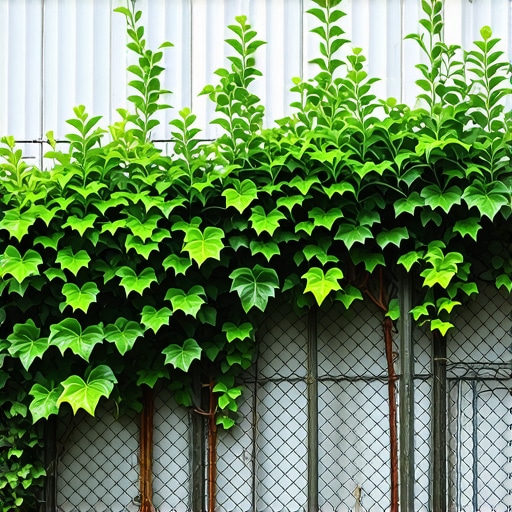
5 Best 2026 Vines for Fast Chain Link Privacy
The Engineering of Living Privacy Screens
For fast chain link privacy, the best 2026 vines include Coral Honeysuckle, American Wisteria, and Carolina Jessamine, selected for their high-density foliage, native resilience, and non-destructive root systems that provide full coverage within two growing seasons while maintaining fence integrity. Most homeowners treat a fence as a static object, but when you add biomass, you are adding a structural load. A 100-foot run of chain link covered in mature Campsis radicans can weigh upwards of 800 pounds when wet. If your posts aren’t set in 3000 PSI concrete at a depth below the frost line, that privacy screen is going to become a liability during the first high-wind event of the season.
The Apprentice Lesson: Vines are Structural Loads
I always drill into my new crew members: if you don’t fix the soil grading first, every plant you put in the ground is just expensive compost. Last spring, I had a green kid trying to plant 15 Carolina Jessamines along a rusted 11.5-gauge chain link fence. The fence was already leaning two inches off-plumb because the water was pooling at the base, softening the clay soil. I had to stop the job, excavate the line, and install a French drain before a single root touched the dirt. You cannot ask a plant to do the job of an engineer. A vine is a living sail. When the wind hits a fully leafed-out fence, the lateral pressure on those terminal posts is immense. If the soil is saturated and the posts are shallow, the whole system fails. Don’t skip the site prep. It will fail.
“Selecting native species ensures the root architecture is optimized for local soil microbial communities and provides the necessary tensile strength for vertical growth.” – USDA Forest Service Handbook
1. Lonicera sempervirens (Coral Honeysuckle)
Coral Honeysuckle provides a dense, semi-evergreen screen that can grow 10 to 15 feet per year, using twining stems to navigate chain link mesh without the destructive aerial roots found in invasive species. This is not the Japanese variety that eats forests. This is a disciplined, woody vine. It requires a soil pH between 6.0 and 7.0. We typically see the best results when we amend the backfill with 20 percent organic compost to increase the cation exchange capacity. This ensures the nitrogen stays where the roots can grab it during the rapid growth phase of May and June. It thrives in USDA zones 4 through 9. Watch the drainage. It won’t tolerate wet feet for more than 48 hours.
2. Gelsemium sempervirens (Carolina Jessamine)
Carolina Jessamine is the heavy hitter for southern climates, offering evergreen coverage and a growth rate that can exceed 18 feet in a single season once the root system is established. The trick with Jessamine is the initial training. You have to weave the primary leaders through the mesh manually for the first 24 inches. After that, its thigmotropism takes over. Be aware: the plant is toxic if ingested. If you have livestock or curious dogs, skip this one. In terms of soil, it prefers a sandy loam. If you are dealing with heavy red clay, you must break the surface tension with expanded shale or gypsum to ensure oxygen reaches the root flare.
3. Wisteria frutescens (American Wisteria)
American Wisteria is the responsible alternative to the invasive Asian varieties, offering massive woody stems that provide a permanent structural screen even in winter. Unlike its cousins, it won’t tear the top rail off your fence, but it still needs a sturdy setup. We only install this on 9-gauge chain link with a 1.625-inch top rail. The growth rate is about 15 feet per year. You need to prune this twice a year to force lateral branching. If you don’t, it will leg out at the bottom, leaving a 3-foot gap where your neighbor can still see your business. Cut the long runners back to three buds in late winter. This forces the plant to fill the mesh rather than just racing for the sky.
| Vine Species | Growth Rate (Ft/Year) | Weight Class | Min. USDA Zone |
|---|---|---|---|
| Coral Honeysuckle | 10-15 | Medium | 4 |
| Carolina Jessamine | 12-18 | Heavy | 7 |
| American Wisteria | 15-20 | Very Heavy | 5 |
| Virginia Creeper | 20+ | Medium | 3 |
| Virgin’s Bower | 10-12 | Light | 4 |
4. Parthenocissus quinquefolia (Virginia Creeper)
Virginia Creeper utilizes adhesive disks to cling to surfaces, making it incredibly effective for covering the metal poles and fabric of a fence simultaneously. It is the toughest vine on this list. It will grow in salt spray, heavy shade, or blistering sun. The downside is the maintenance. It is an aggressive grower. In one season, it can easily jump from your fence to a nearby oak tree. You have to be surgical with the loppers. We recommend a 10-10-10 slow-release fertilizer in early spring, but honestly, this plant is such a survivor that over-fertilizing just creates more work for you. It is the best choice for erosion control on slopes adjacent to the fence line.
5. Clematis virginiana (Virgin’s Bower)
Virgin’s Bower is a native Clematis that produces a frothy mass of white flowers and dense green foliage that can hide a chain link fence in a single season. It uses its leaf petioles to twist around the wire. This is a lightweight vine, making it perfect for older fences that might not handle the weight of a Wisteria. It likes its “feet in the shade and head in the sun.” We always mulch the base with 3 inches of double-ground hardwood mulch to keep the root zone cool. Avoid the big-box store “Sweet Autumn Clematis” which is a Japanese invasive. Stick to virginiana to ensure you aren’t planting a future headache for the local ecosystem.
“Chain link fabric under heavy vine load acts as a solid surface; wind loads must be calculated based on post-embedment depth and PSI of the concrete footing.” – Chain Link Fence Manufacturers Institute (CLFMI)
How fast do vines grow on chain link?
In optimal conditions with a balanced nitrogen supply and consistent drip irrigation, most privacy vines will cover a 4-foot fence within 18 to 24 months. Fast-growing species like Virginia Creeper can cover 20 linear feet in a single season if the soil temperature remains above 65 degrees. Growth is slower in the first year as the plant establishes its root architecture. Once the root-to-shoot ratio stabilizes, the vertical growth accelerates exponentially.
Will vines damage my fence?
Vines can damage a fence if the structural gauge of the wire is too thin or if the top rail is not properly braced for the weight of wet foliage. While twining vines are generally safe for chain link, invasive species with thick woody trunks can eventually warp the fabric. To prevent damage, ensure your fence is made of 9-gauge or 11-gauge galvanized steel and perform annual pruning to remove excess deadwood that adds unnecessary weight.
The 2026 Planting Checklist
- Check fence tension: Tighten any sagging fabric before planting.
- Test soil pH: Aim for 6.0 to 7.0 for most native vines.
- Call 811: Never dig for post reinforcement without marking utility lines.
- Inspect root flares: Ensure you aren’t burying the stem too deep, which causes rot.
- Install drip irrigation: Vines need consistent moisture to fuel rapid leaf production.
The transition from a bare metal eyesore to a living wall requires more than just digging a hole. You are managing a biological system that must coexist with a mechanical one. If you select the right species and respect the engineering limits of your hardware, you will have a privacy screen that lasts decades. Don’t buy the cheap stuff at the grocery store garden center. Go to a real nursery. Get the right cultivars. Do the work once, and do it right.
![4 Fire-Safe 2026 Shrubs for High-Heat Zones [Zone 9]](https://lawnmajesty.com/wp-content/uploads/2026/06/4-Fire-Safe-2026-Shrubs-for-High-Heat-Zones-Zone-9.jpeg)