
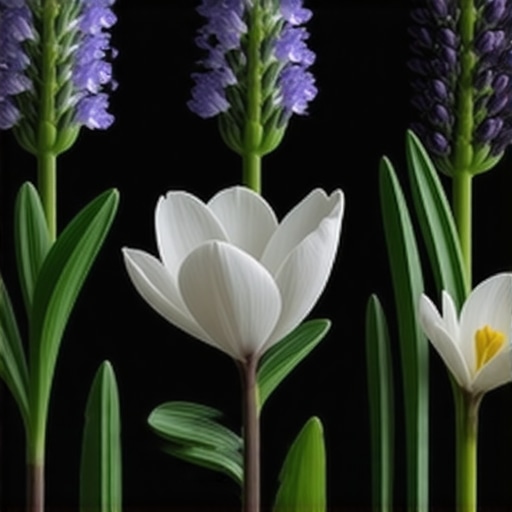
5 2026 Fragrant Perennials for Night Gardens
Engineering the Nocturnal Landscape: More Than Just White Petals
Designing a night garden is an exercise in atmospheric engineering and botanical physics. To succeed in 2026, a landscaper must look beyond simple aesthetics and focus on the volatile organic compounds (VOCs) that plants release after the sun sets. A night garden utilizes pale-colored flora and high-intensity scents to attract nocturnal pollinators while providing a sensory experience for homeowners during the cooler evening hours. It requires a deep understanding of soil chemistry and light reflection. Most ‘mow-and-blow’ hacks will tell you to just plant some white impatiens and call it a day. That is a recipe for failure. If the soil drainage is off or the light placement is wrong, those plants will rot or become invisible in the dark. [image_placeholder]
The Apprentice Lesson: Foundation Before Fragrance
I always drill into my new crew members: if you don’t fix the soil grading first, every plant you put in the ground is just expensive compost. I remember a project in late 2023 where a client wanted a high-end ‘moon garden’ around their pool. My lead apprentice thought he could skip the soil amendment because the yard looked ‘fine.’ Three weeks later, after a 2-inch rain event, the $4,000 worth of specialty perennials were drowning in a perched water table. We had to rip it all out, regrade the subsurface to a 2% slope away from the pool, and incorporate 4 inches of expanded shale to fix the aeration. If you don’t respect the physics of water and soil, the plants don’t care how much you paid for them. They will die. Hard work isn’t just digging; it’s measuring. We use laser levels even for flower beds. It matters.
“The physiological release of floral volatiles is a circadian-regulated process that peak at specific humidity and temperature thresholds.” – Agricultural Extension Agronomy Manual
The Science of Scent: Soil Microbiology and VOCs
Plants don’t just ‘smell.’ They execute chemical releases based on the Cation Exchange Capacity (CEC) of your soil. If your soil is depleted of micronutrients like boron or manganese, your fragrant perennials will produce weak scents. You need a soil test before you buy a single pot. For night-blooming species, we aim for a pH between 6.2 and 6.8 to optimize nutrient uptake. We focus on lawn care and landscaping by integrating organic matter that feeds the mycorrhizal fungi. This fungal network is the internet of the soil. It helps the plants handle the stress of night-time respiration. Don’t use that cheap 10-10-10 synthetic fertilizer from the big-box store. It kills the soil life. We use slow-release organics that provide a steady supply of nitrogen without spiking the salt index of the soil. High salt kills the delicate root hairs of high-end perennials.
How do I prep soil for a night garden?
To prepare soil for a night garden, you must excavate to a depth of 12 inches, incorporate 30% organic compost, and ensure a percolation rate of at least 1 inch per hour. This prevents root rot in nocturnal species which often prefer stable, well-drained environments. Check your drainage first. If water stands for more than 4 hours, install a French drain or a dry well. This is basic hardscaping logic applied to garden design.
The 2026 Selection: Top 5 Fragrant Perennials
These aren’t your grandmother’s gardenias. We are looking at high-performance cultivars engineered for resilience and scent throw.
| Species | Height (Inches) | Primary Scent Note | Hardiness Zone |
|---|---|---|---|
| Oenothera macrocarpa ‘Silver Blade’ | 8-12 | Sweet Lemon | 4-7 |
| Zaluzianskya ‘Midnight Candy’ | 12-18 | Vanilla/Honey | 8-10 |
| Nicotiana alata ‘Grandiflora’ | 24-36 | Jasmine/Lily | Annual/Zone 10 |
| Hesperis matronalis (Selected Cultivar) | 24-48 | Clove/Violet | 3-9 |
| Mirabilis jalapa ‘Moonlight White’ | 24-36 | Citrus Musk | 7-11 |
1. Oenothera macrocarpa (Missouri Primrose): This is a structural powerhouse. Its silver foliage reflects moonlight, making the garden visible without harsh artificial lighting. It needs a hardscaping edge or a rock garden environment to thrive. It hates wet feet. 2. Zaluzianskya (Night Phlox): This plant is deceptive. By day, the maroon buds look like nothing. At night, they open into white stars. The scent can travel 20 feet on a still night. 3. Nicotiana alata: Use the heirloom ‘Grandiflora’ types. Modern hybrids often have the scent bred out of them in favor of color. We want the scent. Plant these near seating areas. 4. Hesperis matronalis (Dame’s Rocket): While some call it common, its evening fragrance is unmatched. We treat it as a biennial in our garden design to ensure a constant bloom cycle. 5. Mirabilis jalapa (Four O’Clocks): The ‘Moonlight White’ cultivar is a 2026 favorite because it stays open longer into the morning hours. It produces large tubers that store energy, making it drought-tolerant once established.
“A retaining wall doesn’t fail because of the stone; it fails because of the water trapped behind it.” – Hardscape Engineering Axiom
Integrating Hardscaping and Lighting
A night garden fails without proper hardscaping. You need paths that are safe to navigate in low light. We use light-colored pavers—think cream-toned travertine or light gray granite—to catch the moon’s reflection. Avoid dark slate; it swallows the light and becomes a trip hazard. We install low-voltage LED lighting at 2700K (warm white). Anything higher looks like a gas station parking lot. We hide the fixtures in the foliage. You should see the effect, not the source. We also consider hydrostatic pressure when building any raised beds for these perennials. Every wall gets a 4-inch perforated drain tile wrapped in filter fabric. No exceptions. We don’t want the wall heaving after the first freeze/thaw cycle. That’s how you protect the client’s investment. Lawn care around these areas must be precise. Don’t scalp the edges. Keep the turf at 3.5 inches to shade the soil and reduce evaporation near your fragrant beds.
Which plants smell strongest at night?
The strongest night-scenting plants are typically Nicotiana alata and Zaluzianskya, which have evolved to release heavy concentrations of benzenoid compounds to attract sphinx moths. These scents are most detectable in high-humidity environments with low wind speeds, making protected garden nooks ideal for planting. Placement is critical. Put them upwind of your patio.
The Seasonal Maintenance Cycle
Maintenance isn’t just cutting back dead stems. It’s a technical audit. In the spring, we check the compaction of the mulch. If it’s over 3 inches, we strip it. ‘Mulch volcanoes’ around trees and perennials cause stem rot. We keep it 2 inches deep and away from the root flare. In the fall, we don’t ‘clean’ the garden too much. We leave the stalks for solitary bees to over-winter. This is landscaping with an ecological conscience. Your night garden needs those pollinators. Check your irrigation headers monthly. One clogged nozzle can kill a $200 specimen plant in a week of July heat. We use drip irrigation with pressure-compensating emitters to ensure every plant gets exactly 0.5 gallons per hour. No more, no less. Precision is the difference between a garden that survives and one that thrives.
Night Garden Maintenance Checklist
- Test soil pH every 24 months.
- Clean LED light lenses monthly to maintain 100% lumen output.
- Prune perennials after the first flush of blooms to encourage a second scent peak.
- Inspect hardscaping joints for polymeric sand erosion.
- Monitor for nocturnal pests like slugs that target tender fragrant foliage.
Stop listening to the influencers on social media telling you to use vinegar and dish soap as weed killer. It ruins the soil pH and kills the microfauna. Use your hands or a propane torch for spot weeding in hardscaping joints. Stay away from the chemicals that disrupt the very ecosystem you are trying to build. A high-end garden is a commitment to biology. If you treat your soil like dirt, your plants will treat you like a stranger. Do it right the first time. Measure twice. Dig once. And for heaven’s sake, check your drainage. It is the foundation of everything we do in landscaping.

![4 Shade-Tolerant Groundcovers for 2026 Clay Soil [No Grass]](https://lawnmajesty.com/wp-content/uploads/2026/05/4-Shade-Tolerant-Groundcovers-for-2026-Clay-Soil-No-Grass.jpeg)