
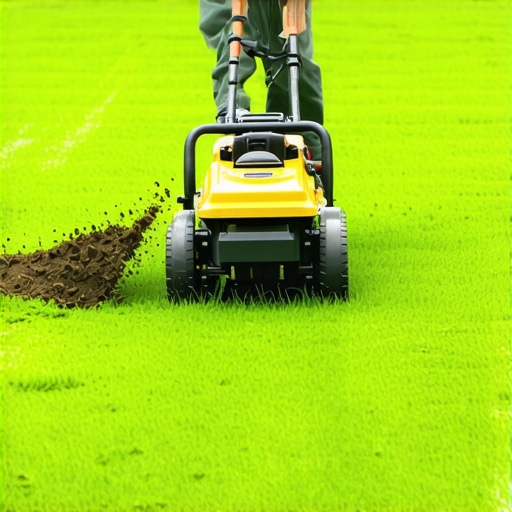
Fixing 2026 Lawn Compaction with Core Aeration
Why Core Aeration is Essential for Your 2026 Lawn Health
Core aeration serves as a critical reset for compacted turfgrass by extracting cylindrical soil cores to improve gaseous exchange and hydraulic conductivity. This mechanical intervention breaks the surface tension of hydrophobic soils, ensuring that root systems can access the macronutrients required for survival during heat stress. When you ignore compaction, you are essentially asking your grass to grow in a parking lot. It will fail. Every time.
The Forensic Autopsy: Identifying the Signs of a Suffocating Lawn
I have spent twenty years watching homeowners throw money into a hole because they did not respect the soil. I always drill into my new crew members: if you do not fix the soil grading and compaction first, every plant you put in the ground is just expensive compost. I remember a job back in 2019 where we dug up a lawn that had not been aerated in a decade. The roots were growing sideways. They literally could not push down through the hardpan clay. It looked like a carpet laying on a basement floor. That is what compaction does. It turns your yard into a biological desert with a green facade. You might see water pooling in low spots or notice that your turf feels like concrete under your boots. These are not minor aesthetic issues. They are symptoms of a dead soil profile. When the bulk density of your soil exceeds 1.6 grams per cubic centimeter, root penetration stops. The plant enters a state of permanent stress, becoming a magnet for pathogens and pests like grubs and chinch bugs.
“Soil compaction occurs when soil particles are pressed together, reducing pore space between them. This restricts the movement of air, water, and nutrients to the roots.” – Penn State Extension
The Microscopic Reality of Soil Compaction
To understand why your 2026 lawn needs a core reset, you have to look at the physics of the A-horizon soil layer. Soil is not a solid mass: it is a collection of minerals, organic matter, and, most importantly, pore space. These pores are divided into macropores and micropores. Macropores allow for the rapid movement of water and the exchange of gases. Micropores hold onto water for the plant to use later. In a compacted lawn, the macropores are crushed. The air is squeezed out. Without oxygen, the aerobic microbes that break down thatch and cycle nitrogen die off. They are replaced by anaerobic bacteria that produce toxic byproducts. This is why a compacted lawn often smells sour after a heavy rain. The rhizosphere, the area around the roots where all the chemical magic happens, becomes a dead zone. You can dump all the nitrogen you want on the surface, but if the microbes are not there to process it, and the roots are too weak to take it up, you are just washing chemicals into the local watershed.
How much modified gravel do I need for a patio base?
While this seems like a hardscaping question, it relates directly to lawn drainage. For a standard patio, you need a minimum of 6 inches of compacted modified gravel (2A or CR617). This base must extend 6 inches beyond the edge of the pavers to prevent settling. If this drainage is not handled correctly, the runoff will saturate the adjacent lawn, leading to localized soil compaction and anaerobic conditions that kill your grass. Proper garden design requires balancing these hard surfaces with permeable turf areas that can handle the increased water load. [IMAGE_PLACEHOLDER]
The Engineering Behind the Plug: Tines, Depth, and Spacing
Do not waste your time with spike aerators. Those little shoes with nails on the bottom? They are a joke. All they do is push the soil aside, increasing the density of the sidewalls. This is called sidewall compaction, and it makes the problem worse. Professional core aeration requires a machine that uses hollow tines. These tines must penetrate at least 3 inches into the soil. The resulting plugs, or cores, should be about 0.5 to 0.75 inches in diameter. We look for a hole density of about 20 to 40 holes per square foot. This creates enough void space to allow the soil to relax and expand. It is like a pressure relief valve for your yard. The metallurgy of the tines matters too. Cheap, thin tines will bend when they hit a rock. We use case-hardened steel that can punch through the toughest red clay. If the machine is not heavy enough to pull a clean plug, it is just scratching the surface.
Comparative Analysis of Aeration Methods
| Method | Impact on Soil | Longevity | Professional Verdict |
|---|---|---|---|
| Spike Aeration | Increases sidewall density | 2 weeks | Ineffective |
| Core Aeration | Physical removal of soil mass | 12 months | Industry Standard |
| Liquid Aeration | Chemical surfactant break-up | Variable | Supplement only |
| Power Raking | Removes surface thatch only | 6 months | Not for compaction |
When is the best time to aerate my lawn?
The timing for core aeration depends entirely on your grass type and the 2026 climate cycle. For cool-season grasses like Kentucky Bluegrass or Tall Fescue, the best window is late August through early October. This allows the grass to recover during the peak growing season when temperatures are moderate. For warm-season grasses like Bermuda or Zoysia, you want to aerate in late spring or early summer after the grass has fully broken dormancy. Aerating during a drought or when the ground is frozen is a waste of time. You need the soil to be moist but not saturated. If it is too dry, the tines cannot penetrate. If it is too wet, the machine will rut the yard and smear the soil, closing the very pores you are trying to open.
“A retaining wall doesn’t fail because of the stone; it fails because of the water trapped behind it. Similarly, a lawn fails when the soil structure traps water at the surface instead of allowing it to percolate.” – Hardscape Engineering Axiom
The 2026 Pre-Aeration Checklist
- Flag all irrigation heads, valve boxes, and shallow utility lines.
- Mow the turf to a height of 1.5 to 2 inches to allow the machine better access to the soil.
- Apply 0.5 inches of water to the lawn 24 hours before the service to soften the ground.
- Test the soil pH to determine if lime or sulfur should be applied immediately after aeration.
- Inspect the equipment for sharp, clean hollow tines.
Post-Aeration Protocol: Seeds, Fertilizers, and Top-Dressing
The hour after you finish aerating is the most valuable time for your lawn. Those holes are direct conduits to the root zone. This is when you should be overseeding. The seed-to-soil contact inside those holes is nearly perfect, leading to much higher germination rates than broadcasting on top of a flat lawn. Following the seed, apply a high-phosphorus starter fertilizer. We look for an NPK ratio like 10-25-10. The phosphorus encourages rapid root development. If you really want to change the biology of your yard, this is the time to top-dress with a quarter-inch of high-quality compost or leaf mold. The organic matter will fall into the holes, permanently altering the soil structure and increasing your Cation Exchange Capacity (CEC). This helps your soil hold onto nutrients instead of letting them leach away. Do not rake up the plugs. They will break down in a week or two, returning valuable microbes and minerals to the surface. It is nature’s way of recycling.
Future-Proofing Your Turf
Lawn care is a marathon, not a sprint. One round of aeration will not fix twenty years of neglect, but it is the only way to start the recovery. If you have heavy foot traffic or clay-heavy soil, you should plan on aerating every single year. For lighter soils, every two to three years might be enough. Keep your mower blades sharp and never remove more than one-third of the grass blade at a time. Scalping the lawn stresses the plant and exposes the soil to the sun, which increases evaporation and hardens the surface. By maintaining a deep root system through regular aeration, you are building a lawn that can survive the heat of 2026 and beyond. It is about engineering a resilient ecosystem, not just chasing a color.
![Fixing 2026 Yellow Lawn Patches [Pet Waste Fix]](https://lawnmajesty.com/wp-content/uploads/2026/07/Fixing-2026-Yellow-Lawn-Patches-Pet-Waste-Fix.jpeg)
![Why Your 2026 Grass Seed Kills Your Budget [Fix]](https://lawnmajesty.com/wp-content/uploads/2026/06/Why-Your-2026-Grass-Seed-Kills-Your-Budget-Fix.jpeg)