Sharpening Your Mower Blades for a Cleaner Cut
Look at your lawn. If you see a tan or whitish haze across the top of your grass 24 hours after mowing, you are not looking at a nutrient deficiency. You are looking at a horticultural crime scene. When a mower blade is dull, it does not cut the grass; it smashes through it like a rusted hammer. This leaves a shredded, ragged edge on the leaf blade that is the botanical equivalent of a jagged skin tear. It is ugly, it is dangerous for the plant, and it is entirely avoidable.
The Anatomy of a Ragged Cut and Turf Pathology
Sharpening mower blades is the primary method to prevent turfgrass leaf shredding, which leads to desiccation and pathogen entry. A clean cut preserves the vascular system of the plant, ensuring the photosynthetic capacity remains intact and reducing transpirational water loss through open wounds. I always drill into my new crew members: if you do not fix the soil grading first, every plant you put in the ground is just expensive compost. The same applies to mower blades. You can buy the most expensive fertilizer on the market, but if you are hacking the grass with a dull blade, you are effectively opening thousands of tiny doors for fungi like Pythium and Rhizoctonia to enter and destroy your investment. I have seen entire acres of high-value turf decimated because a foreman was too lazy to swap a blade after hitting a stray piece of limestone. It is non-negotiable.
“A dull mower blade does not slice the leaf blade; it tears the tissue, leading to increased water loss and a greater susceptibility to environmental stress and disease.” – Penn State Center for Turfgrass Science
How much torque do I need for a mower blade?
Standard residential mower blades typically require 45 to 60 foot-pounds of torque, while commercial units may require up to 90 foot-pounds. Always use a calibrated torque wrench rather than an impact gun to ensure the bolt is secured without stripping the spindle threads or risking the blade flying off at 3,000 RPM. Loose blades vibrate. Vibration kills spindles. Spindles are expensive.
The Physics of the 30-Degree Bevel
Mower blade maintenance requires achieving a precise 30-degree cutting angle to balance edge retention with impact resistance. Most residential homeowners sharpen their blades until they are razor-sharp, which is a mistake because a razor edge will roll and nick the moment it hits a twig or a pebble. We are looking for a “butter knife” sharpness with a consistent bevel. If you lose the angle, you lose the lift. Mowers rely on aerodynamic lift to pull the grass upright before the blade passes over. If your blade is rounded off, the grass stays flat, the cut is uneven, and your garden design looks like a mess. I tell my guys to look at the blade under a magnifying glass. If the edge looks like a mountain range, it is garbage. Throw it away and start over.
| Metric | Dull Blade Impact | Sharp Blade Impact |
|---|---|---|
| Leaf Healing Time | 72+ Hours | 12 to 24 Hours |
| Water Loss | Extreme (35% increase) | Minimal |
| Fuel Consumption | 20% Increase | Optimal Efficiency |
| Fungal Vulnerability | High Risk | Low Risk |
The Professional Sharpening Protocol
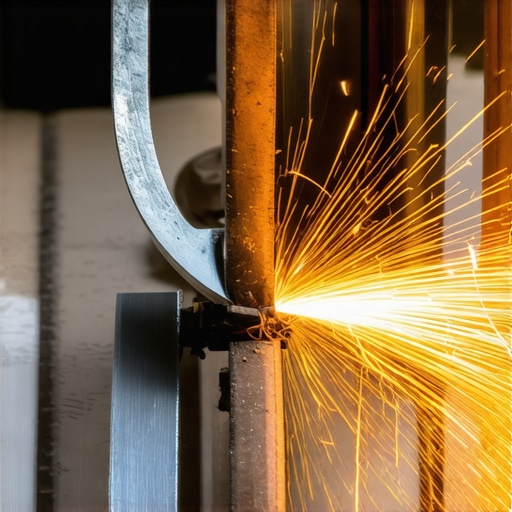
Proper sharpening techniques involve the use of angle grinders, bench grinders, or specialized blade sharpeners to remove minimal material while restoring the factory edge profile. You must follow a strict sequence to maintain blade balance. An unbalanced blade will vibrate at high frequencies, eventually shattering the engine’s crankshaft seals or the electric motor’s bearings. Do not skip the balance test. Use a dedicated blade balancer, not a nail in a wall. If one side is heavy, grind more off the back of the wing, not the cutting edge.
- Disconnect Spark Plug: Never touch the blade while the ignition lead is connected. It can fire.
- Clean the Deck: Remove dried grass buildup which causes aerodynamic drag.
- Grind the Bevel: Follow the existing 30-degree factory angle.
- Verify Balance: Ensure the blade sits perfectly horizontal on the balancer.
- Torque to Spec: Use a torque wrench. No exceptions.
“Proper mower blade maintenance is the single most cost-effective way to improve turf health and reduce the need for chemical fungicides.” – Agronomy Field Manual 4th Ed
When should I replace my mower blade instead of sharpening?
You must replace the blade when the lift wing (the curved back part) has thinned significantly or when more than 10 percent of the blade width has been ground away. Thin wings can snap off at high speeds, becoming lethal shrapnel. If you see cracks or deep nicks that cannot be ground out without overheating the steel, the blade is compromised. It will fail. Do not wait for it to break.
The Long-Term Impact on Lawn Health
In landscaping and high-end lawn care, we measure success by root depth and cellular turgor. A sharp blade allows the plant to seal the wound quickly, directing energy toward root growth instead of tissue repair. If you are in a region with heavy clay soil, the stress of a ragged cut combined with poor drainage is a death sentence. The plant will rot. Keep your blades sharp. Check them every 10 hours of mowing time. This is not a suggestion; it is the science of keeping things alive.