5 2026 Plants for Low-Water Xeriscaping
Why 80 Percent of Your Xeriscape Success Happens Before Planting
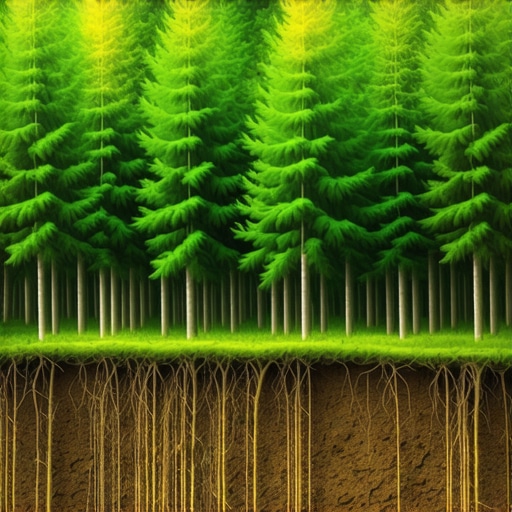
Successful low-water xeriscaping in 2026 requires a foundation of soil drainage, grading, and root zone management. Professional landscaping involves testing soil pH and ensuring the hydrostatic pressure of the site does not drown drought-tolerant species during infrequent heavy rains. If you ignore the sub-grade, your plants will fail.
I always drill into my new crew members: if you do not fix the soil grading first, every plant you put in the ground is just expensive compost. I have seen guys throw $5,000 worth of nursery stock into a hole with zero drainage. Two months later, those plants are rotted out because the soil was essentially a heavy clay bathtub. We are not just digging holes; we are engineering a biological system that must survive on minimal inputs. If the grade does not pull water away from the root flare, you are wasting your client’s money and my time. You have to look at the soil pore space. Without 50 percent of that space being air and water, the roots suffocate. Simple as that.
“Soil compaction is the primary killer of urban landscape plants, reducing oxygen availability to the root system and preventing the downward movement of moisture required for deep root establishment.” – Penn State Extension Horticultural Manual
How much water do new xeriscape plants need?
New xeriscape installations require approximately one inch of water per week for the first 12 to 18 months to establish a deep root architecture. Once established, many species survive on natural rainfall alone, provided the garden design includes appropriate mulching to prevent evaporative loss and soil crusting.
The Engineering of Low-Water Garden Design
Modern garden design for 2026 focuses on hydrozoning, which groups plants by specific water requirements to prevent over-irrigation of drought-hardy species. By utilizing hardscaping elements like boulders and swales, we can direct runoff toward deep-rooted plants while keeping the turf grass footprint minimal. This is civil engineering on a residential scale.
| Material Type | Heat Retention | Water Permeability | Best Use Case |
|---|---|---|---|
| Decomposed Granite | High | 90% | Walkways and xeric beds |
| River Rock (3-5 inch) | Medium | 100% | Dry creek beds and drainage |
| Wood Chip Mulch | Low | 70% | Planting beds for moisture retention |
| Polymeric Sand | N/A | 5% | Stabilizing paver joints |
1. Leucophyllum frutescens (Texas Sage ‘Cloud’ Cultivars)
This is not your average shrub. The 2026 cultivars of Texas Sage are bred for high humidity tolerance and fungal resistance. Biologically, these plants utilize a dense layer of silver trichomes on their leaves. These microscopic hairs reflect solar radiation and reduce the temperature of the leaf surface. When you plant these, you must ensure the soil is at least 60 percent mineral matter. If the organic content is too high, the nitrogen levels will cause the plant to grow leggy and weak. Keep the nitrogen low. Force the plant to work. Use a 1/4 inch minus gravel mulch around the base to reflect heat upward, which triggers the bloom cycle after rain events. It is a biological response to barometric pressure changes.
2. Schizachyrium scoparium (Little Bluestem ‘Blue Heaven’)
Little Bluestem is a C4 photosynthetic powerhouse. This means it is more efficient at carbon fixation in high-heat environments than standard C3 grasses. Its root system can reach depths of eight feet. When we talk about lawn care alternatives, this grass wins because it stabilizes the soil and prevents erosion without requiring a drop of supplemental water once the taproot finds the water table. The key is the crown. Plant it too deep, and it will rot. I tell my crew the crown should sit exactly 0.5 inches above the surrounding grade. This allows for settling without burying the growth point. In 2026, we are looking for the ‘Blue Heaven’ cultivar because it maintains structural integrity through winter snow loads without flopping.
3. Baileya multiradiata (Desert Marigold)
This is a short-lived perennial that acts like an annual in terms of seed dispersal. It is a survivalist. The plant utilizes a deep taproot to find moisture in arid landscaping environments. From a garden design perspective, these provide a constant yellow bloom from spring through fall. However, the real value is in the soil microbiology. These plants thrive in poor, lean soils with a pH of 7.5 to 8.5. Do not fertilize them. High nitrogen will kill the Desert Marigold faster than a drought. It is adapted to nitrogen-poor environments. If you feed it like a Kentucky Bluegrass lawn, you will burn the roots and the plant will collapse within weeks.
What is the best soil for drought-tolerant plants?
The best soil for drought-tolerant plants is a sandy loam with less than 5 percent organic matter. High organic content holds too much moisture, which leads to Phytophthora root rot in species adapted to arid conditions. Professional hardscaping and planting require a well-draining mineral base.
4. Hesperaloe parviflora (Yellow Brakelights)
While the standard red Hesperaloe is common, the 2026 trend is shifting toward the yellow and compact ‘Brakelights’ varieties for tighter hardscaping integration. These are succulents, but they are cold-hardy down to USDA Zone 5. They use Crassulacean Acid Metabolism (CAM) to survive. They open their stomata at night to take in CO2, minimizing water loss during the heat of the day. When installing these near a retaining wall, you must account for the reflected heat from the stone. The stone acts as a thermal mass. This plant can handle it, but you need a French drain behind the wall to ensure water does not sit at the root zone during winter dormancy.
“A retaining wall doesn’t fail because of the stone; it fails because of the water trapped behind it, creating hydrostatic pressure that overcomes the friction of the base.” – Hardscape Engineering Axiom
5. Salvia yangii (Compact Russian Sage)
The 2026 compact varieties of Russian Sage are essential for modern landscaping because they do not require staking. These plants are built for high-wind, low-water environments. The woody base provides a structural skeleton that survives harsh winters. From a horticultural standpoint, these plants require an annual hard prune in late winter. You take them down to about six inches from the ground. This stimulates new growth and prevents the center from becoming hollow and dead. If you leave the old wood, the plant becomes a mess of brittle stems. Pruning is not a suggestion; it is a requirement for the plant’s health.
The Professional Installation Checklist
- Test soil pH and drainage rates (minimum 1 inch per hour percolation).
- Mark all underground utilities via 811 before excavation.
- Remove 100 percent of existing invasive weeds and turf grass.
- Incorporate 2 inches of expanded shale or crushed stone into heavy clay soils.
- Set irrigation timers for deep, infrequent cycles (early morning only).
- Apply 3 inches of inorganic mulch (gravel or rock) around xeric species.
The transition to low-water landscaping is not just about choosing the right plants; it is about changing the way we manage the land. We have to stop treating our yards like golf courses. A yard is an ecosystem. When you use the right 2026 cultivars and pair them with proper engineering, you create a landscape that survives the next decade of heatwaves. It takes work. It takes dirt. But it works. Do not skip the prep. Do not buy cheap plants. Do it right the first time.