The Easiest Way to Remove Rust Stains from Iron Fencing
The Forensic Autopsy: Why Your Iron Fence is Bleeding Orange
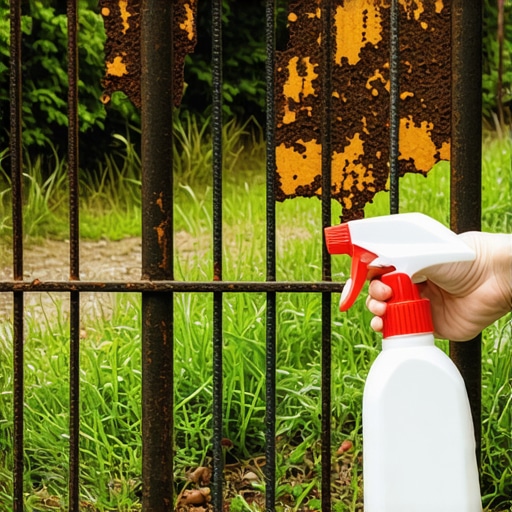
To remove rust stains from iron fencing effectively, you must utilize mechanical abrasion to strip loose scale followed by a chemical converter like phosphoric acid to neutralize the remaining oxidation at a molecular level before sealing the substrate with a zinc-rich primer. I recently got called out to tear up a $30,000 patio that was sinking because the previous contractor failed to address the drainage around an old iron perimeter fence. The iron was so corroded that the rust runoff had chemically bonded with the expensive travertine pavers, creating deep orange ghosting that no pressure washer could touch. Iron doesn’t just sit there; it reacts. When oxygen and moisture meet unprotected iron, the resulting iron oxide expands up to ten times its original volume. This expansion exerts massive pressure, cracking the surrounding masonry and destroying the structural integrity of your hardscape. If you see orange streaks on your lawn or garden design elements, the metal is literally dissolving into your soil. This is not just an aesthetic issue. It is a structural failure in progress.
“A retaining wall doesn’t fail because of the stone; it fails because of the water trapped behind it, and that same moisture is the primary catalyst for the electrolytic reaction known as corrosion in iron structures.” – Hardscape Engineering Axiom
What is the best chemical to remove rust from metal?
The most effective chemical for iron fence restoration is orthophosphoric acid, which converts iron oxide into ferric phosphate, creating a hard, black, inert layer that stops further corrosion and provides a stable base for high-performance coatings. Don’t waste your time with vinegar or lemon juice hacks you see on social media. Those are for kitchen knives, not 200 linear feet of estate fencing. You need industrial-strength agents. If the rust is heavy, you start with a needle scaler or a stiff wire wheel on a 4.5-inch angle grinder. Wear your PPE. You do not want iron filings in your lungs. Once you have reached near-white metal (SSPC-SP 10 standards), you apply the converter. It will turn the remaining rust black. That is the chemical reaction you want. If it doesn’t turn black, the reaction failed. Do it again. This process is the only way to ensure the rust won’t bubble back through your new paint within six months. It’s about chemistry, not just covering up the mess.
The Mechanical Grind: Stripping the Scale
Removing rust scale from ornamental iron requires high-torque mechanical tools and abrasive media to expose structural steel and ensure the surface profile is adequate for epoxy primer adhesion. Most homeowners make the mistake of painting right over the rust. That is a death sentence for the fence. Rust is porous. It traps moisture. When you paint over it, you are just vacuum-sealing the rot. You need to get down to the raw metal. Use a 40-grit flap disc for the flat sections and a wire cup brush for the intricate scrollwork found in custom garden design. Do not be gentle. If the metal flakes off in chunks, the fence is structurally compromised. In some cases, we find that the bottom rail of the fence has completely hollowed out due to internal moisture. If you can poke a screwdriver through it, stop cleaning. It’s time for the welder, not the painter. Quality hardscaping requires a solid foundation, and that includes the metalwork surrounding it.
How do you get rust off an iron fence without sanding?
For delicate wrought iron where sanding is impractical, professionals use chemical dipping or electrochemical rust removal, though pressure washing with a 3000 PSI oscillating tip can remove loose flaking paint and surface oxidation prior to acid treatment. Sandblasting is the gold standard, but it’s messy. In a finished landscape, you can’t have silica sand flying into your turf grass or clogging your pond filters. Instead, we use a wet-sandblasting attachment for the pressure washer. It contains the dust while providing the necessary impact to strip the scale. Once stripped, the iron is highly reactive. It will start flash-rusting within minutes if the humidity is high. You have a very narrow window to apply your first coat of primer. Iron never sleeps. It is always trying to return to its natural state as ore.
The Hardscape Protection Protocol
Protecting hardscape pavers and landscaping features from iron oxide staining involves surface sealing with a silane-siloxane water repellent and ensuring the grading directs runoff away from porous stone. When rust drips onto concrete or natural stone, it enters the pores. To get it out, you need a pH-neutral rust remover designed specifically for stone. Never use muriatic acid on pavers; it will etch the surface and change the color permanently. In my years of doing this, I’ve seen more stones ruined by the cleaner than by the rust itself. Use a poultice if the stain is deep. Mix the cleaner with a thickening agent, apply it to the stain, cover it with plastic, and let it draw the iron out over 24 hours. It takes patience. Hardscaping is an investment. Don’t let a $500 fence ruin a $20,000 patio.
“The persistence of iron oxide in soil can alter pH levels and affect the bioavailability of micronutrients to turf grass and ornamental plantings.” – Agronomy Field Manual
The Pro’s Rust Restoration Checklist
- Angle Grinder: Use with wire cup brushes and flap discs for rapid scale removal.
- Phosphoric Acid Converter: To neutralize microscopic oxidation in pits.
- Zinc-Rich Primer: Provides sacrificial protection to the underlying iron.
- Alkyd Enamel Topcoat: Offers a hard, UV-resistant barrier against the elements.
- Drop Cloths: Heavy-duty canvas to protect soil and turf from chemical runoff.
- Safety Gear: Respirator (N95 at minimum), eye protection, and heavy gloves.
Restoration vs. Replacement: Making the Call
Deciding between iron fence repair and full replacement depends on the cross-sectional loss of the metal pickets and the integrity of the welded joints. If the rust has eaten through more than 25% of the metal’s thickness, it’s a safety hazard. I’ve seen fences that looked okay on the outside but were essentially hollow shells. When a dog or a child leans against it, the whole thing snaps. Check the post bases. That is where the moisture collects, especially if they are set in concrete without a proper taper to shed water. If the post is wiggling inside the concrete, the iron has rotted below grade. At that point, you’re not just removing rust; you’re doing structural engineering.
| Method | Effectiveness | Labor Intensity | Best For |
|---|---|---|---|
| Wire Brushing | Moderate | High | Intricate Scrollwork |
| Grinding | High | High | Flat Rails and Posts |
| Chemical Conversion | Extreme | Low | Microscopic Pits |
| Sandblasting | Total | Medium | Major Restoration |
The Maintenance Cycle: Preventing the Return of the Orange
Maintaining landscaping ironwork requires annual inspections for paint failure and the application of automotive-grade wax or lanolin-based sprays to hydrophobically repel moisture. Don’t wait for the orange to appear. Every spring, walk your fence line. If you see a tiny bubble in the paint, pop it. Underneath, you will find a small spot of rust. Sand it, prime it, and touch it up immediately. If you have a sprinkler system, make sure the heads are not hitting the fence. Most municipal water has high mineral content that accelerates corrosion. Adjust your zones. Redirect the water to the roots of your plants, not the iron of your fence. Turf grass needs water; iron needs to stay dry. It is a simple rule that most homeowners ignore until they have to call someone like me to fix the damage. Forget the ‘mow-and-blow’ guys who hit your fence with weed whackers; every nick in the paint is a gateway for rust. Keep the string trimmers away from the metal. Use a herbicide strip or a stone border to keep the grass back. Small preventative steps save thousands in the long run.
![Fixing 2026 Yellowing Leaves on Gardenia [Soil Fix]](https://lawnmajesty.com/wp-content/uploads/2026/06/Fixing-2026-Yellowing-Leaves-on-Gardenia-Soil-Fix.jpeg)